 CC
CC 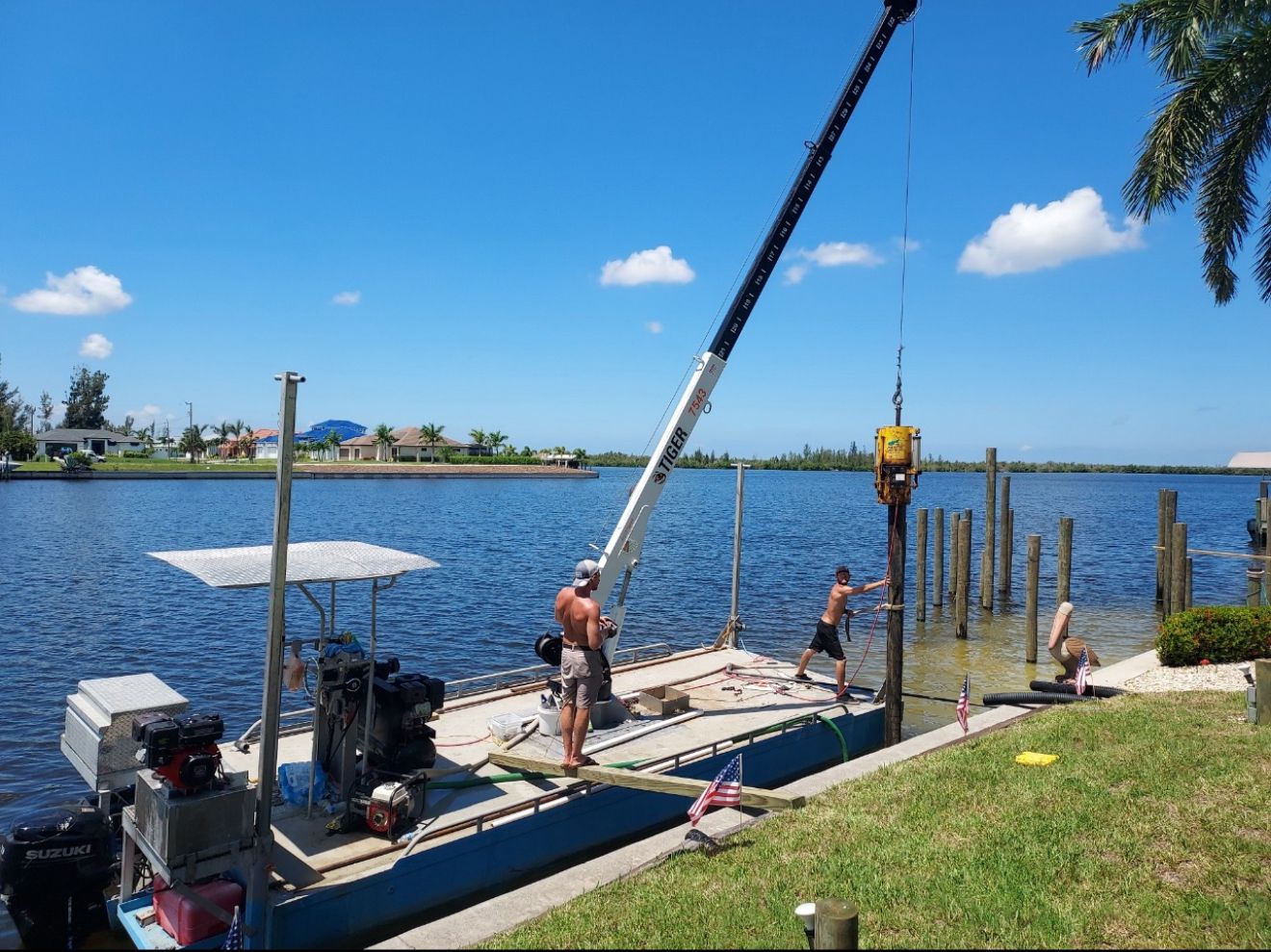
Guide · 12 · Barge Access
The crane arrives by water
Dock work is heavy work. The question is which side of the seawall it happens on. Ours happens on the canal side, off a barge, with the yard behind you left exactly the way you keep it.
Most dock damage happens on the land side
Picture the usual version of this job. A machine comes through the side gate, or the gate comes off. Lumber and old decking stack on the grass for a couple of weeks. Something heavy parks between the pool deck and the seawall, day after day, on Florida sand that has been quietly holding sprinkler line and irrigation heads just under the sod. The dock gets built. So does a second, quieter project list you did not order.
That second list is the one owners tell us about after the fact: ruts that never quite grew back, a zone of turf that stays yellow, a cracked paver or two, an irrigation run that mysteriously stopped feeding one side of the yard. None of it shows up as a line on the dock estimate. All of it shows up in your weekend.
So we took the job off the land. The crane, the pile driver, the lumber, the crew and the debris all ride a barge in the canal. Your grass is not a staging area, your seawall is not a road, and the only new thing behind your house when we leave is the dock.
Six things that change when the job floats
The barge is the job site
It is not a delivery boat that drops things off and leaves. The barge is the working platform: crane, pile driver, tools, hardware and the crew all live on it for the length of the job. That is why there is nothing to stage in your yard, because the staging area is already floating in front of your seawall.
Your irrigation never enters the conversation
Sprinkler lines and heads run shallow, and they tend to run along exactly the strip between the house and the water, which is the strip land-access dock work has to cross and park on. Working from the canal side means that strip is never crossed, never compacted and never dug through, so nobody has to find out where your lines are the hard way.
The seawall does not carry the machine
A seawall is holding back the ground behind it, and that ground is what heavy equipment would sit on. Parking real weight on the backfill right at the cap is asking a wall to do a job it was not drawn for. From the water, the load goes into the barge and the pilings we are driving, not into the wall you already paid for.
Reach comes from the right direction
A machine on land can only build as far out as its boom reaches, so the dock ends up sized around the equipment instead of around your boat. Working from the water, the crane is already out where the dock is going. Walkways, platforms and lift wells get laid out for how you use the water, not for how far something can lean over your grass.
Tear-off leaves the way it came
Old decking, pulled pilings and demolition debris go straight onto the barge, so nothing gets dragged across the lawn to a dumpster in the driveway. Your driveway stays a driveway, your gate stays shut, and the mess never touches the part of the property you actually walk on.
Access problems become water problems
Tight side yards, zero-lot-line homes, pool cages built close to the seawall, shared or condo docks with no route at all, island addresses with no easy land approach: on land these are the jobs that get quoted high or turned down. By water they are just Tuesday. If we can float to your seawall, the approach stops being the hard part.
How a barge job actually runs
The water route gets planned first
At the free inspection the owner is looking at two things: the dock work itself and how we get to it. Canal depth at your seawall, tide swing, width to maneuver, any bridge on the way, and where the barge can sit and still work your dock line. That answer shapes the schedule before anything is ordered.
Everything loads at the water, not your curb
Pilings, lumber, decking, hardware and the lift components come aboard away from your property and travel in by water. There is no delivery truck to meet, no pallet dropped on the grass, and no pile of material sitting in the sun in your side yard waiting for the crew.
The barge sets up in front of the seawall
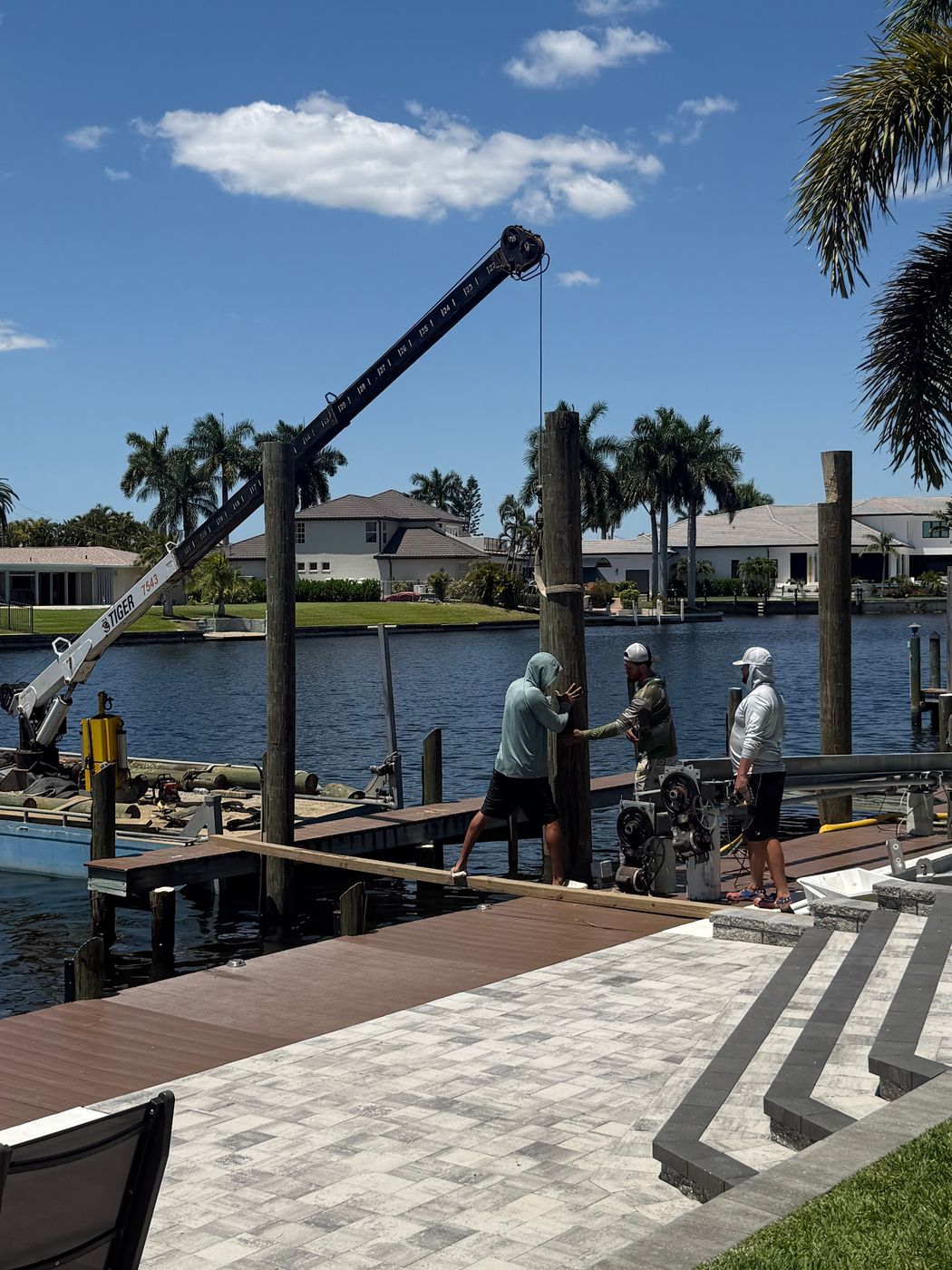
It comes down the canal, positions off your dock line and becomes the work platform. The crane runs from there. Crew move between the barge and the structure they are building, which is where the work is anyway, so foot traffic across your property is not part of how the job gets done.
Driving, building and hauling all happen on the water
Pilings go in plumb and deep from the canal side, framing and decking follow, and the old material comes off onto the barge as it is stripped. Demolition and construction share the same platform, so the job never needs a second place to put things.
The barge leaves and so does the evidence
At handover you get the dock, the walkthrough with the owner, and a yard that looks like nothing happened in it. The only thing to inspect on the land side is whether we left anything behind, and the honest answer should be no.
Real work, real water
Every photo is our own work on SW Florida water. Click any of them to look closer.
Rated 5.0, 98 reviews
“Alex and his workmanship was above what I had expected ... I would highly recommend him and his team with any other customer. 10 star rating. Along with being very fairly priced.”Lou Luongo · Google
The repair bill that was never quoted
Owners comparing dock estimates are usually comparing the dock. Fair enough, that is what the paperwork describes. What the paperwork rarely describes is the access plan, and the access plan is where the surprises live. Sod, irrigation repair, a reset paver, a gate rehung: none of that is dock work, so none of it tends to be anybody's responsibility once the dock is finished and signed off.
That is not a knock on land-access builders, some jobs genuinely have no water route and there is nothing to be done about it. It is a reason to ask the question early. Where does the equipment stage, what comes across the yard, who owns it if something under the grass gets crushed. Ask it before the work starts, because after is a conversation nobody enjoys.
For us the question mostly answers itself, since the barge carries the job and the canal carries the barge. The trade is honest and worth saying out loud: we need water to float in. Depth at your seawall, tide, canal width and anything we have to pass under are real constraints, and we would rather find them at the inspection than on the morning the crane shows up.
| Staging and materials | From the yard, lumber and equipment need somewhere to sit for the length of the job, and that somewhere is your grass. From the water, the barge holds all of it and your property is never part of the plan. |
|---|---|
| Load on the seawall | Heavy machinery working from behind the wall puts weight on the backfill the wall is retaining. Working from the canal side keeps that load in the water and out of the structure you already own. |
| Debris and tear-off | Old boards and pulled pilings either travel across the lawn to a dumpster, or straight onto the barge. One of those routes leaves marks. |
| Awkward addresses | No side-yard clearance, a pool cage tight to the water, or an island with no easy road approach stops a land crew cold. It changes nothing about how the barge gets there. |
Why We Work From the Barge (and What It Means for Your Yard) questions
Where to go from here
Piling Installation
Pilings are the part that most needs the barge. Everything below the waterline gets driven from the canal side.
See the service Related guideHow Your Canal, Bay or River Location Changes Your Dock Build
The water type shapes how the barge gets there, and what your build has to stand up to once it is done.
Read the guideYour lawn stays out of it
Tell us your canal and what the dock needs. The owner will come look at both the structure and the water route, free, and tell you exactly how the job would run at your seawall.
Open 7 AM to 7 PM, 7 days a week · Call or text