 CC
CC 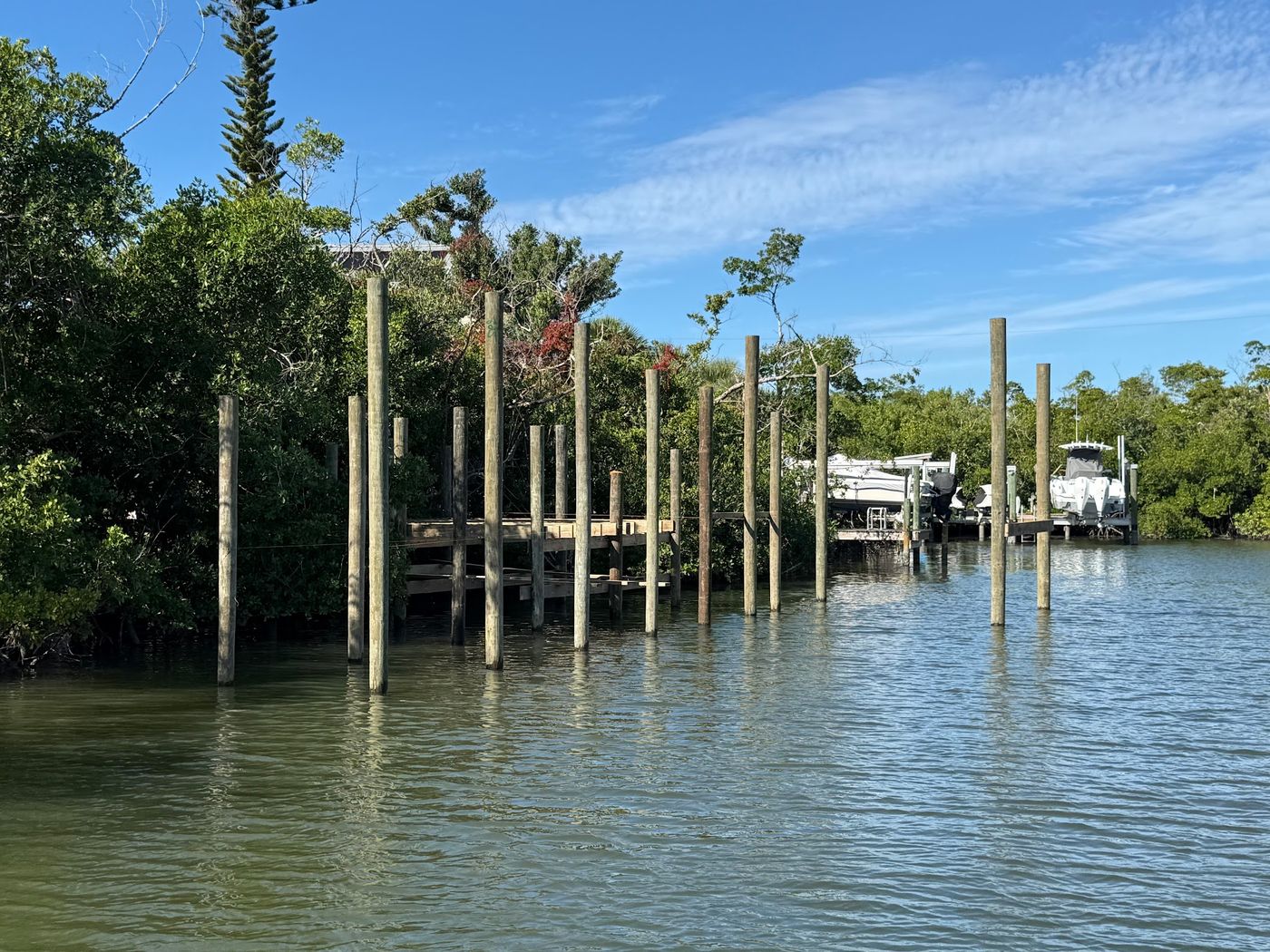
Restore · 04 · Piling Wraps
The waterline is where docks die
Borers, barnacles and the constant wet-dry cycle eat pilings from the outside in, right where you cannot see it happening. A sealed wrap protects exactly that zone, for a fraction of what new pilings cost.
The damage hides in a narrow band
Pilings do not rot evenly. Salt water goes after a narrow band at the waterline, the strip that is wet at high tide and dry at low, and mostly leaves alone the wood up in the air and the wood buried in the mud. That band is also the part your eye skips, because it is usually hidden under a skirt of barnacles and growth.
Three things work that band at once. Marine borers tunnel in from the outside and hollow the wood while the surface still looks fine. Barnacles and growth hold moisture and grit against the grain. And the wet-dry cycle, every tide, drives salt in and pulls it back out. The result is necking: the piling quietly shrinks right where it is carrying the most, and by the time you can see it from the dock, you are looking at a replacement instead of a repair.
A wrap stops that. Sealed tight around the waterline zone, it cuts the borers off from the wood and takes the oxygen and grit out of the equation. It is a small job that buys a lot of time. The only real catch is timing: a wrap protects sound wood, and it cannot bring back wood that is already gone.
Every job covers
Wraps sealed at the waterline zone
The wrap goes on tight and sealed through the band that takes the beating, from below the low tide mark to above the high one, with no open seam for borers to work back in behind.
Barnacles and growth cleaned off first
A wrap over a crust of barnacles is a wrap that fails. Every piling gets scraped back to bare wood so the seal actually seals.
Every piling inspected as it is wrapped
We have hands on the wood before the wrap goes over it. That is the closest look anybody has taken at your pilings, and you hear exactly what we found.
Honest triage, piling by piling
Wrap the sound ones, flag the gone ones. If a piling is past saving we say so, instead of covering it up and taking the money for a wrap.
Worked from the barge
We come at the waterline from the canal side, on the tide we need. Nothing crosses your yard and nobody is hanging off the edge of your deck.
Wrap-ready prep on new pilings
Pilings we drive can go in wrap-ready, so the protection is on from day one and the borers never get a head start.
Scrape it, read it, seal it
Read the waterline
We come out and look your pilings over at the water, free. You find out which are sound, which are wearing, and which are already past the point a wrap can help.
Clean back to wood
Barnacles, growth and loose surface come off the wrap zone first. A wrap only works against bare, sound wood, so this part does not get rushed.
Wrap and seal
The wrap goes on from the barge and gets sealed top and bottom, so water and borers have no way in behind it. We work the tide, not your lawn.
Walk it with you
You get a straight rundown at the end: what got wrapped, what we found under the growth, and which pilings we would keep an eye on going forward.
Real work, real water
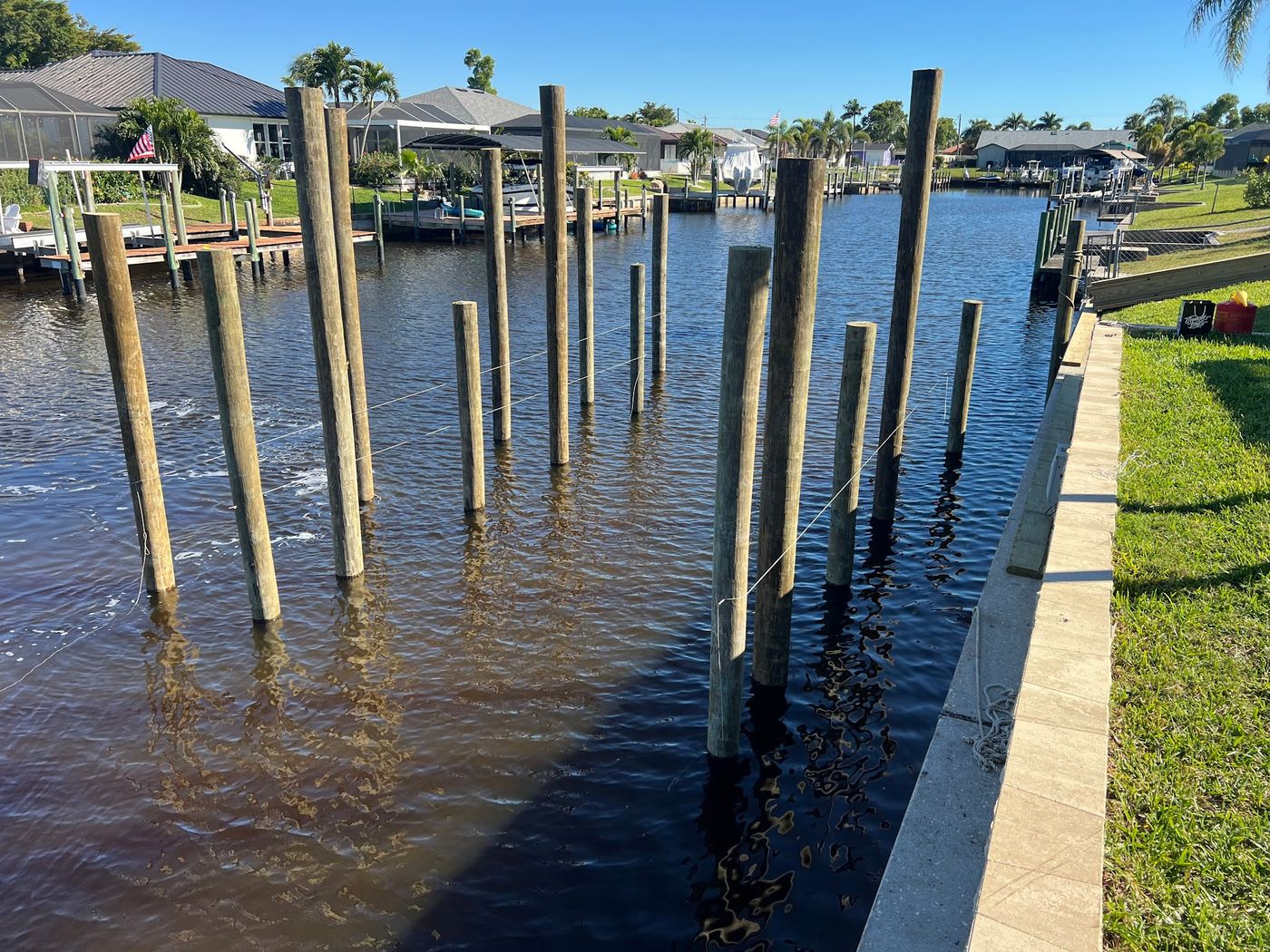
Every photo is our own work on SW Florida water. Click any of them to look closer.
Rated 5.0, 112 reviews
“Alex and his workmanship was above what I had expected ... I would highly recommend him and his team with any other customer. 10 star rating. Along with being very fairly priced.”Lou Luongo · Google
Some pilings are past wrapping
The wrap is the easy sell, which is exactly why we are careful with it. A wrap on a sound piling buys you a long stretch of time for very little. A wrap on a piling that is already hollow buys you nothing but a tidy cover over a problem that keeps getting worse out of sight, right up until the day it does not.
So we read every piling before we wrap it: how it sounds when it is struck, whether it has necked in at the waterline, how much solid wood is left under the growth, and whether it is carrying a lift or just a walkway. Then you get the honest move for that piling, one at a time. Sometimes the answer is a wrap. Sometimes it is a new piling. And sometimes it is that the piling is fine, leave it alone, call us when something changes.
| Solid wood, surface growth only | Wrap it. This is the case wraps were made for: nothing lost yet, protection on before the borers get started. |
|---|---|
| Soft at the waterline, still solid inside | Usually wrap it, once we clean back and find out how deep the soft wood goes. Caught here, a wrap is doing real work. |
| Necked in, hollow when struck | Do not wrap it. The strength is already gone and a wrap only hides that. This one wants a new piling, not a cover. |
| Leaning or shifting under load | Not a wrap question at all. Something below the mudline is letting go, and that gets solved with pilings, not protection. |
Piling Wraps questions
Often paired with this
Piling Installation
When a wrap is not enough, this is the fix. New pilings driven from the barge, straight and deep, in place of the ones that are gone.
See the service Related serviceFree Dock Inspections
Wrap or replace gets settled here, piling by piling, in a free straight report before you spend anything.
See the service Related serviceDock Repair & Re-Decking
Sound pilings under a tired deck mean a re-deck, not a rebuild. Wraps and fresh boards often go on the same trip.
See the service GuidePiling Wraps vs. Replacement: How to Tell Which You Need
How to tell whether your dock pilings can be wrapped or need replacing: the waterline signs SW Florida canal owners can read for themselves at low tide.
Read the guideWrap them while there is wood to save
Tell us your canal and what your pilings look like at low tide. We will come read them, free, and tell you which ones to wrap and which ones to replace.
Open 7 AM to 7 PM, 7 days a week · Call or text