 CC
CC 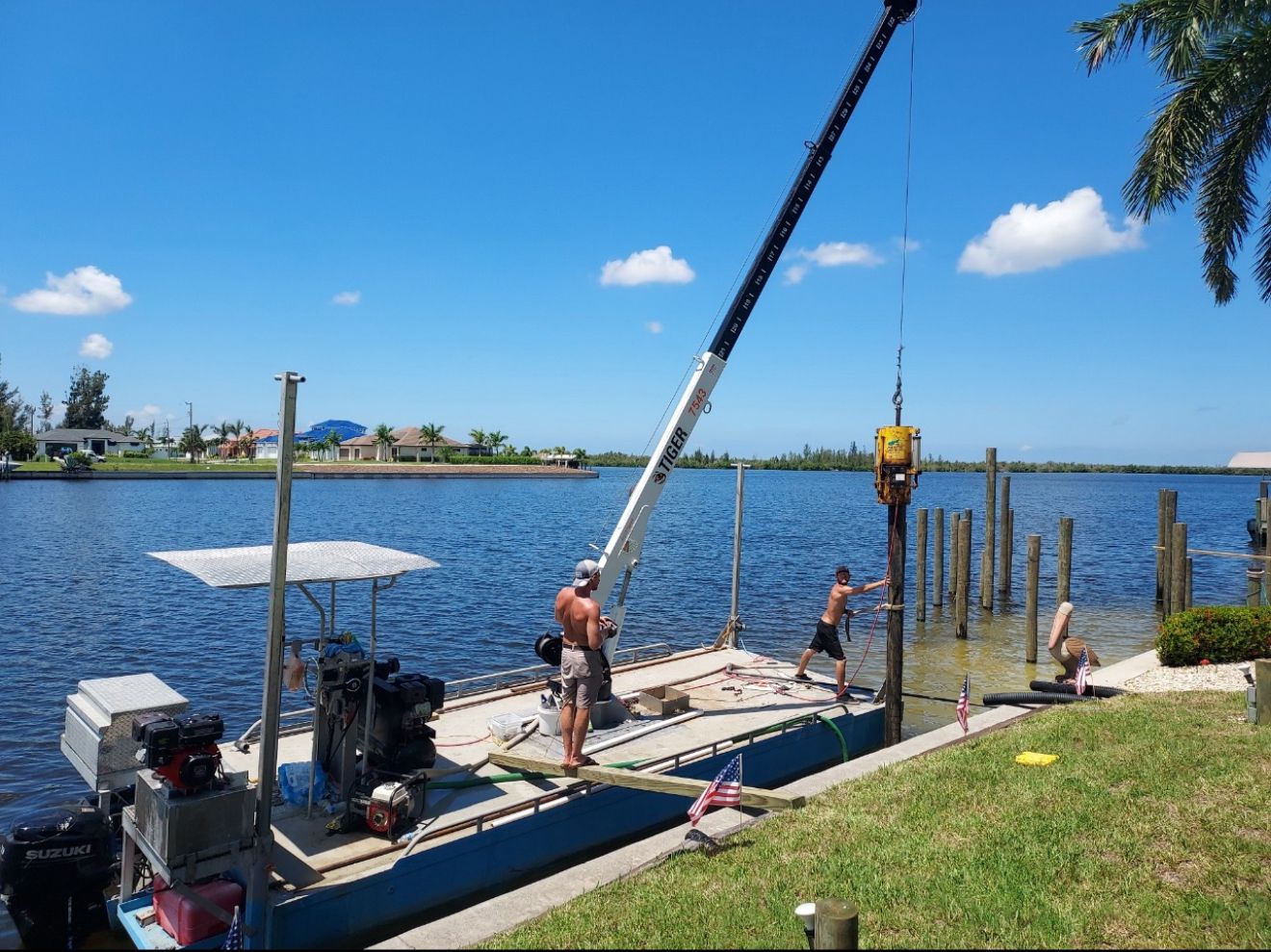
Build · 02 · Piling Installation
Everything above the water stands on what is below
Pilings are the whole ballgame. We set new ones from the barge, straight and deep, for new docks, failing docks and boat lifts. Nothing comes through your yard to get there.
Docks give out from the bottom up
The dock is what you notice. The pilings are what goes first. They stand in salt water all year, take the wet and dry cycle at the waterline, and feed marine borers that work from the outside in, in exactly the band you cannot see from the deck.
So the warning arrives late, and it arrives through the dock. A board that flexes where it never used to. A rail drifted out of line. A lift sitting a little crooked in its cradle. By then the piling has been losing ground for a while, and its neighbors are quietly carrying what it stopped carrying.
That does not mean the whole dock is finished. Most piling work is surgical: a few replaced, the rest sound and worth protecting. We look at every one of them and tell you which is which, before anything is ordered.
Every job covers
New pilings for docks, lifts and platforms
Pilings for a build going up from nothing, an addition to a dock you already have, or a lift that needs its own legs to stand on.
Replacement of failing pilings
Leaning, rotten or borer-eaten pilings pulled and replaced, and the sound ones left alone. We do not replace a whole row when only a few are gone.
Driven from the barge
All of it happens from the canal side. No crane through your gate, no ruts across the lawn, no yard access needed at all.
Straightness and depth checked as they go
Every piling gets checked while it is being set, not after the fact. A piling out of line does not get corrected later, it gets driven right the first time.
Wrap-ready prep
Pilings are left clean and ready so protective wraps can seal the waterline right away, which is the simplest moment they will ever be protected.
Permit guidance
We scope the work around Lee County and City of Cape Coral dock rules and walk you through the permit steps before anything gets driven.
How a new piling goes in
Free inspection
We come out and look at every piling, at the waterline and below it. You get a straight read on which are sound, which are wearing and which are done.
Plan around what stands
Good pilings stay. We plan the replacements around the dock and lift you already have, so the job stays surgical instead of turning into a teardown.
Barge in, drive from the water
The barge comes down the canal and the crew works off it. Pilings go in plumb and set deep for what they carry, with the structure around them protected.
Tie in and hand back
New pilings get tied into the frame or the lift, hardware set, and we walk the finished work with you. Wraps can go on while everything is still fresh.
Real work, real water
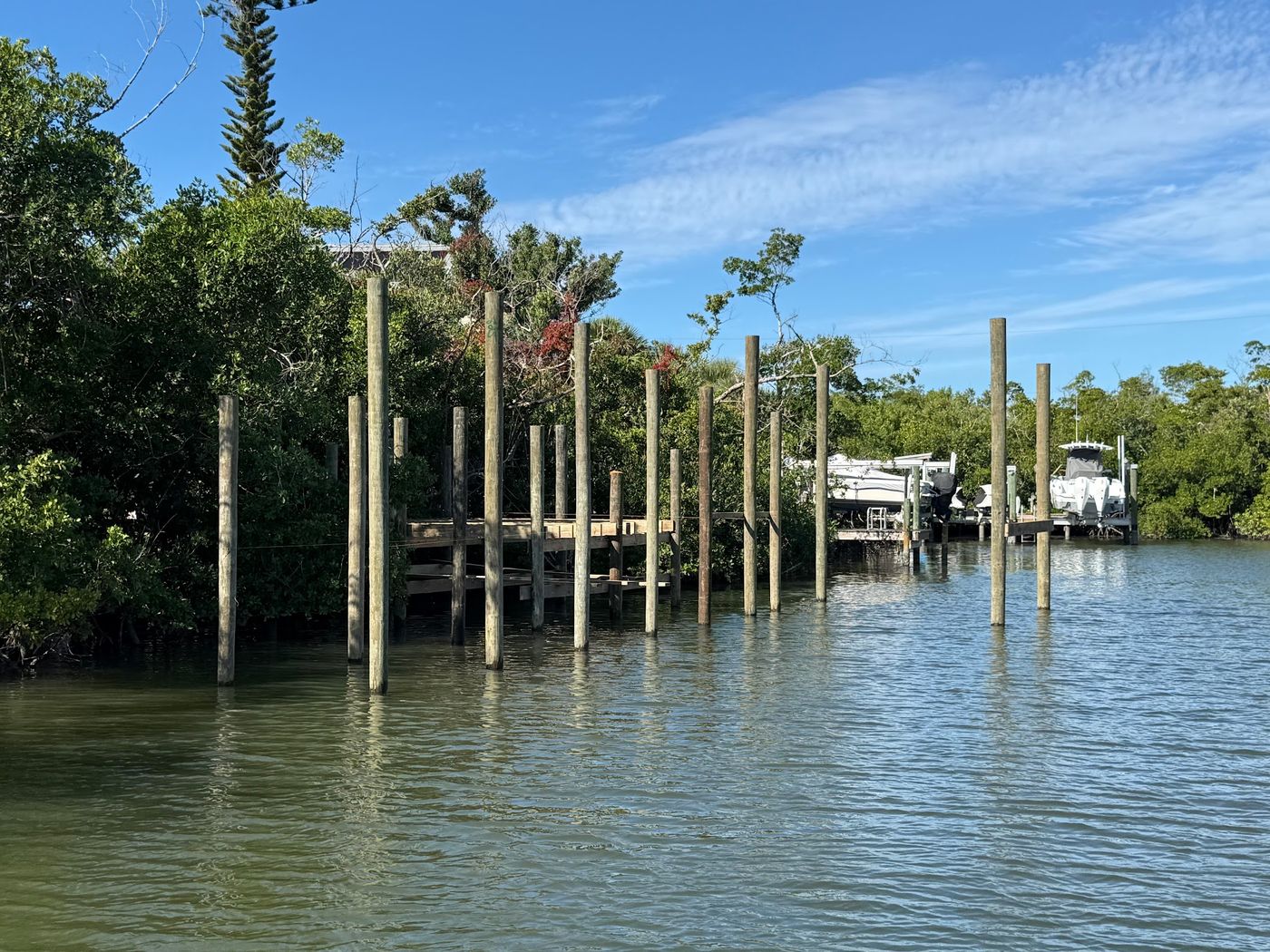
Every photo is our own work on SW Florida water. Click any of them to look closer.
Rated 5.0, 112 reviews
“Alex, and crew were able to get the job done quickly (when other contractors were months out). ... My dock is now finished and I could not be happier! I would highly recommend Alex for your dock building needs.”John Anderson · Google
Lean, softness and necking
Pilings almost never fail at the top, where you can see them. They fail in a band at and just under the waterline. That is the zone that is wet, then dry, then wet again, the zone that grows barnacles, and the zone marine borers treat as an open invitation. Wood there gives up first while the rest of the piling still looks perfectly fine from the deck.
So you learn to read the signs instead of waiting for the failure. A lean means the piling has moved. Soft wood at the waterline means the outside is going. Necking, where the diameter pinches in like an hourglass, means it has been going for a while. None of that is cause to panic. All of it is cause to look now, rather than after storm season is already on you.
| Lean, or a piling out of line with its row | It has moved. Either the bottom stopped holding it or something pushed it. Load it used to carry is now sitting on its neighbors. |
|---|---|
| Soft or crumbling wood at the waterline | The wet and dry band is doing its work. This is where pilings go first, and where a wrap earns its keep on the ones still sound. |
| Necking, where the diameter pinches in | Material has been eaten out of a band, usually by borers and abrasion. The piling is thinner than it looks from up on the deck. |
| Movement or sway when you walk the dock | The frame is telling you about something underneath it. Worth looking at the pilings before the boards take the blame. |
| Rust bleed and loose hardware at the connection | Salt is working the connection points. Sometimes that is just hardware. Sometimes it is wood that no longer holds a fastener. |
Piling Installation questions
Often paired with this
Free Dock Inspections
Not sure which pilings are tired and which are fine? The free inspection gives you a straight report, piling by piling.
See the service Related servicePiling Wraps
New pilings are the easiest time to protect the waterline, and wraps seal the exact band that takes them out.
See the service Related serviceBoat Lift Installation
A lift belongs on its own dedicated pilings, set for the load it carries, not borrowed from the dock frame.
See the service GuideWhy We Work From the Barge (and What It Means for Your Yard)
Barge-based dock and lift work on SW Florida canals: what floating the job site actually involves, and why your lawn, irrigation and seawall stay out of it.
Read the guideFind out what is holding you up
Send a photo of your pilings, or just tell us what the dock is doing. We will come look, free, and tell you which ones are solid and which ones are living on borrowed time.
Open 7 AM to 7 PM, 7 days a week · Call or text