 CC
CC 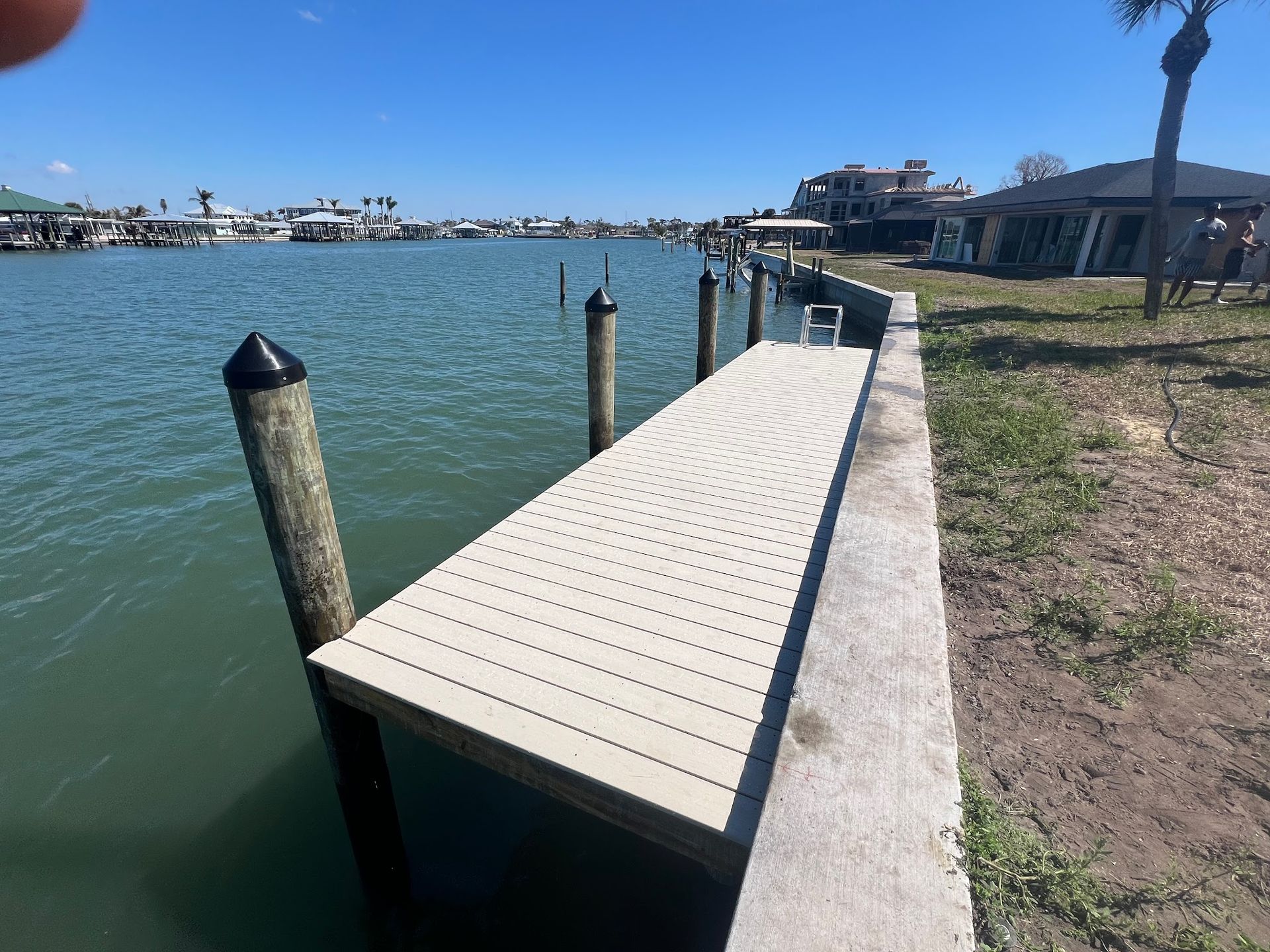
Guide · 09 · Water Type
Your water decides the whole build
A canal dock, a bay dock, a river dock and an island dock can look like the same job from the street. Underneath the deck they are not. The water you sit on sets the piling depth, the hardware and the way we get there.
Two docks, one design, one of them fails
Owners shop docks the way they shop kitchens: they see one they like, they want that one. Fair enough. But a dock is not furniture, it is a structure standing in whatever water is behind your house, and SW Florida hands out very different water within a short boat ride.
A dock tucked deep in a canal grid lives a sheltered life. Wind has nowhere to build, wake dies against the seawalls, and the load on the structure is mostly your boat and your feet. Move that same design to open bay water, a river bend with current, or the exposed side of an island, and it starts absorbing forces it was never drawn for. Nothing dramatic happens on day one. It shows up later as loose connections, working fasteners and pilings that no longer feel planted.
So before we talk decking or lift models, we read your water. Fetch, wake, current, depth, bottom, exposure and access. That reading is what the rest of the build answers to.
The variables that move the build
Fetch, the distance wind gets to work
Fetch is how far open water runs before it reaches your seawall. A narrow canal gives wind almost none, so chop stays small. Open bay gives it plenty, and the same afternoon breeze arrives as real water movement. More fetch means the structure needs more honest piling depth and tighter frame connections, because the load never fully stops.
Wake, the load nobody plans for
Wake is the traffic tax on your dock. A quiet residential canal gets slow no-wake traffic. Channels, river runs and bay-side water get boats that are actually going somewhere. Repeated wake pushes and pulls at the connections, works fasteners loose over time, and is exactly why hardware selection is not a detail.
Current and tide swing
River and pass-adjacent water moves, and it moves both ways. Current loads the pilings sideways and scours at the bottom around them, while a bigger tide swing changes how much piling sits wet, dry or cycling between the two. Both push the design toward deeper set pilings and more protection at the waterline.
Exposure, which is really salt and sun
Every dock here is in salt water, but exposure decides how hard the salt works. Open, breezy water carries spray onto bolts, brackets, lift cables and motors that a sheltered canal dock never sees at that rate. Same fasteners, faster clock. That is why exposed builds get salt-rated hardware treated as structural, not cosmetic.
Bottom and depth at your seawall
What is under the water matters as much as what is on it. Soft bottom, hard bottom, shallow shelf, oyster and shoal edges, deep canal cut: each one changes how a piling behaves once driven, how far the walkway has to run to reach usable water, and where a lift can realistically sit.
Access, which decides the schedule
Island and back-bay addresses are often easy to build and hard to reach, at least by road. Since the crane, pilings, lumber and crew ride the barge, water access is the access we care about. If we can float to your seawall, the location stops being the hard part.
How we read your water
Stand on the seawall and look out
The first question is simple: how far can you see open water from your dock line? That answer, more than any brochure, tells us what wind and chop will do here on a working afternoon.
Watch what goes by
Traffic type and speed tell us the wake story. A back canal where everyone idles is a different structural problem from water that feeds a channel or a run out to the Gulf.
Check the water itself
Depth at the seawall, tide swing, current, bottom conditions and how much piling will cycle wet and dry. This is where piling depth and waterline protection get decided, and it is why we look instead of guessing.
Plan the approach
Every job runs off the barge, so we plan the water route in with the build: where the barge sets up, where materials stage, how the crane works your specific seawall. Your yard is not part of the plan.
Draw it around the answers
Only then does the dock get laid out: layout, piling plan, hardware and lift placement, all matched to your water. We scope the build around Lee County and City of Cape Coral dock rules and walk you through the permit steps. Outside of that, rules differ by city and county, and we tell you what your project runs into.
Real work, real water
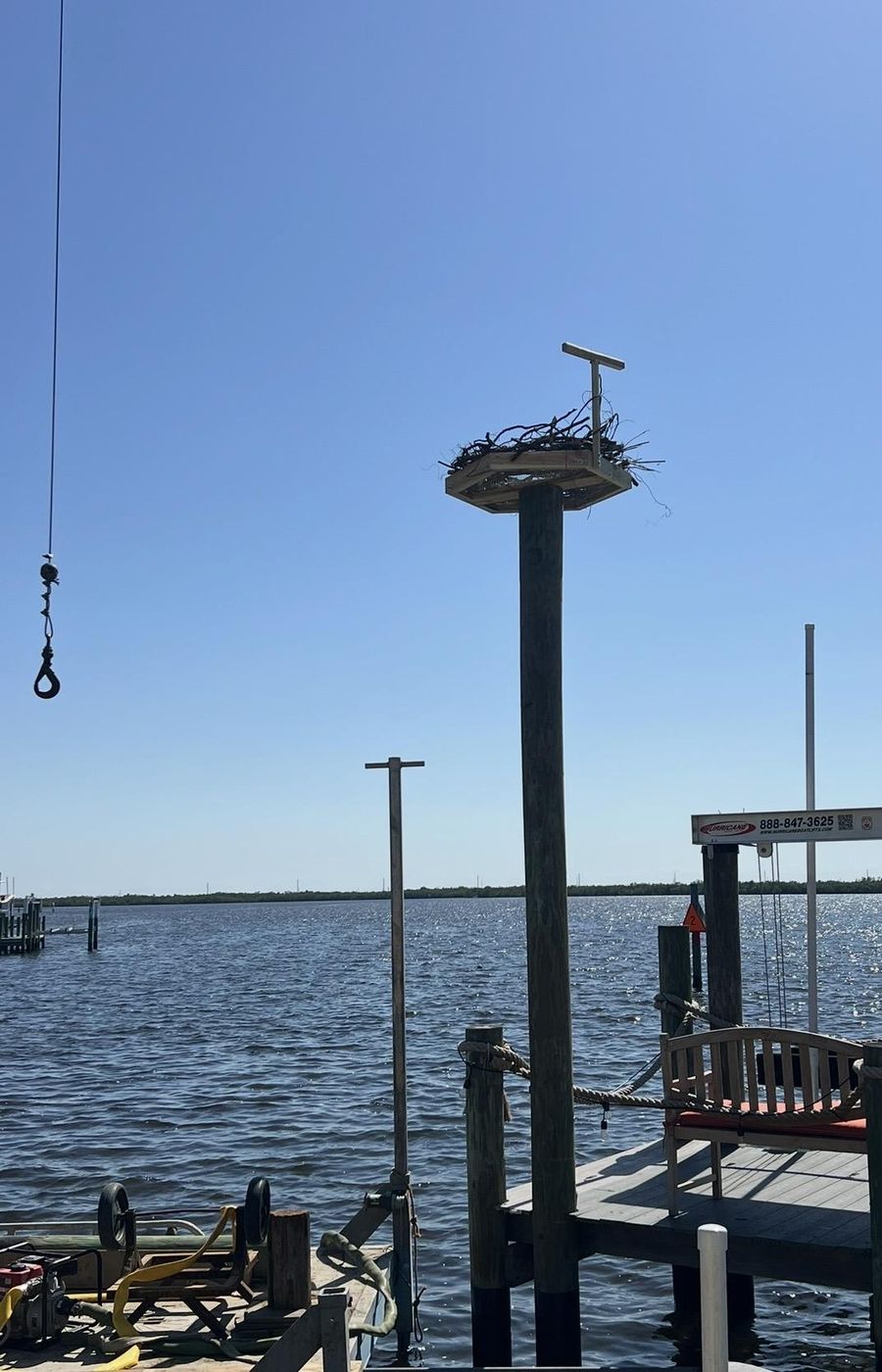
Every photo is our own work on SW Florida water. Click any of them to look closer.
Rated 5.0, 98 reviews
“Hiring Alex and his crew was a great decision! First and foremost they showed up when they said they would and perhaps even more important, finished when they said they would. ... I only wish I'd hired Alex from the start.”Vince Kotlarz · Google
Protected is not the same as still
The most common misread we run into is owners assuming a protected address means an easy one. Protected usually describes what the water does in bad weather, not what it does every day. Plenty of protected water still carries steady traffic, moves with the tide, and hands your pilings a wet-dry cycle that never takes a day off.
The flip side is just as common. Owners on open water assume their location makes a good dock impossible, or at least exotic. It does not. Open water is not harder to build on, it is just less forgiving of a build that was drawn for somewhere calmer. The materials are the same materials. The difference is depth, connection detail and how seriously the waterline gets protected.
Which is the real point of this guide: there is no single right dock for SW Florida, and anybody quoting you one without looking at your water is quoting a picture, not a project.
| Sheltered canal | Low fetch, modest wake, steady salt. The gentlest of the four, which is why a canal dock lives or dies on waterline protection and honest piling depth rather than on brute exposure. |
|---|---|
| Open bay or Sound | Wind builds across open water and wake arrives from boats with somewhere to be. Deeper set pilings, tighter frame connections, and hardware chosen for spray, not just splash. |
| River and moving water | Current loads pilings sideways and scours around them, and tide swing widens the wet-dry band. Depth and waterline protection carry more of the job here. |
| Island and barrier water | Wind and wake on the water side, plus a logistics problem on the land side. Since the whole job travels by barge anyway, the exposure is the real design driver, not the address. |
How Your Canal, Bay or River Location Changes Your Dock Build questions
Where to go from here
New Dock Construction
Every build starts by reading your specific water, then drawing the dock around what it asks for.
See the service Related guideWhy We Work From the Barge (and What It Means for Your Yard)
However your water differs, the approach does not change. The barge comes to the seawall either way.
Read the guideTell us what you look out at
Canal, bay, river or island, the answer starts the same way: the owner comes and stands on your seawall, free, and tells you straight what your water needs.
Open 7 AM to 7 PM, 7 days a week · Call or text