 CC
CC 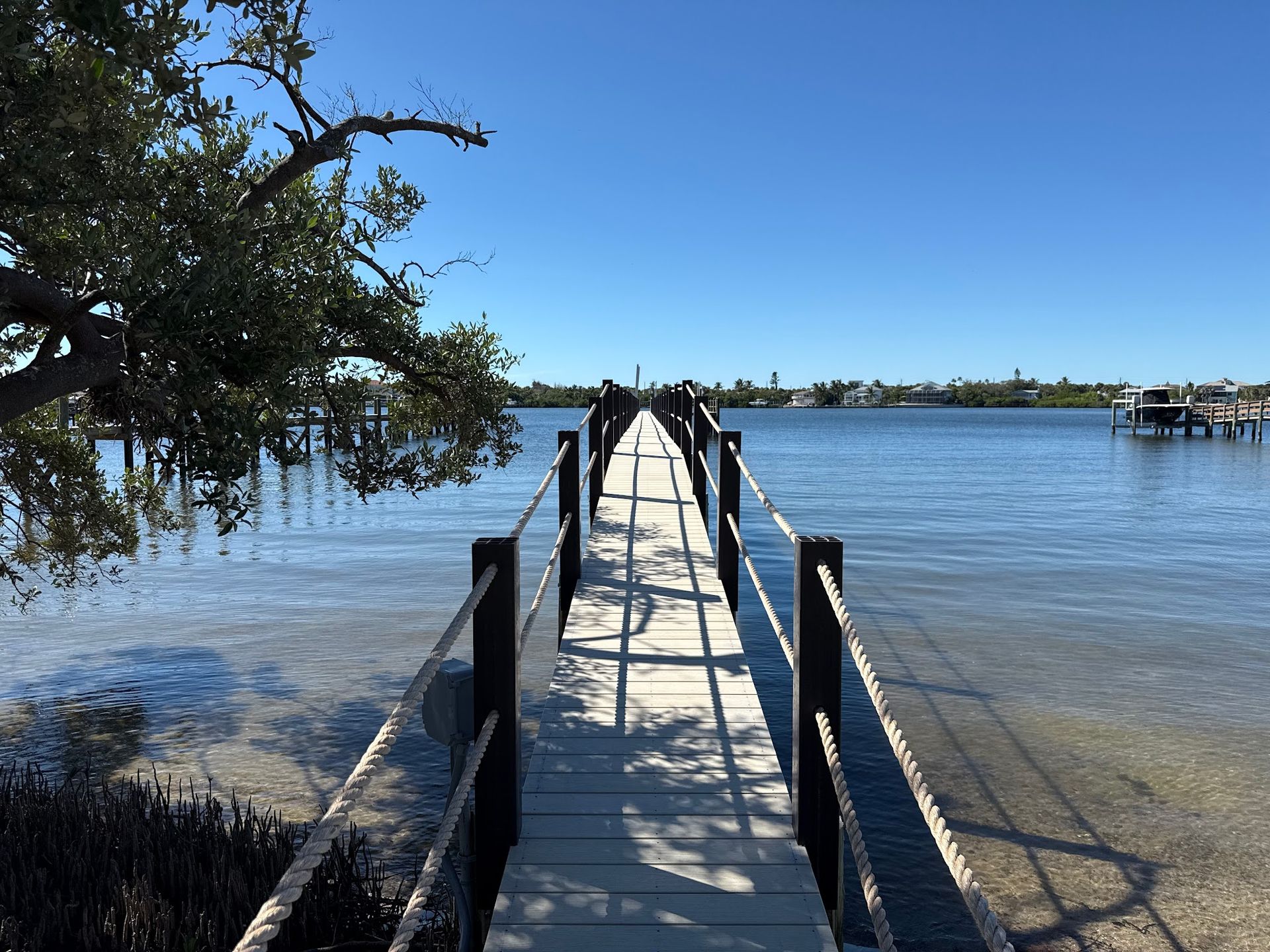
Guide · 11 · Buying Waterfront
The dock is part of what you are buying
Nobody tours a waterfront house and studies the pilings. They walk to the end of the boards and picture the boat tied up. Here is what to actually look at before you close, and what can wait until the keys are yours.
The rest of the house is not standing in salt water
House hunting on the water goes about the same way for everybody. You study the kitchen, the roof, the windows, the air handler. Then you walk out back, stand at the end of the dock with your agent, and picture where the boat goes. Almost nobody kneels at the deck edge and looks underneath. The dock reads like a bonus that came with the lot, not like a structure with a condition of its own.
It is a structure, though, and it is the only part of the property living full time in salt water. Boards, frame, pilings and lift each age on their own schedule, and none of those schedules pause for a closing date. Whatever shape the dock is in the day you sign is the shape you inherit, along with whatever the last owner had been quietly stepping around.
The good news: a dock gives up most of its story to anyone willing to spend a few minutes on it. You do not have to be a builder to tell honest wear from something structural. You just need to know where to put your eyes and where to put your weight.
What to look at while you are still deciding
The piling row, read from the seawall
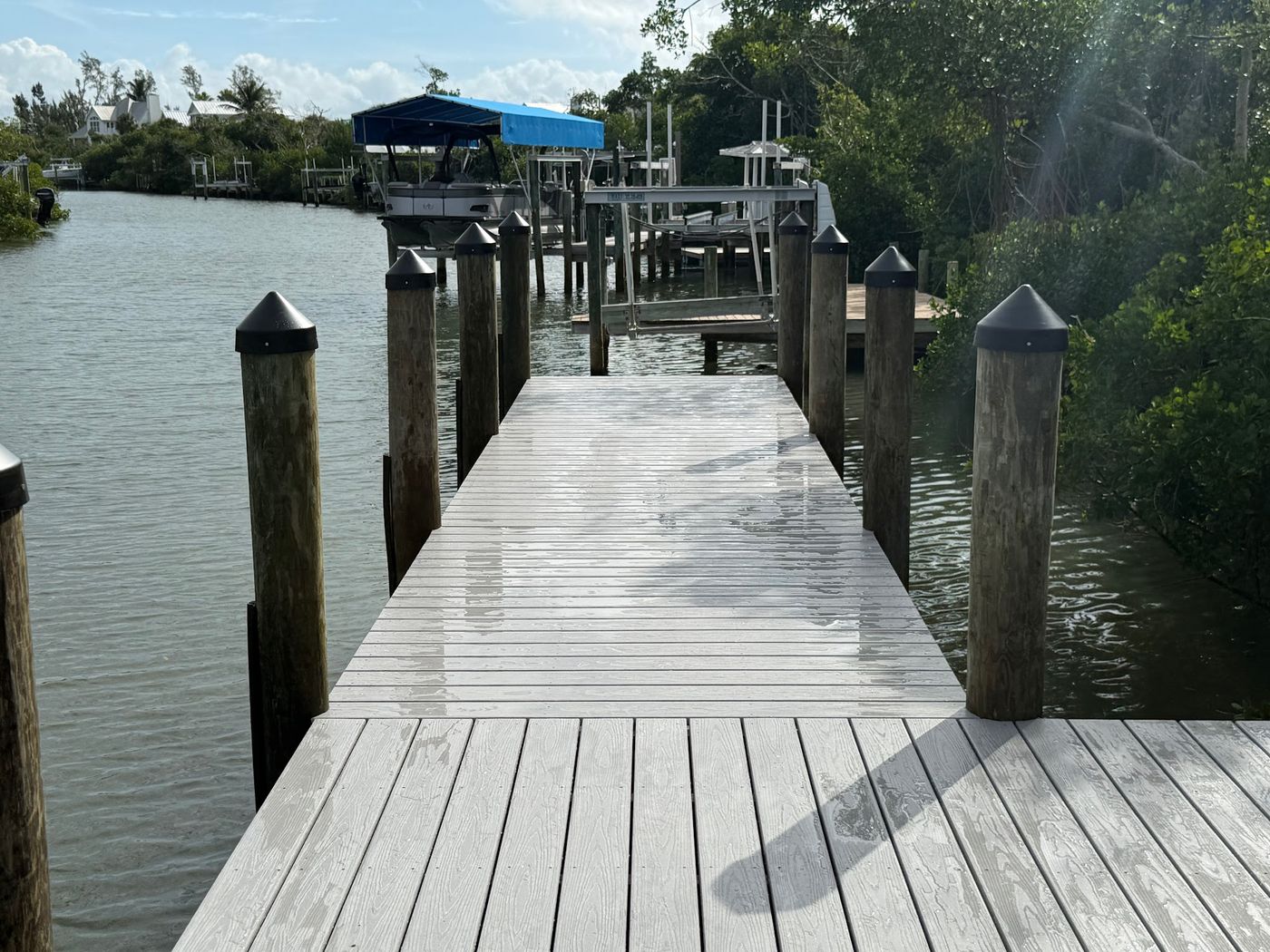
Sight down the line the way you would sight a fence. Pilings should read straight and evenly spaced, and a lean that only shows on one of them is worth noting. Then look at the band right at the water. That wet and dry zone is where borers, barnacles and salt do their work, and a pinched waist down there outranks anything happening up on the deck.
How the deck feels, not how it looks
Do not just walk the centerline. Step toward the edges, near the cleats, and anywhere that stays shaded and damp. You are feeling for flex, and for a board that shifts against its neighbor. A showing is the one time you are welcome to put real weight on somebody else's dock, so put it there.
Repairs somebody already made
A few boards newer than the rest. One bright stringer under old framing. Fresh paint on a single post. None of that is bad news by itself, and some of it is a seller taking care of the place. What it tells you is where the dock has needed help before, which is usually where it will ask again.
The lift, if the property has one
A lift sitting still tells you close to nothing. Look at the cables for fray, rust and uneven winding on the drums. Look at how the bunks and cradle hang. Then ask for it to be run while you are standing there. A groan, a shudder or a cradle sitting crooked is much better learned now than in your first season.
Hardware and the places metals meet
Bolts, brackets, ladder mounts, cleats, beam connections. Rust weeping down from a bolt head is the fastener telling on itself. A dock holds together at its connections, and salt finds those before it finds anything else, so the stains are worth more attention than the color of the boards.
What was built, by whom, and on paper
Ask the listing side who built the dock, what has been repaired, and whether there is paperwork for the work that was done. Unpermitted structural work has a way of surfacing later, at sale or insurance time, and asking the question during a showing is far easier than untangling it after the keys change hands.
How to work it into your showings
Use the first visit
You are already out there with your shoes off half the time anyway. Walk to the end, feel the boards, sight the piling row from the seawall, glance at the lift. It costs you a few minutes and it is the difference between an impression of the dock and an actual read on it.
Come back at low tide
Low water is when pilings stop hiding. Necking, softness, cracking and heavy growth all show themselves once the tide drops off them. If you get a second showing, spend part of it at the seawall looking down instead of out at the canal.
Ask plain questions, take plain photos
Who built it, what has been fixed, has the lift been serviced, is there paperwork. Then photograph the deck surface, the frame from the edge, the piling row and the lift from a couple of angles. Those photos are what let you compare two properties honestly instead of by memory.
Keep the dock in the conversation
If what you found looks structural, it belongs in the same discussion as everything else that comes up while you are under contract. Your agent handles that part. Knowing what the work actually involves is what makes it a real conversation instead of a number pulled out of the air.
Get it read once the place is yours
After closing, book the free inspection. The owner walks the dock and the lift, checks the pilings at and below the waterline, reads the frame and hands you a straight summary: what is solid, what is wearing, what needs attention now and what can wait. That is the moment you finally know what you bought.
Real work, real water
Every photo is our own work on SW Florida water. Click any of them to look closer.
Rated 5.0, 98 reviews
“Alex, and crew were able to get the job done quickly (when other contractors were months out). ... My dock is now finished and I could not be happier! I would highly recommend Alex for your dock building needs.”John Anderson · Google
New owners call about the board they already knew about
The calls that come in from recent buyers follow a pattern. Somebody closes, enjoys the water for a season, and then a busy weekend with guests finds the one board everybody had been unconsciously walking around. It was not hiding. It simply never took any weight during a showing, because showings happen on pleasant mornings and no buyer stress tests a stranger's dock.
The other direction is just as common, and worth saying out loud. Plenty of docks that look rough are structurally fine, and buyers talk themselves out of good water over grey boards and a little growth at the waterline. Looks and condition are two separate reports. Which one you are actually holding decides whether the answer is a fresh deck on bones you already own or a conversation that starts below the water, and nobody settles that from listing photos.
| Grey, splintery boards | Cosmetic on its own. Sun and salt do that to sound wood on their own schedule. Worth a careful feel underfoot, not worth walking away over. |
|---|---|
| A piling out of the row, or soft at the waterline | Structural, and the one sign worth slowing down for. Everything you can see above the water is standing on what is below it. |
| A lift nobody has run lately | An unknown until it moves. Cables, bunks, cradle and motor all report differently under load than they do sitting still, so ask to see it cycle. |
Buying a Waterfront Home: What to Check About the Dock First questions
Where to go from here
Free Dock Inspections
The next step once you own the place: the owner reads the dock, the lift and the pilings and hands you a straight summary.
See the service Related guideSigns Your Dock Needs Repair Before It Needs Replacing
What those visible warning signs actually mean, sign by sign, once you are the one standing on the boards.
Read the guideFind out what you actually bought
Tell us the canal and what you noticed at the showing. The owner will come walk the dock and the lift, free, and give you a straight read on where it stands.
Open 7 AM to 7 PM, 7 days a week · Call or text