 CC
CC 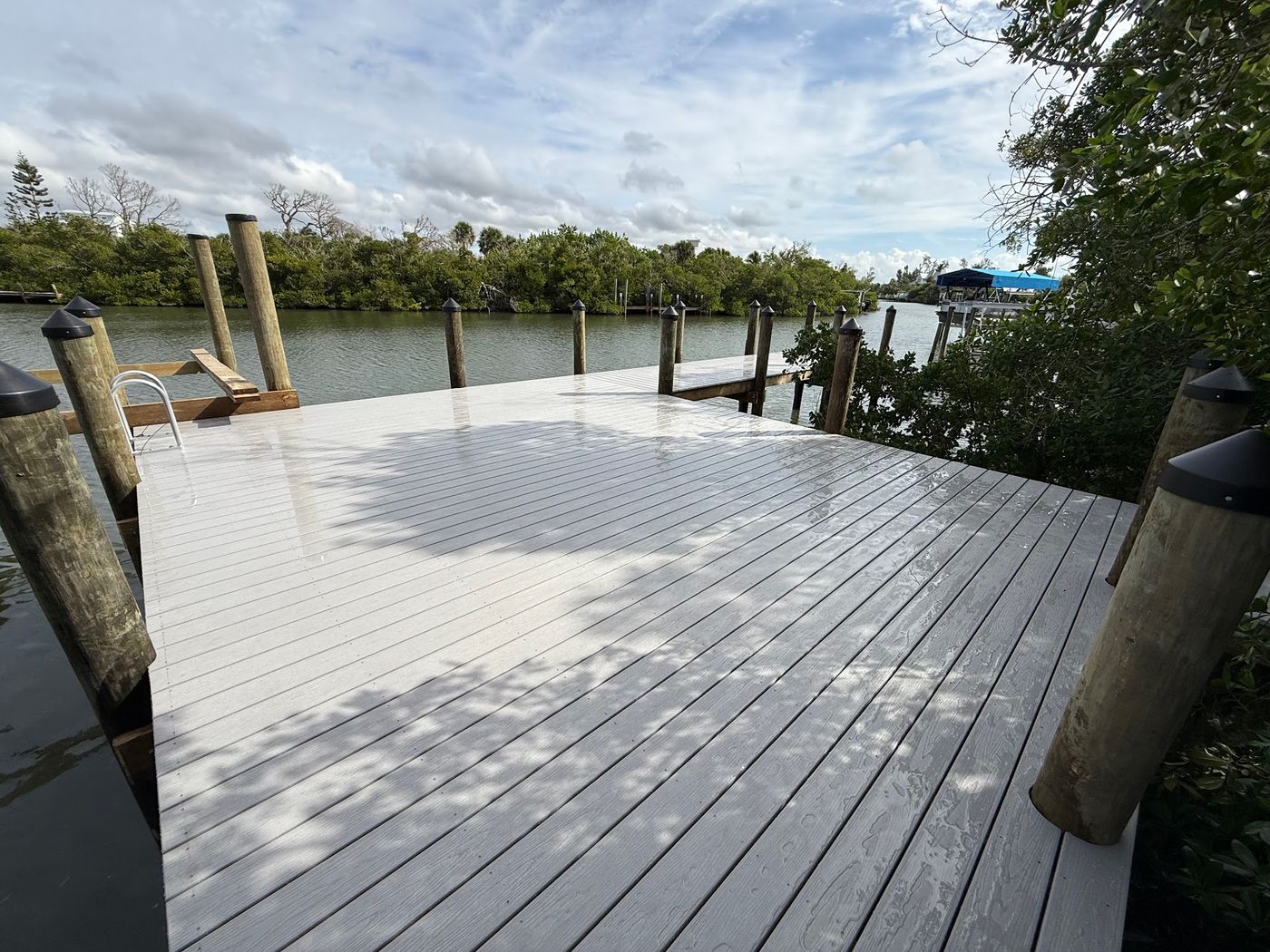
Guide · 02 · Decking
The board you walk on, honestly compared
Composite or pressure-treated is the decision owners spend the most time on and get the least straight talk about. Here is how the two actually behave on a SW Florida dock: heat, upkeep, color, feel, and the part underneath that outlasts both.
You are not picking a board, you are picking a routine
Most owners come at this like a shopping question: which one is better. It is the wrong frame. Both materials build a dock that works. What separates them is what your next several summers look like, how the deck feels at noon in August, and whether you are the kind of person who will get out a sander and a can of sealer on a Saturday.
That is why the same two options land differently on two docks in the same canal. A barefoot family deck where the kids run out with wet feet has one obvious answer. A working dock that takes fish blood, cast nets, ice chests and the occasional dropped anchor may have another. Neither of those owners is wrong, and neither should be talked into the other one's board.
So we quote both when it is a close call, and the owner tells you which way he would go on your dock and why. You get the reason, not just the recommendation.
Six things that decide it for you
Heat underfoot
This is the one nobody warns you about and everybody notices. Any deck in unshaded Florida sun gets hot by midday, and dark composite gets hottest of all because dark surfaces absorb more of it. Lighter composite colors run noticeably cooler than dark ones, and weathered pine sits somewhere in the middle. If your dock has no shade and bare feet are the point, color choice matters more than the material choice.
The upkeep rhythm
Pressure-treated pine wants a routine: cleaning, and sealing on a repeating schedule, forever. Skip it and the boards go grey and start to check and splinter. Composite wants a wash and not much else. Neither is maintenance free, because salt spray and canal grime land on both, but only one of them puts a project back on your calendar every so often.
How the color ages
Pressure-treated pine weathers toward grey no matter what you do, which some owners genuinely like and others fight with a stain can. Composite holds its color far better, but it is not frozen in time either: expect it to settle a shade or so in the first stretch of full sun and then hold steady. Ask to see a board in daylight, not under store lights, before you commit to a color.
Feel and splinters
Composite is uniform underfoot. No grain to lift, no splinters, and the surface stays consistent board to board, which matters if kids and dogs use the dock the way kids and dogs do. Pine is real wood and behaves like it: it can cup, check and raise a splinter as it ages, and it responds to being sanded and sealed. The difference shows up barefoot before it ever shows up in a photo.
Living in salt spray
Both materials are built for exterior water work, and both spend their lives getting hit with salt, sun and wet-dry cycling. Composite does not care about rot. Marine-grade pressure-treated pine is treated to stand up to it, and it does, as long as it is maintained. What eats docks in SW Florida is rarely the deck surface anyway. It is what is happening lower down, at and below the waterline.
The frame is the real lifespan
Boards are a wear layer. They are supposed to be replaceable. The stringers, the frame and the pilings under them are what actually decide how long your dock stands, and salt-rated fasteners are what decide whether the deck stays tight to the frame. A premium board on tired bones is money spent on the wrong layer, and we will say that out loud instead of selling you the upgrade.
How to land the decision in one visit
Start with how you use the dock
Barefoot family deck, fishing platform, boat access and nothing more. Say it out loud, because the honest answer to that question narrows the choice faster than any material comparison does.
Be honest about maintenance
Not what you intend to do. What you actually do. If sealing a deck on a schedule sounds like something you will genuinely keep up with, pine stays firmly on the table. If it sounds like a chore you will skip twice and then feel bad about, that is useful information and it is not a character flaw.
Look at your sun
Walk out and see how much shade the dock gets and when. A deck that bakes from midmorning on is a different problem from one that sits in afternoon shadow, and it should steer your color even more than your material.
Check the frame before you shop boards
Sound the deck, look at the stringers and look hard at the pilings at the waterline. If the bones are gone, the board conversation can wait, because you are having a different conversation. That is exactly what the free inspection settles.
Get both quoted side by side
On a close call we quote both so you can see the choice instead of guessing at it. Then the owner tells you which one he would put on your dock, in your canal, for the way you actually use the water.
Real work, real water
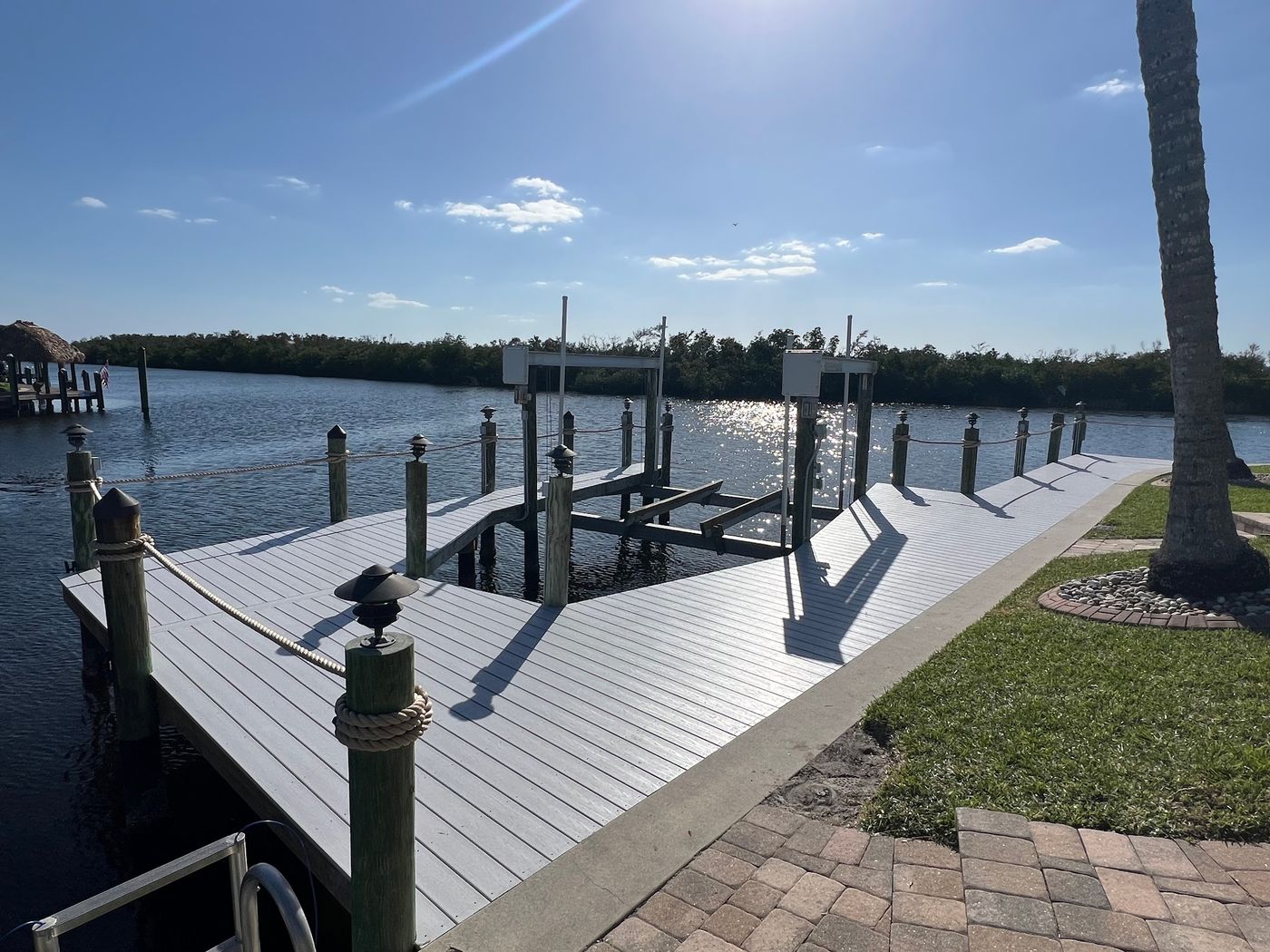
Every photo is our own work on SW Florida water. Click any of them to look closer.
Rated 5.0, 98 reviews
“I'm a pretty particular person when it comes to Detail and Alex and his crew gave very great attention to detail. The best I've seen. Love my Dock and couldn't be happier with the results.”Duane Needham · Google
The board you regret is usually the wrong color
Owners rarely come back unhappy about the material they picked. When somebody does say they would change something, it is almost always the shade: a deep, handsome color that looked perfect on a sample and turns into a hot plate on an unshaded dock in July. The material argument gets all the attention and the color decision quietly does more to your daily experience of the dock.
The other thing worth saying plainly: decking is the one part of a dock that is meant to be swapped. It sits on top, it takes the abuse, and one day it comes off and a fresh deck goes down on the same frame. Owners who understand that stop treating the board choice as permanent and start putting their attention where it belongs, on the structure holding it all up.
| Heat underfoot | Dark composite runs hottest in unshaded sun. Lighter composite runs cooler. Weathered pine falls in between. On a bare-foot dock with no shade, pick the color for heat first and looks second. |
|---|---|
| Upkeep | Pine asks for cleaning and sealing on a repeating schedule, indefinitely. Composite asks for a wash. That difference compounds every single year you own the dock. |
| How it ages | Pine drifts toward grey unless you keep after it. Composite settles slightly in its first stretch of full sun, then largely holds. Both collect salt film either way. |
| What decides lifespan | Neither board. The pilings, the frame, the stringers and salt-rated fasteners under the deck decide how long the dock stands. Boards are the layer you get to replace. |
Composite vs. Pressure-Treated Decking questions
Where to go from here
Dock Repair & Re-Decking
Already have decking that has reached the end of its run? This is the re-deck itself: old boards off, frame repaired, new surface down.
See the service Related serviceNew Dock Construction
Choosing decking is one decision inside a whole new build, from layout on the seawall to the boat tied to your cleats.
See the serviceWalk both boards on your own dock
Call or text and tell us your canal and how you use the water. The owner comes out free, sounds the deck, checks the frame underneath and tells you which board he would put down and why. Open 7 AM to 7 PM, 7 days a week.
Open 7 AM to 7 PM, 7 days a week · Call or text