 CC
CC 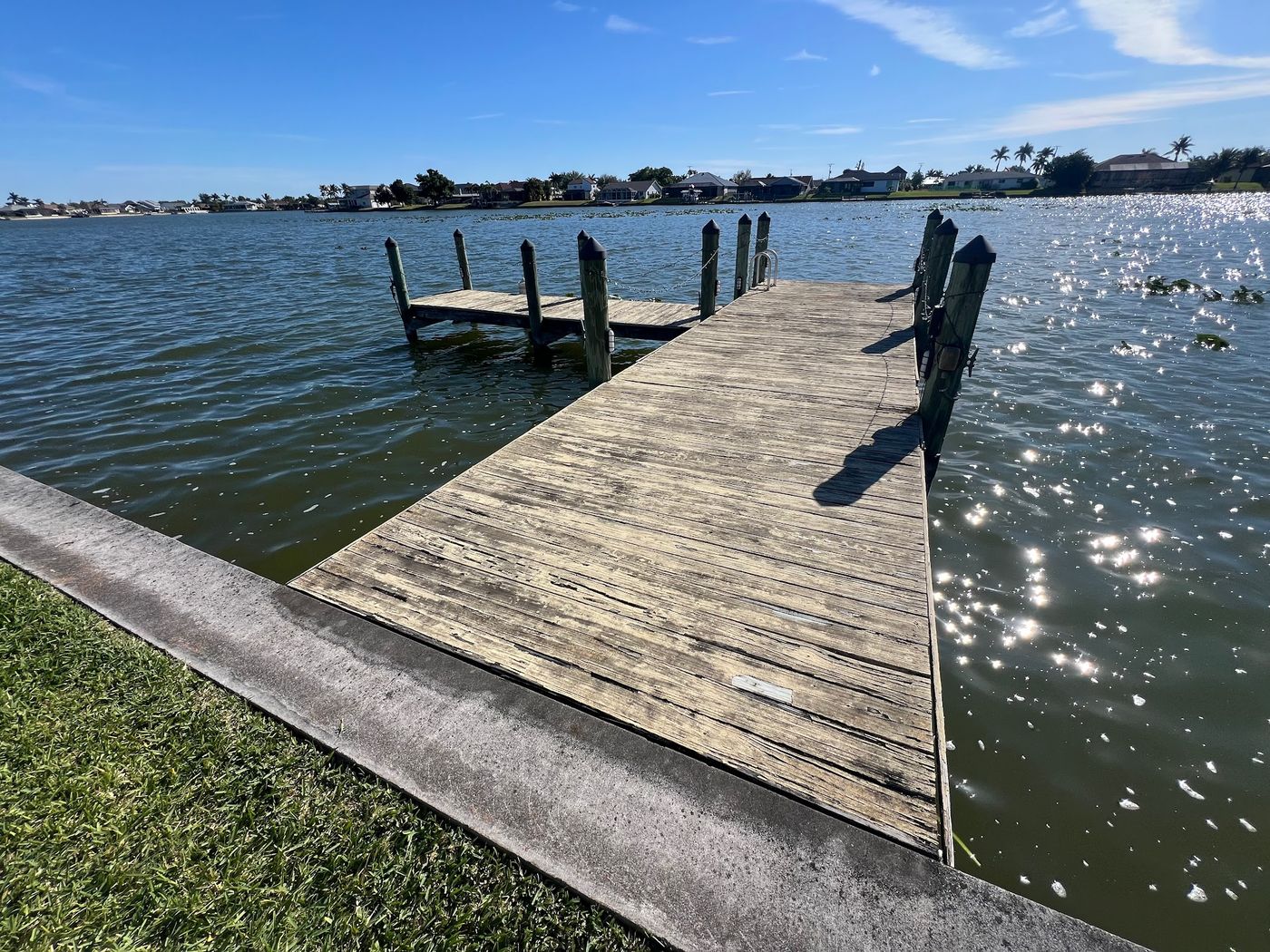
Guide · 06 · Warning Signs
Your dock warns you long before it quits
Salt water gives you notice. A board that gives a little, a rail that wiggles, a rust streak running down a piling. Here is how to read those signs yourself, and which ones mean call somebody this month.
Nothing about a failing dock happens on a Tuesday
Almost nobody wakes up to a collapsed dock. What actually happens is slower and quieter: you start walking a slightly different line down the walkway, you stop letting the grandkids run out to the end, you tell guests to watch that board by the cleat. The dock has been talking for a couple of seasons. You just got used to the accent.
That is the expensive part. Nearly every warning sign is cheap while it is still a warning sign. A single wet stringer is an afternoon. The same stringer left alone soaks the ones beside it, pulls fasteners loose, lets the frame rack, and now the boards are the least of it.
So this guide is a walk-through, not a scare. Go stand on your dock with a cup of coffee and read down the list. Most of what you find will be normal wear. The point is knowing which of it is not.
The signs that actually mean something
Boards that give underfoot
Step across the deck slowly and feel for flex, especially near the waterline and under anything that stays wet. A little spring in one spot points down at what is under that board. Spring in a lot of spots points at the decking itself having run out of road.
Movement at the frame
Grab a post or a rail and put real weight into it. A dock should feel like a floor, not a boat. If the whole section shifts, sways or comes back to you, the issue is structural and no new board on top will change it.
Rust bleed from the hardware
Dark orange streaks weeping down from a bolt head or running under a bracket mean the fastener is giving itself up to salt. The stain is the tell. The connection behind it is what matters, because a frame is only as good as what is holding it together.
Gaps opening at the stringers
Look where the boards meet the framing underneath. Screws standing proud, boards lifting at the ends, a shadow line that was not there last year: those all say the wood is no longer gripping what it is fastened to.
Lean, necking and softness at the piling
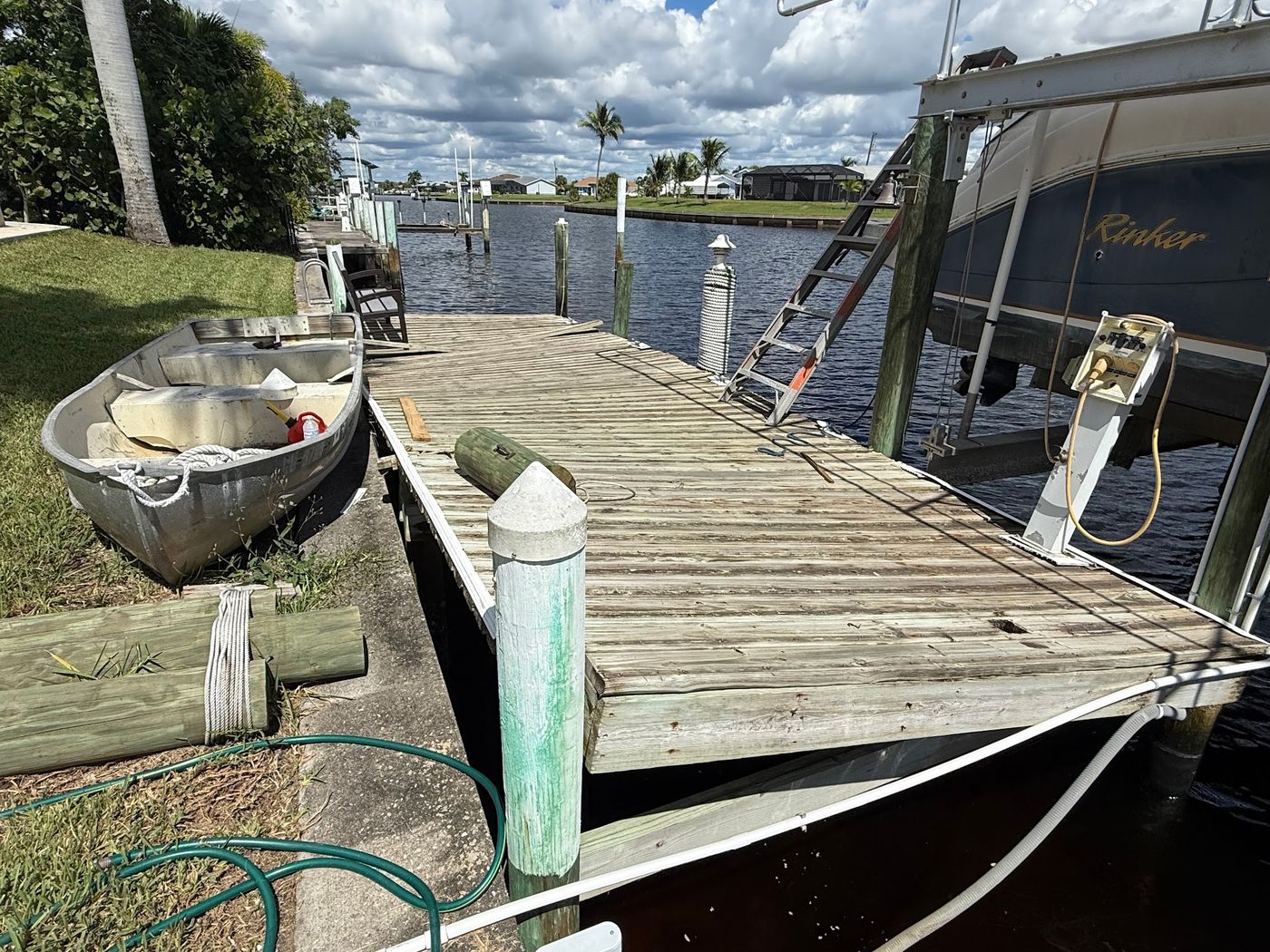
Sight down the row from the seawall. Pilings should read as a straight line. A lean, a waist where the wood pinches in at the waterline, or wood that gives when you press it there, is the sign that outranks everything else on this list.
What the boards do not tell you
Grey, checked, stained decking looks alarming and often means nothing structural. Meanwhile a deck that photographs beautifully can sit on stringers that are done. Looks and condition are two separate reports.
How to walk your own dock
Walk it slow and barefoot
Shoes hide everything. Barefoot you feel flex, heat, a lifted screw head and a board that moves against its neighbor. Take the whole walkway, then the platform, then the edges where people actually stand.
Push on what should not move
Rails, posts, ladder mounts, the lift walkway. Lean into them. You are not testing strength, you are testing whether the connection is still a connection. Anything that gives gets noted.
Get low and look under
Kneel at the deck edge and look back under the boards at the stringers and the frame. Dark wet wood that never dries, sawdust-looking crumble, or a stringer sagging between supports tells you more than the whole deck surface did.
Read the waterline at low tide
Low water is when the pilings are honest with you. Check the zone right at and just above the water for necking, soft spots, cracking and heavy growth. That band is where docks quietly lose the argument.
Write it down, then have someone check it
Note what you found and where, and take photos on your phone. Then book the free inspection. The owner walks the same dock, sounds the boards, reads the frame and tells you which of your notes are wear and which are work.
Real work, real water
Every photo is our own work on SW Florida water. Click any of them to look closer.
Rated 5.0, 98 reviews
“I'm a pretty particular person when it comes to Detail and Alex and his crew gave very great attention to detail. The best I've seen. Love my Dock and couldn't be happier with the results.”Duane Needham · Google
The boards complain, but the frame decides
Owners almost always call about the surface, because the surface is the part you touch. Understandable. But decking is a wear layer, and wear layers are supposed to wear out. The real question every sign on this page is pointing at is the same one: are the stringers, the frame and the pilings still doing their job?
That is why two docks with identical tired boards get two different answers. One gets a fresh deck on bones that were already paid for. The other needs the conversation to start below the water, because new decking over a leaning piling just buys you a nicer looking problem. Nobody can tell those apart from the top of the boards, which is exactly why the inspection is free and why the owner does it himself.
| Soft in one spot | Almost always one wet or failing stringer under that board. Small, contained, and cheapest to handle now. |
|---|---|
| Soft across the whole deck | The decking has reached the end of its service, but the frame underneath may still be perfectly sound. |
| Sway, lean or shifting underfoot | The structure is talking, not the surface. This is the one that stops being cheap if it waits. |
Signs Your Dock Needs Repair Before It Needs Replacing questions
Where to go from here
Dock Repair & Re-Decking
The fix itself, once the frame checks out: tear off the tired boards and lay a fresh deck on bones you already own.
See the service Related guideNew Dock or Re-Deck: How Owners Decide
Sometimes the honest answer is a new dock instead of a repair. This is how that call gets made.
Read the guideHave somebody read it with you
Tell us your canal and what you are feeling underfoot. The owner will come sound the deck and check the pilings, free, and tell you straight what is wear and what is work.
Open 7 AM to 7 PM, 7 days a week · Call or text