 CC
CC 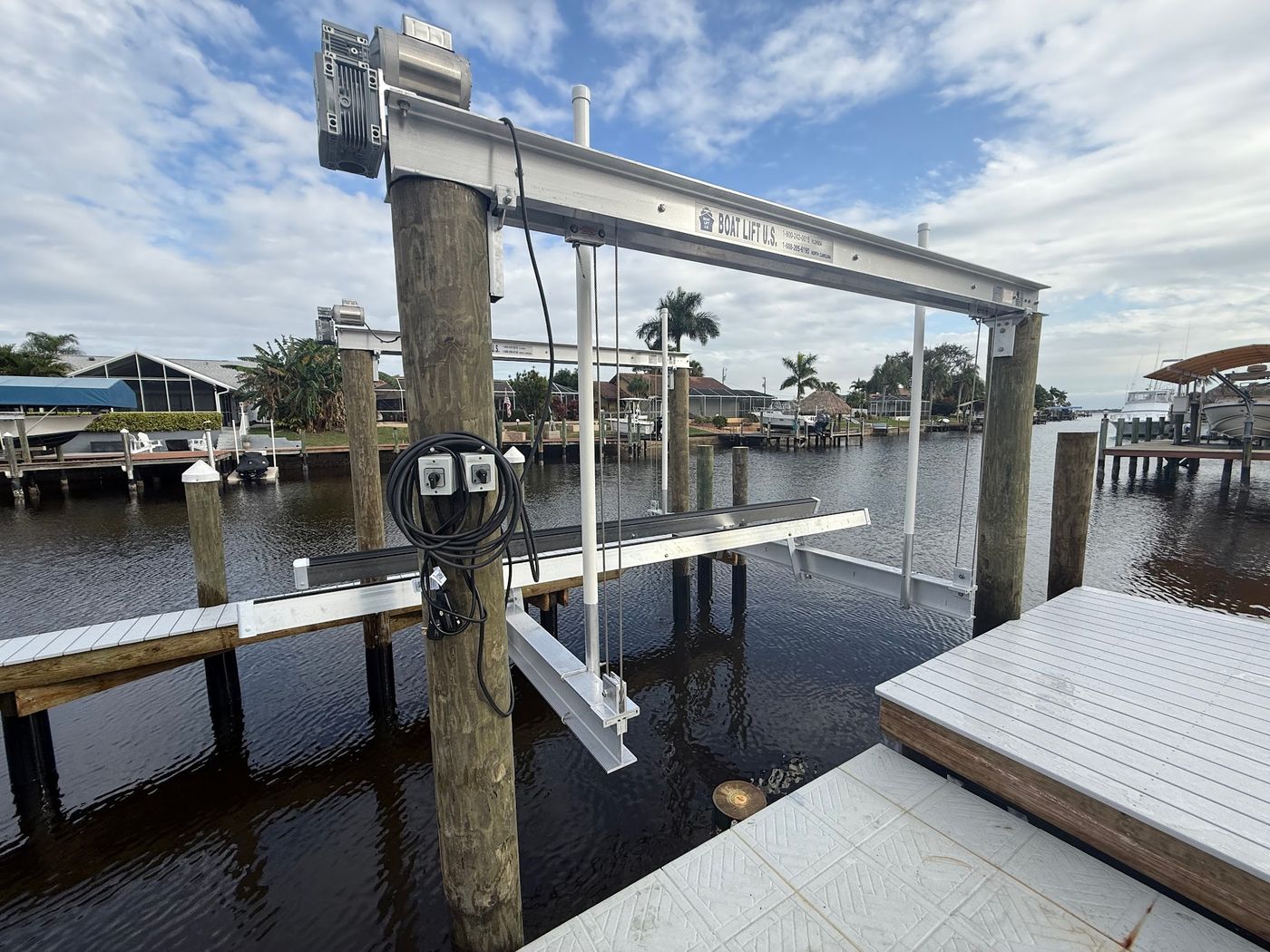
Guide · 10 · Lift Maintenance
Salt never takes a season off
Nobody hands you an owner's manual when you buy the house the lift came with. Here is the rhythm that keeps one running: what to look at, how often, and where the line is between your eyes and a service call.
Maintenance is just repair you did early
Most lift owners have no schedule at all, and that is not laziness. You use the lift, you rinse the boat, and the lift goes back to being part of the dock until the day it makes a sound you have not heard before. Nothing about owning waterfront teaches you otherwise.
Meanwhile the water is working. The cables go wet, then dry, then wet again. Grit finds its way into the places that are supposed to roll. Sun bakes the bunk carpet stiff. Salt air settles on a motor housing and just sits there. None of that is dramatic on any given Tuesday, and all of it adds up across a season.
So the fix is not a project, it is a rhythm. A minute of attention every time you run the lift, a slower look every month or so, one long look before storm season, and one set of experienced eyes on it while the water is salt. That is the whole guide, and the rest of this page is what to actually look at.
What wears, and what to watch
Cables, end to end
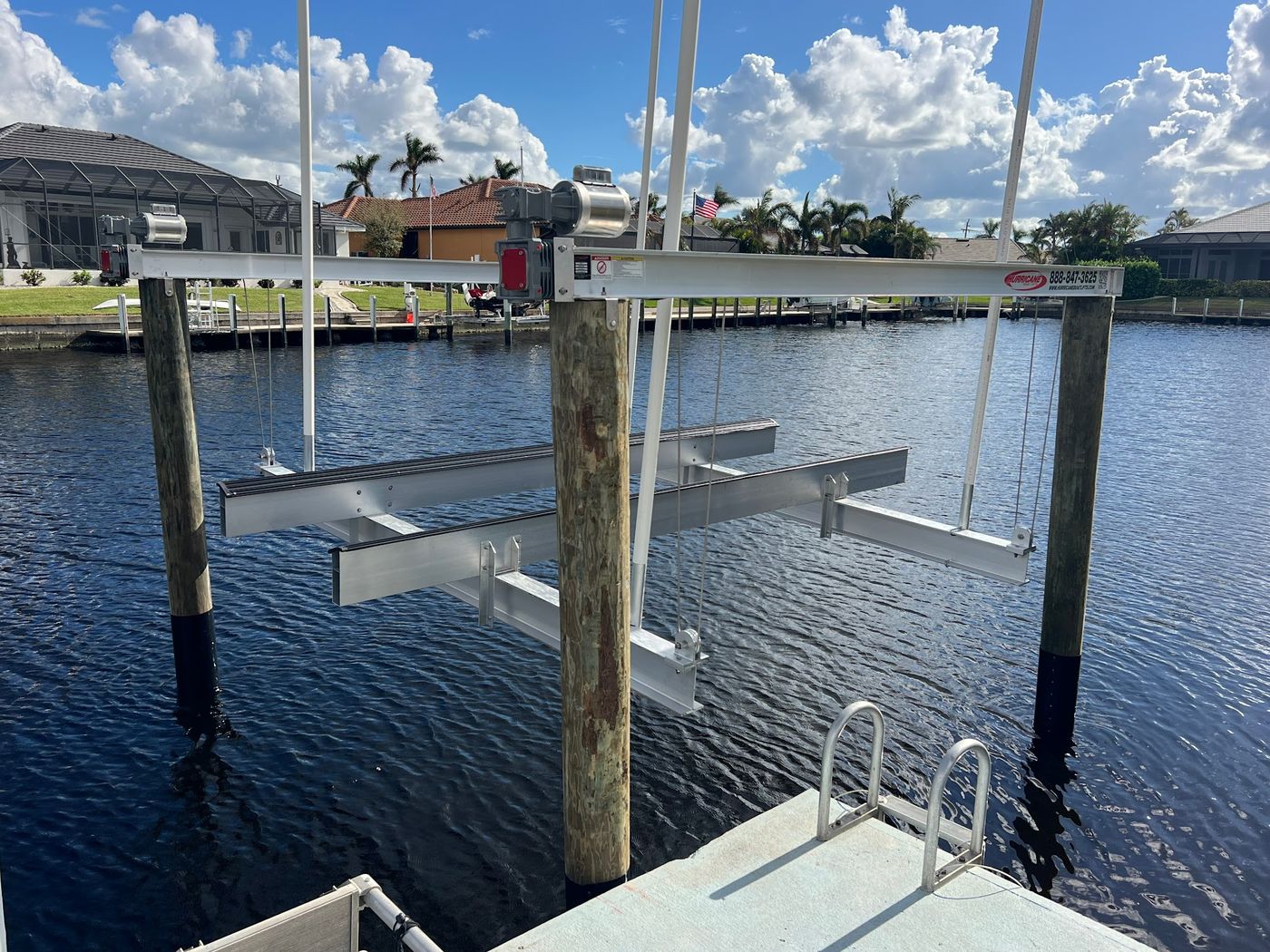
Cables wear where they bend and where they sit: where they wrap the drum, where they ride each sheave, and at every swaged fitting. Run your eye along the whole length with the lift down and empty. Fray, rust bloom or a rough spot means that stretch of cable is on borrowed time.
Sheaves and bushings
These are the parts that let a cable move instead of drag. With the lift down and off, spin what you can reach by hand. Anything that binds, wobbles or grinds has stopped doing its job quietly, and it will start taking the cable with it.
The drive end
Motor, gearbox, switches and wiring live in salt air with a cover between them and the weather. Check that the cover is actually closed, the housing is dry inside, and nothing is weeping rust down the beam below it. The drive end fails slowly, then all at once.
Bunks and guide posts
Bunk boards carry the hull's whole weight along a narrow line. Sun hardens the carpet, water gets into the board, and fasteners work loose. Guide posts drift out of true from wind, wake and the occasional rough docking. Both are easy to reset before they start changing how the boat sits.
Corrosion at the connections
Bolts, brackets, beam ends and the hardware tying all of it to the pilings. A rust streak running down a beam or a piling is not cosmetic. It is a fastener telling you what is going on inside a joint you cannot see.
A rinse while you have the hose out
Salt does its damage as it dries, not while it is wet. When you rinse the boat, carry the hose along the cables, the drum, the sheaves and the drive housing. It is the cheapest item on this list and the one owners skip most.
A rhythm you can actually keep
Every run: notice
For the length of one cycle, pay attention. Same sound, same speed, boat coming up level in the cradle. You are not inspecting, you are noticing. Something you catch on a Sunday afternoon is a phone call. The same thing caught later is a rescue.
Every month or so: rinse and walk it
Lift down, empty, controls off. Fresh water on the cables and the drive end, then a slow walk around: cable ends, bunk bolts, guide posts, and any rust streak that was not there last time. A few quiet minutes, no tools.
Before storm season: the long look
This is the one that matters. Full cable check end to end, hardware and beam connections, cradle sitting level, controls cycled through their whole travel. Pick a calm stretch with nothing on the forecast, not the week everyone on your canal is racing to get a boat handled.
At least yearly: eyes that do this daily
In salt water an owner's attention is worth a lot and still misses things. The owner runs your lift through its cycle, checks the parts that are hard to judge from the dock, and tells you plainly what is worn, what has drifted and what is still fine. The inspection is free whichever way it lands.
Anytime it changes: skip the calendar
A new noise, visible fray, a corner lagging, a cradle hanging off level. None of that waits for your next scheduled look. Stop running the lift, keep everyone out from under it, and call or text with what it was doing right before you stopped.
Real work, real water
Every photo is our own work on SW Florida water. Click any of them to look closer.
Rated 5.0, 98 reviews
“I'm a pretty particular person when it comes to Detail and Alex and his crew gave very great attention to detail. The best I've seen. Love my Dock and couldn't be happier with the results.”Duane Needham · Google
A lift is never sitting still
Your lift lives outdoors, over salt water, in full sun, with moving parts. There is no version of that where nothing happens. The wet and dry cycle at the cables, the grit that works into a sheave, the sun cooking the bunk carpet, the salt air resting on a housing: none of it announces itself, and all of it is happening on the days nothing is wrong.
Which makes the useful question a different one. Not is my lift broken, but when did anybody last actually look at it. A lift that gets attention on a rhythm mostly needs small parts. A lift that gets attention when it makes a noise needs whatever that noise turned into. And while you are down there, look lower: the pilings holding the lift are part of the lift, and soft wood at the waterline is not something a new cable fixes.
| Yours to do | Rinsing, looking, listening, and spinning what turns while the lift is down, empty and off. No tools, no risk, and most of the early warnings live right here. |
|---|---|
| Worth a second opinion | A cable you are not sure about, a corner that lags a little, a bolt weeping rust, a cradle that looks a hair off level. If you are squinting at it, have someone look who sees lifts every week. |
| Never a do it yourself job | Anything underneath a loaded lift, cable replacement, and running a lift that is binding to see what happens. That is where owners get hurt and boats end up in the canal. |
Boat Lift Maintenance: A Seasonal Checklist questions
Where to go from here
Boat Lift Repair & Service
The service call this checklist points you toward, for the day looking turns into fixing.
See the service Related guideHow to Size a Boat Lift: Understanding Wet Weight
Sizing and maintenance are the two halves of a lift that lasts. A lift working past its size wears out faster no matter how well you keep it.
Read the guideHave the owner look it over
A new noise, an old lift you inherited with the house, or nothing wrong at all and you just want it checked before the season gets busy. Call or text and the owner will come run it through a cycle, free.
Open 7 AM to 7 PM, 7 days a week · Call or text