 CC
CC 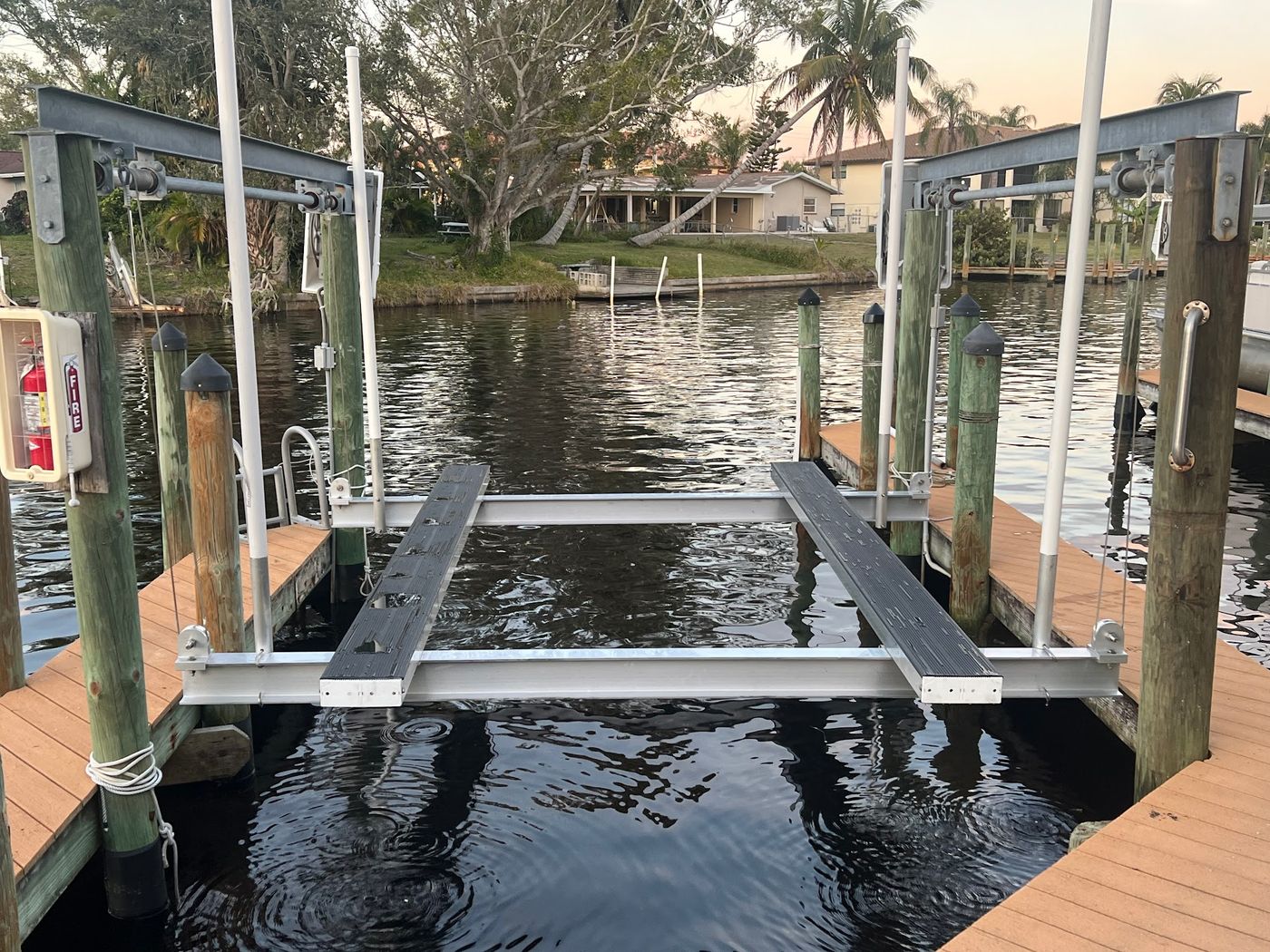
Guide · 13 · Lift Styles
The lift that fits your canal, not the catalog
Weight decides the capacity. Your water decides the shape of the thing: how much you have under the hull at the bottom of the tide, how much room sits in front of your seawall, and how your boat wants to be carried.
Same boat, different water
Most owners arrive at this question sideways. You walk the canal, notice that three neighbors have three lifts that look nothing alike, and none of them can really tell you why theirs is the one they ended up with. One inherited it with the house. One picked what the last crew happened to have on the trailer. That is not a recommendation, it is a coincidence you are standing in front of.
Style is not decoration. Each one is solving a different problem: a canal that goes thin at low water, a slip so tight you cannot swing the bow, a hull that does not sit on bunks the usual way, a boat that only comes out on weekends in season. Put the wrong style behind the wrong seawall and you feel it every single time you load, in the wind, in the dark, with somebody waiting on the dock and a wake coming down the canal.
The good news is that your water narrows the list fast. Depth at the low end, how far the tide moves, the room in front of your seawall and the shape of your hull usually leave two honest options instead of six. The owner walks that with you at the water, free, and tells you which two.
Six things your water decides for you
What is under the hull at low water
Not what you see standing on the dock this afternoon. What is there at the bottom of the tide, on the day the water pulls out hardest. Depth is the first thing that takes styles off your list, and the only honest way to judge it is to look when the canal is at its worst, not its prettiest.
How far your water moves
A canal that barely breathes and a canal that swings hard ask for different things. A setup that loads beautifully at high water can leave you reaching, guessing and bumping at the low end. Style has to work across the whole range you actually boat in, not at the one water level you happened to measure.
The room in front of your seawall
Canal width, where the neighbor's pilings and boat sit, how much swing you have to line up the bow, and whether the far bank is close enough to matter on a windy day. Some styles want water out front to live in. Others exist precisely because you do not have it.
How your hull wants to be carried
A deep V, a pontoon and a flat skiff do not sit the same way, do not load the same way and do not want their weight in the same places. The style has to suit the shape of the boat, because the boat is not going to change to suit the style.
How you actually use it
Every weekend all year, or in and out a few times a season. Loading solo half the time, or always with a second set of hands. A style that is fussy but fine once a month gets old fast when it is a Saturday habit, and ease of use is a real specification even though nobody prints it.
What the seawall and the water in front of it can carry
Some styles stand on dedicated pilings driven out front. Others carry their load closer to the wall. That difference is not a preference, it is a structural question about your seawall and your bottom, and it gets answered at the water before anything is ordered.
Work the style question in this order
Settle the weight before the style
Loaded weight sets the floor for the whole conversation. Choosing a good looking style around a weight you never checked is how owners end up with a lift that fits the canal and not the boat.
Read your water at its worst
Go look at the canal at low water, and again on a day the wind is pushing straight into your seawall. Those two visits tell you more about which styles belong behind your house than any amount of reading will.
Walk the room you really have
Pace the seawall. Notice where the neighbor's boat sits, where the pilings are, where power reaches, and how you would swing the bow coming in. Room on a plan and room on a Saturday are two different quantities.
Match it to how you load
Picture yourself putting the boat away alone, tired, at the end of the day. The style that survives that picture is usually the right one, and the style that only works when the water is flat and a helper is standing there is usually not.
Have it checked at the seawall
Bring your boat details and your questions to the free inspection. The owner looks at your depth, your tide, your seawall and your hull, then tells you which styles genuinely fit and which ones only look good on a page.
Real work, real water
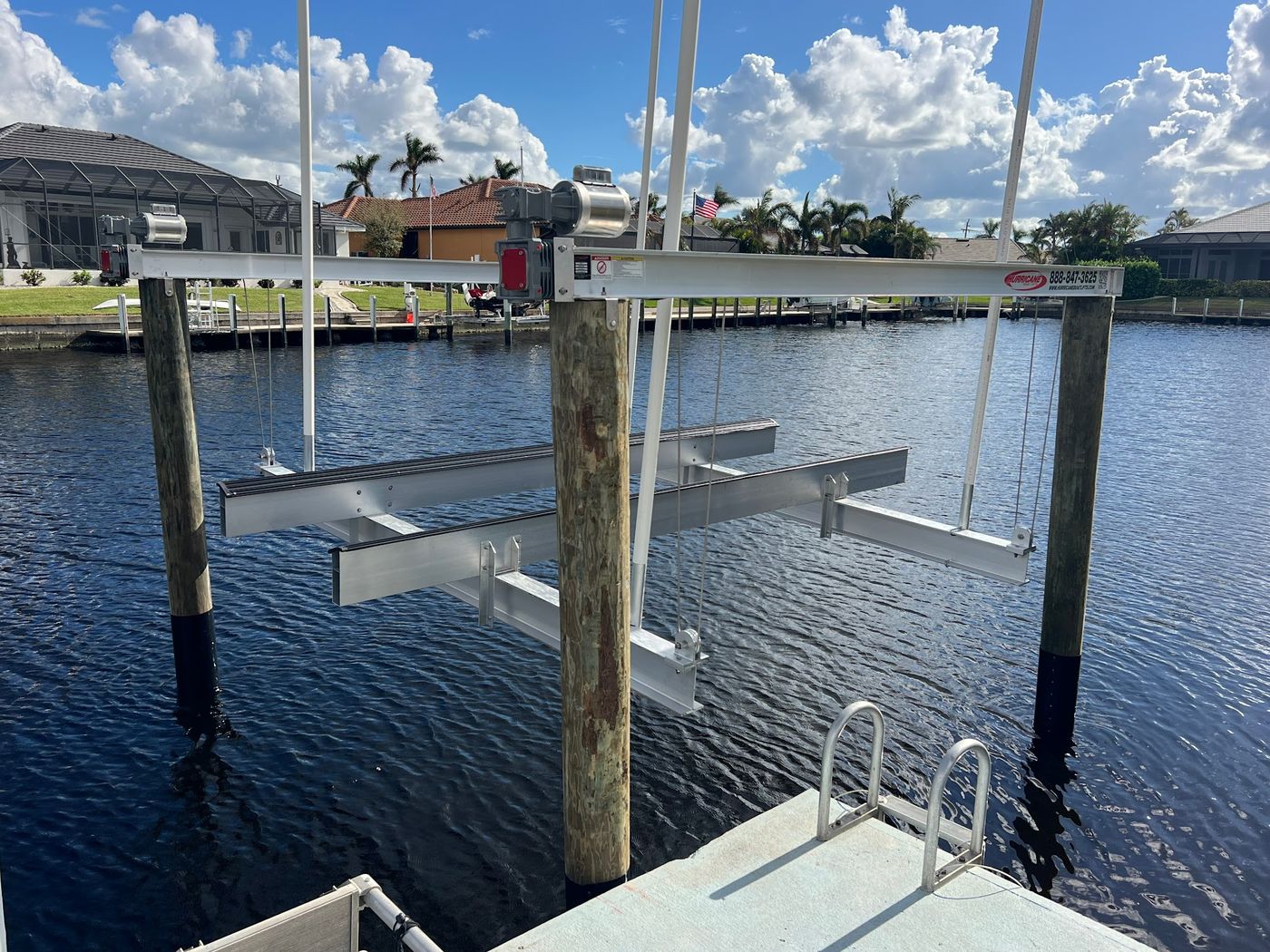
Every photo is our own work on SW Florida water. Click any of them to look closer.
Rated 5.0, 98 reviews
“Hiring Alex and his crew was a great decision! First and foremost they showed up when they said they would and perhaps even more important, finished when they said they would. ... I only wish I'd hired Alex from the start.”Vince Kotlarz · Google
Every style is a trade, not a ranking
There is no best lift style, which is unsatisfying if you came here hoping to be told one. There is only the style that suits your depth, your tide, your room and your hull. The lift your neighbor swears by may be exactly wrong for a seawall four houses down, and neither of you did anything careless. The water just changes.
The trades are real, though, and worth knowing before you choose. More moving parts up top means more to keep an eye on in salt air. Fewer moving parts usually means more compromise somewhere else, in how the boat sits or how it drives on. Whatever you land on, it lives outdoors in salt, and it wants eyes on it on a rhythm rather than after a noise.
| Piling-mounted cradle lifts | The workhorse behind most canal homes. Beams span pilings driven for the job, the machinery sits up top, and the boat rides in a cradle on bunks fitted to the hull. Wants honest depth and honest room out front, and repays it by handling the widest range of boats. |
|---|---|
| Elevator style lifts | The platform travels up and down close to the seawall instead of living out in the canal. It comes into its own where the water is tight, where a neighbor's boat is right there, or where an owner would rather not have beams standing in the view. |
| Floating lifts | Nothing holds it up but the water: it rises and falls with the tide and you drive the boat onto it. Moving with the water instead of fighting it is the whole point, which is why it comes up in thin canals and hard swings, and it still gets the hull up out of the growth. |
| Personal watercraft and small skiffs | A jet ski or a light skiff is a different question entirely. Load stops being the deciding factor and handling takes over: whether one person can put the thing away alone, on a windy afternoon, without waiting on a second set of hands. |
Boat Lift Styles: Which Type Fits Your Boat and Canal questions
Where to go from here
Boat Lift Installation
The install itself, once you know which style fits: dedicated pilings from the barge, cradle and bunks set to your hull, controls tested with your boat on it.
See the service Related guideHow to Size a Boat Lift: Understanding Wet Weight
Style and weight are the two questions that decide a lift. This one covers the weight half, wet and loaded, the way the lift will actually feel it.
Read the guideTwo honest options beat six brochures
Tell us the boat and where your canal is. The owner comes out to the seawall, free, looks at your depth, your tide and your room, and tells you which lift styles actually fit your water.
Open 7 AM to 7 PM, 7 days a week · Call or text