 CC
CC 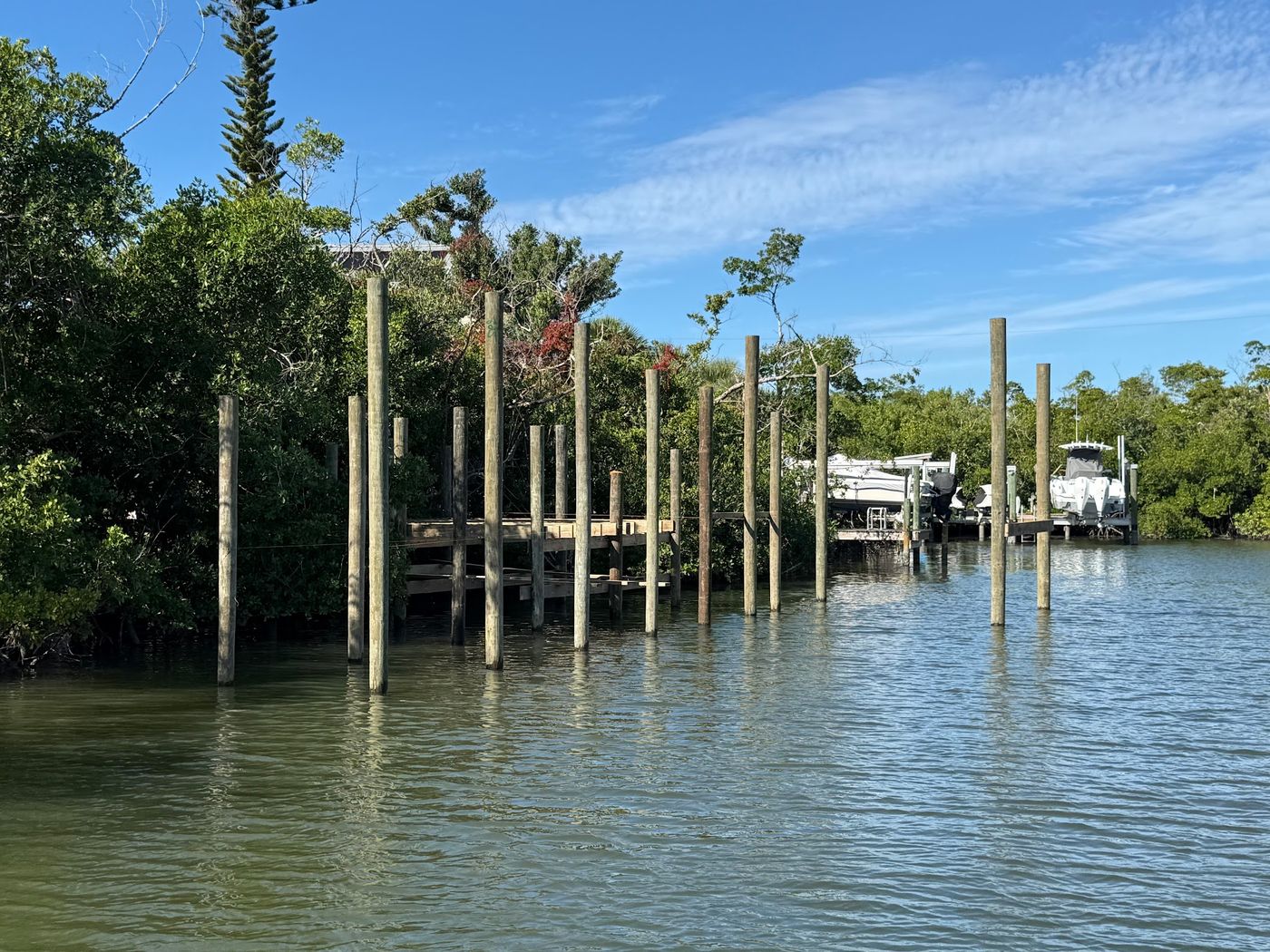
Guide · 04 · Wraps or Replace
Some pilings are worth wrapping. Some are not
Wraps work beautifully on pilings that still have their wood, and do nothing at all for pilings that do not. Here is how to read yours before anybody quotes you either way.
You cannot see the part that decides it
Standing on your dock, every piling looks about the same: a post running down into green water with a crust of growth around it. The part that decides whether you need a wrap or a new piling is under that crust, in a narrow band you never look at, and it is the one part of the dock nobody ever photographs.
That is why the same dock can produce two very different answers. Read the pilings and you either find sound wood under the growth, in which case a wrap is one of the best moves available to a waterfront owner, or you find wood that has quietly gone hollow, in which case a wrap is a lid on a problem. The pilings are the variable. Not the opinion.
The good news is that most of the reading is learnable. Not all of it, and not the part that needs a hand on the wood at low water, but enough that you can walk your own dock and know whether you are looking at a wrap job, a replacement job, or a dock that is fine and you can stop thinking about it.
The signs that actually mean something
Look at low tide, in good light
High water hides the exact band you need to see. Go out at the bottom of the tide with the sun behind you and look hard at the strip that is normally underwater. Everything worth knowing happens in that strip.
Necking is the shape that ends the argument
A healthy piling is about the same thickness top to bottom. A failing one pinches in at the waterline while the wood above and below stays full, because that is the only band under attack. Once you can see the pinch from the dock, the strength is already gone and a wrap has nothing to protect.
Sound and softness beat eyesight
Wood can look right and be finished. A solid piling answers a firm knock with a tight, dull thud. A hollow one answers with a drum note. And if a probe sinks into the surface where it should skate across, the surface is not really the surface anymore.
Read the growth, not just the wood
Heavy barnacle crust holds moisture and grit against the grain, so it earns a closer look. What tells you more is a gap: a bare band where the crust broke away because the wood behind it shrank back. Growth that has lost its grip is reporting that the piling moved.
Streaks and stains above the water
Long dark runs down the wood, rust bleeding out of bolts and brackets, or a piling that never seems to dry out all mean water is sitting where it should not. None of them prove anything alone. All of them are a reason to look lower.
What the piling carries changes the urgency
A worn piling under the corner of a walkway and a worn piling carrying your boat on a lift are not the same problem, even with identical damage. Lift pilings and the outboard row take the most load and the most water, so they get read first.
How to read your own pilings
Wait for the low water
Check the tide and go out at the bottom of it, ideally on a calm day when the canal is clear. You want the most piling showing and the least glare on it. A look taken at high tide tells you almost nothing about the band that matters.
Go piling by piling, not dock by dock
Start at the outboard corner and work back toward the seawall. Most docks are a mix: some pilings in trouble, more of them fine, and the honest answer is different for each one. Treating the set as a single unit is how owners either overspend or fix the wrong thing.
Get a hand on what you can safely reach
From the boat, from a kayak, or from a safe lean over the edge, knock on the wood and press the soft spots. You are feeling for give and listening for hollow. If you cannot reach it safely, leave it. That part is exactly what the free inspection is for.
Photograph the ones that worry you
Shoot every suspect piling at the waterline and note where it sits on the dock. Low tide photos tell the owner more before he arrives than any description over the phone, and they give you a baseline to compare against the next time you look.
Real work, real water
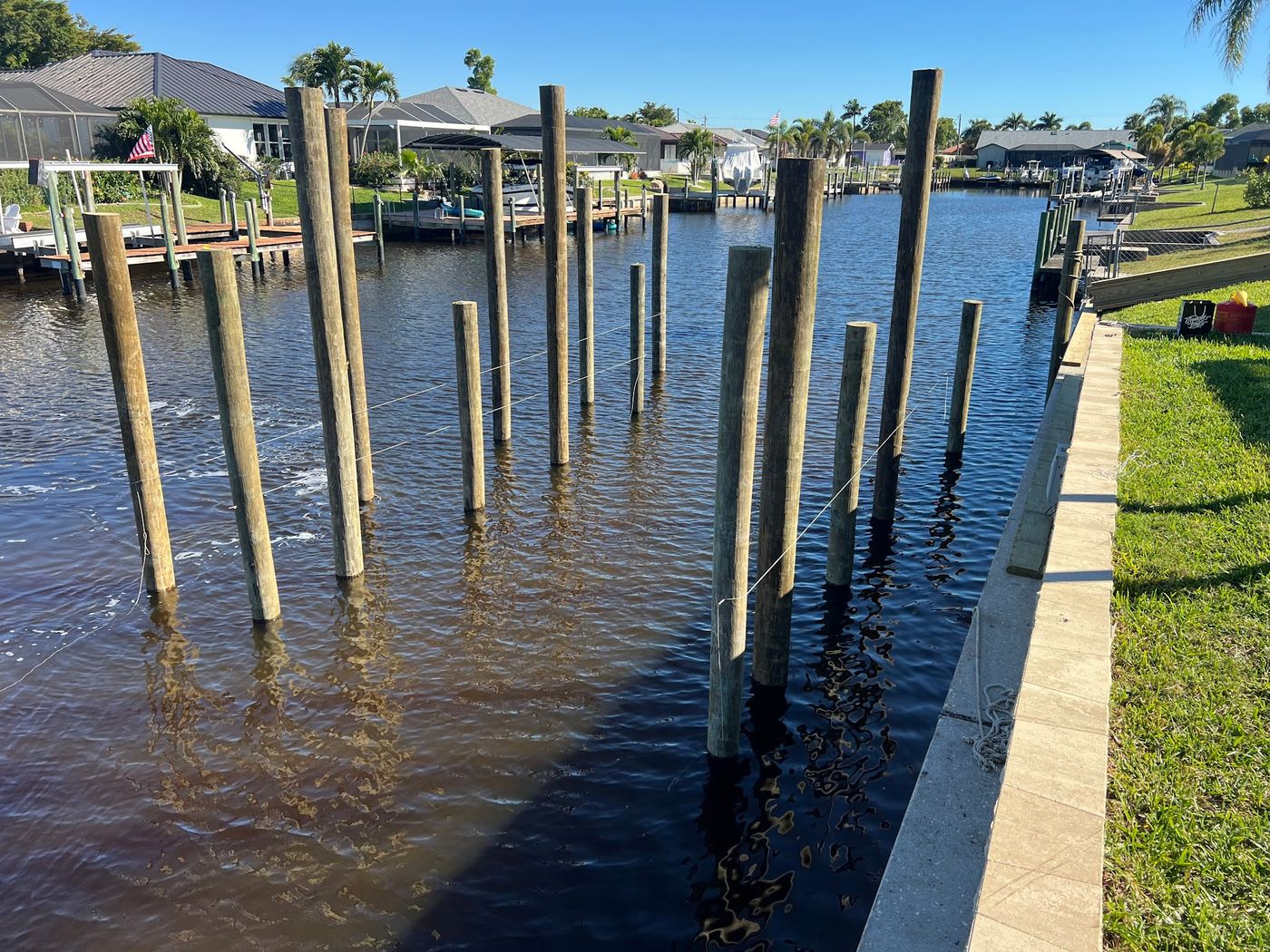
Every photo is our own work on SW Florida water. Click any of them to look closer.
Rated 5.0, 98 reviews
“Alex and his workmanship was above what I had expected ... I would highly recommend him and his team with any other customer. 10 star rating. Along with being very fairly priced.”Lou Luongo · Google
A wrap protects wood. It does not replace it
The most useful thing to understand about a wrap is what it is not. It is a barrier, not a splint. Sealed around the waterline band it cuts the borers off, keeps grit and oxygen away from the grain, and lets sound wood stop losing ground. What it cannot do is put strength back into a piling that has already given some up. Wrap a hollow piling and it carries exactly what it carried yesterday, only now the loss is harder to see.
Which is why the honest version of this job is almost never all wraps or all new pilings. It is usually replacements where the wood is gone, wraps on the rest while they still have everything, and a short list to keep an eye on. Sorted in one trip from the barge, that is the smallest version of this problem you will ever have to deal with. Left alone, the wrap candidates slowly turn into replacement candidates, and that is the direction the math runs.
| It does | Seal the band that takes the beating so borers, grit and constant wetting stop working on sound wood. Buys real time on a piling that still has its strength. |
|---|---|
| It does not | Add strength, stop a lean, or bring back wood that is already gone. Over a hollow piling a wrap is a cover, not a fix, and the dock is no safer for it. |
| It depends on | How much solid wood is left under the growth. That is a hands-on call at low tide, and it is the entire difference between a wrap job and a piling job. |
Piling Wraps vs. Replacement: How to Tell Which You Need questions
Where to go from here
Piling Wraps
The service itself, once you know which pilings qualify. Growth cleaned back to bare wood, then sealed through the band that takes the beating.
See the service Related servicePiling Installation
Some pilings are past a wrap and need replacing outright. New ones driven from the barge, straight and deep, in place of what is gone.
See the serviceFind out while there is still wood to save
Send a photo of your worst piling at low water, or just call. The owner comes out free, reads them one at a time, and gives you a straight answer on each: wrap it, replace it, or leave it alone and call when something changes.
Open 7 AM to 7 PM, 7 days a week · Call or text