 CC
CC 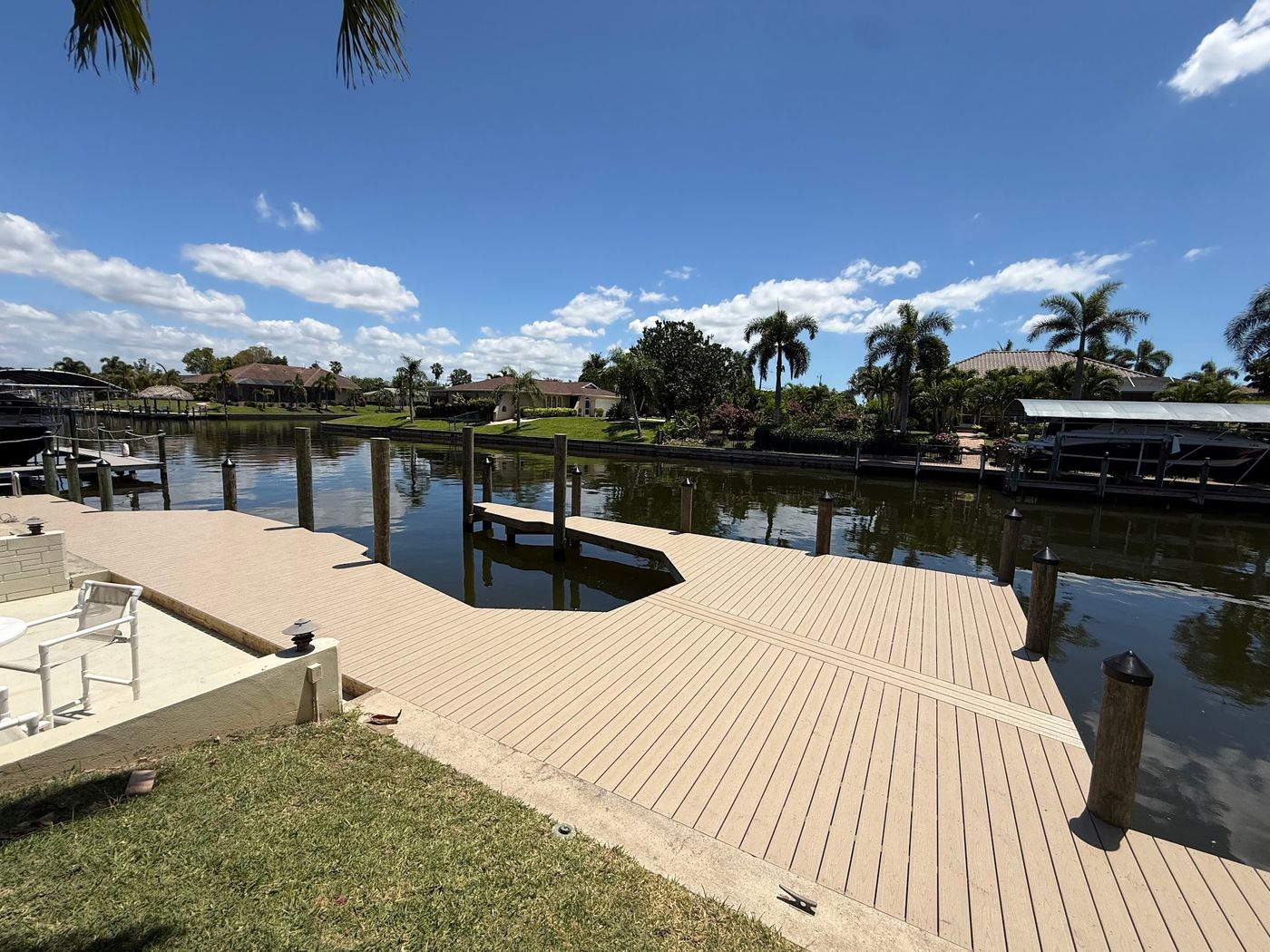
Guide · 07 · New or Re-Deck
The dock came with the house
You did not watch this one age, so you have no idea what you inherited. Here is how owners work out whether the frame under those tired boards is worth saving, or whether the honest answer starts below the water.
You did not build it, and now you own it
Most re-deck questions come from owners who watched their dock get old. Yours did not. You closed on the house, the dock came with it, and the first walk out to the water ended with something flexing under your foot and a quiet question about what you had just taken on.
The seller could not tell you much. Neither could the listing photos, shot from the far end at a flattering hour. What you have is a structure of unknown history standing in salt water, doing the exact job you bought the house for, with no paperwork and no story attached to it.
That is a solvable problem, and it does not get solved by staring at the boards. Two docks can look equally finished from the deck. One of them is a fresh deck on bones that are fine. The other is a rebuild that starts below the waterline. The difference is real, it is under your feet, and it is knowable before you spend anything.
The six things that settle it
Start below the waterline
Pilings decide more than anything standing on them. Look for lean, for wood that gives when you press it at the splash zone, and for necking where the piling narrows right where the water works hardest. Sound pilings are the single best reason to keep a dock.
Sound the frame, not the boards
Stand mid-span and shift your weight. A deck that flexes between the stringers is a board problem. A dock that moves as a whole, at the frame, is a structure problem, and no amount of new decking makes that stop.
Read the rust bleed
Brown streaks running from every fastener head, connectors weeping at the joints, bolts you can turn with your fingers. Hardware that gave up tells you how the dock was specified in the first place and how the salt has treated it since. It is a fair proxy for what you cannot see.
Ask if the layout is worth saving
This is the one owners skip. A re-deck keeps the dock exactly where it is, exactly the size it is. If the walkway is too tight for the way you carry gear, if there is no honest room for the lift you want, or if the platform sits on the wrong side for your boat, you would be paying to preserve a layout you never chose.
Notice how much of it is failing
One soft patch by the seawall is a repair. Boards giving out across the whole deck usually means the whole deck is the same age and the rest is right behind it. Fixing the worst section now and the next section later is how one job quietly turns into three trips.
Factor in what you want from the water
If a lift is coming, if the kids will fish off it, if you want a platform to sit on with coffee at sunrise, say that before anyone talks about boards. Those plans sometimes make a new build the cheaper path over the life of the dock, because the frame has to change anyway.
How owners actually work it out
Walk all of it, slowly
Not just the first stretch. Walk to the end, step near the edges, and pay attention to where you instinctively avoid putting weight. The spots you already step around are the spots to point at later.
Read the waterline at low tide
The waterline is where docks die, and low tide is when it shows itself. Look at every piling in that band: growth, softness, a narrowed waist, a lean that does not match its neighbors.
Get your head under the deck
Where you can safely see under, look at the stringers and the connections. Daylight through a joint, wood that is dark and crumbling where members meet, hardware pulling away from the frame: that is the structure telling you its side of the story.
Let the free inspection settle it
The owner comes out and checks the pilings, frame, fasteners and lift, then hands you a straight report on what is solid, what is wearing and what needs attention now. Free inspections are a standing service, and the report is yours to keep whichever way the answer goes.
Scope the job around the rules
Once the direction is clear, we scope the build around Lee County and City of Cape Coral dock rules and walk you through the permit steps. Rules differ by city and county, so we tell you what applies to your water before anything gets ordered.
Real work, real water
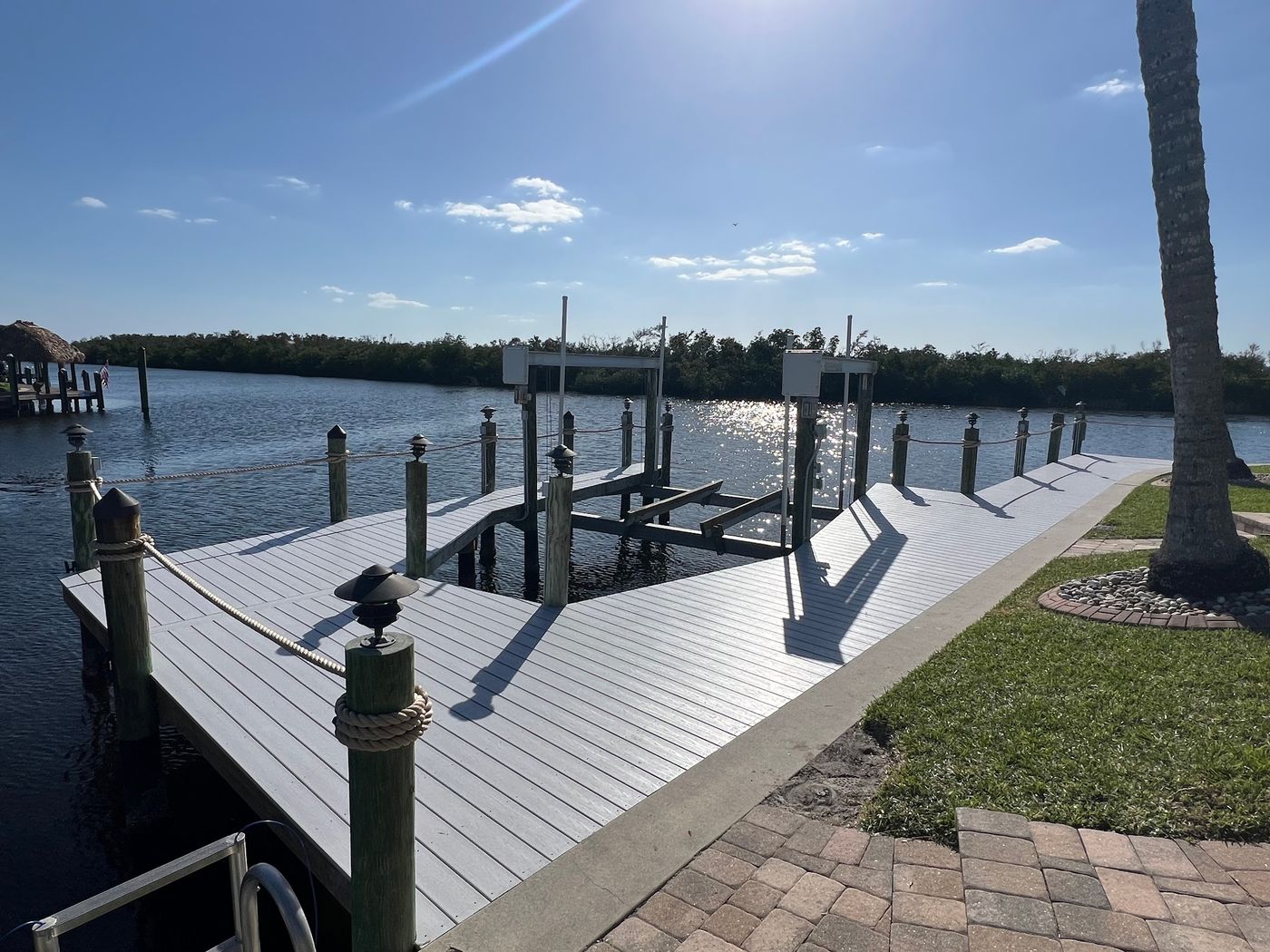
Every photo is our own work on SW Florida water. Click any of them to look closer.
Rated 5.0, 98 reviews
“Alex, and crew were able to get the job done quickly (when other contractors were months out). ... My dock is now finished and I could not be happier! I would highly recommend Alex for your dock building needs.”John Anderson · Google
The cheap job that stops being cheap
There is a specific trap in this decision, and it is not the obvious one. Nobody regrets building a dock that was genuinely needed. What owners regret is paying for a beautiful new deck on a frame that was already on the clock, then paying again when the pilings finish what they started. That first bill did not save anything. It rented time at the price of the whole job.
So the logic runs the other way from instinct. A re-deck over sound bones is the best value on the water, because the expensive part of a dock, the structure, is already in place and still good. A re-deck over marginal bones is the most expensive thing you can do, because you end up buying the job twice. That is the whole reason we look under the deck before anyone talks about board color.
| Bones are sound | Pilings plumb and firm through the splash zone, stringers solid, the frame does not shift underfoot. The decking is a surface you get to replace. Re-deck it and go use the dock. |
|---|---|
| Bones are mixed | Most of the structure checks out, a handful of pilings or stringers do not. Replace those, repair what is open, then deck the whole thing at once. Hybrid jobs are common and often the right answer. |
| Bones are done | Leaning or necked pilings, a frame that moves, rot where the members meet. New boards would only hide it. The honest answer starts below the water with a new build. |
New Dock or Re-Deck: How Owners Decide questions
Where to go from here
New Dock Construction
If the frame is gone, this is the real answer: a new build that starts below the waterline instead of on top of it.
See the service Related serviceDock Repair & Re-Decking
If the frame is sound, this is the job that saves you serious money: fresh boards on bones you already own.
See the serviceFind out which dock you actually bought
Tell us your canal and what you are feeling underfoot. The owner will come out, free, check the pilings and the frame, and tell you straight whether what came with the house is worth keeping.
Open 7 AM to 7 PM, 7 days a week · Call or text