 CC
CC 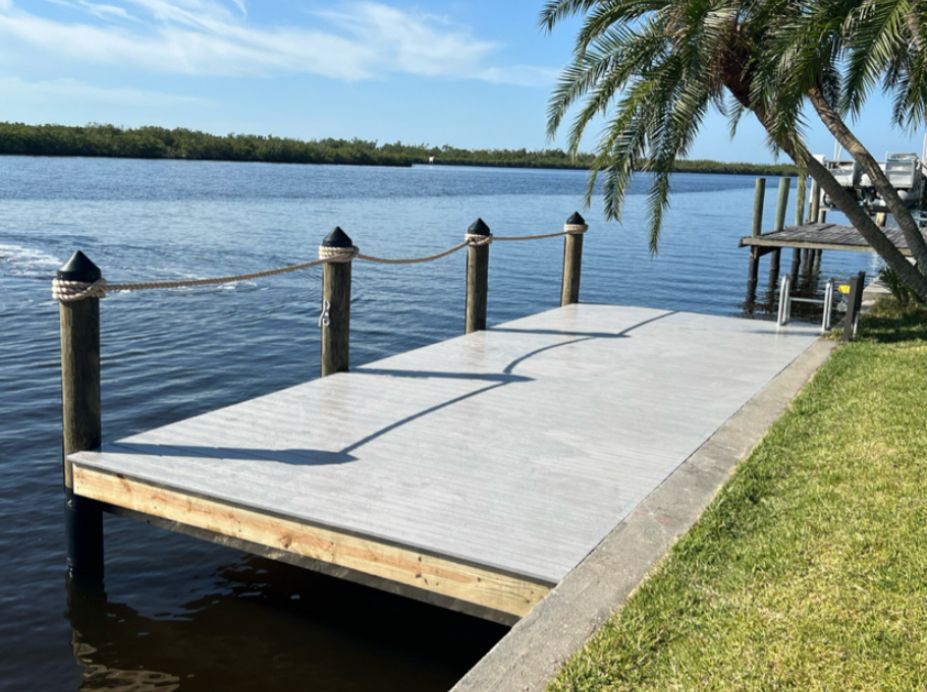
Guide · 14 · Finishing Touches
Cleats, ladders and the parts you touch every day
Nobody stands on their dock admiring the stringer spacing. They remember reaching for a cleat that was a step too far forward, and hauling themselves out of the canal on a ladder that stopped short of the water.
Fittings are not afterthoughts
The frame and the pilings decide how long a dock lasts. The finishing layer decides whether you enjoy it. Those are two different questions, and almost all the planning energy goes to the first one, because that is the part that turns into a bill if you get it wrong.
Then the dock is built and normal life starts. The bow line goes on at an angle the cleat does not like, so you learn to loop it a certain way. The kids swim off the end and climb back up over the edge, because the ladder ended up around the corner by the lift. You walk out at dusk to check lines with your phone in your teeth, every time.
None of that is a construction defect. It is a planning gap. On paper it costs you a five minute conversation. After the deck is down and the boat is in the slip, it costs you a tear-out, and most owners just live with it instead.
What actually gets decided here
Cleats where your lines pull
A cleat is only in the right place if the line coming off the boat can pull straight against it. That means knowing where the bow sits, where the stern sits, where the spring lines run, and which way the wind shoves you off the seawall on a bad afternoon. Hardware is the cheap part of a dock. Hardware in the wrong spot annoys you every single time you tie up.
A ladder that reaches past low water
Almost every ladder complaint is the same complaint: it stops short. At the low end of the tide swing the bottom rung hangs in the air, and getting back on it turns into a jump and a haul. A ladder wants to reach into the water at low tide, sit where a swimmer naturally comes to it rather than where the frame was convenient, and tie into the structure instead of into a deck board.
Rails, or honestly no rails
Rails change how a dock feels and how it gets used. Small kids, dogs and anybody unsteady on their feet argue for them. Fishing, line handling, loading gear over the side and an uninterrupted view argue against. Rope rails split the difference on a lot of the docks we build: something to grab, nothing blocking your cast or the water.
Light for the hours you actually use it
Docks get used at dusk and after dark far more than owners plan for. Checking lines before weather moves in, coming back late from the sandbar, cleaning fish, walking a guest out to see the canal. Low-voltage light at the walkway edge, any step, and the ladder covers nearly all of it. Aim it down at the deck, not out at the water, unless you want to meet every bug in the neighborhood.
The working surfaces you will actually use
A dock box, a rod holder run, a hose bib, a cleaning table, a bench where somebody sits with a coffee. Each one has a footprint, a right place and a wrong place, and each one puts load somewhere on the deck. Picking them during layout means the frame knows they are coming.
Room left for the thing you add later
Nobody buys everything at once, and that is fine. Blocking in the frame, a sleeve for a future run, and a note of what goes where later cost almost nothing while the deck is open. They are what stands between a future add-on and pulling boards to reach a joist.
Decide it in this order
Start with the boat, not the dock
Where does the hull actually lie against the dock, at high water and at low water, in the wind you get most days. Everything about tie-up follows that answer. Cleat placement is a boat question that happens to get solved with dock hardware.
Then how people get in and out of the water
If anybody in the house swims, the ladder is not a leftover decision. Put it where a person in the water would swim to, not where the last bay of framing happened to leave room, and check it against the low end of the tide swing rather than the day you are standing there.
Then who else is on the dock
Grandkids, a dog that does not slow down at the edge, a parent who wants something to hold. That list settles the rail question faster than any style discussion, and it is worth being honest about it, because rails are one of the harder things to add convincingly later.
Then the hours you keep
If the dock only ever sees the middle of the day, skip the lighting. If you check lines at night, fish at dusk, or come back in the dark, run the light while the deck is open. This is the item owners most often wish they had handled during the build.
Then leave hooks for later
Name the add-ons you are not buying yet, and let the frame know about them anyway. Blocking under a future dock box, a spot picked for the cleaning table, a path for a future run. Minutes now, no tear-out later.
Real work, real water
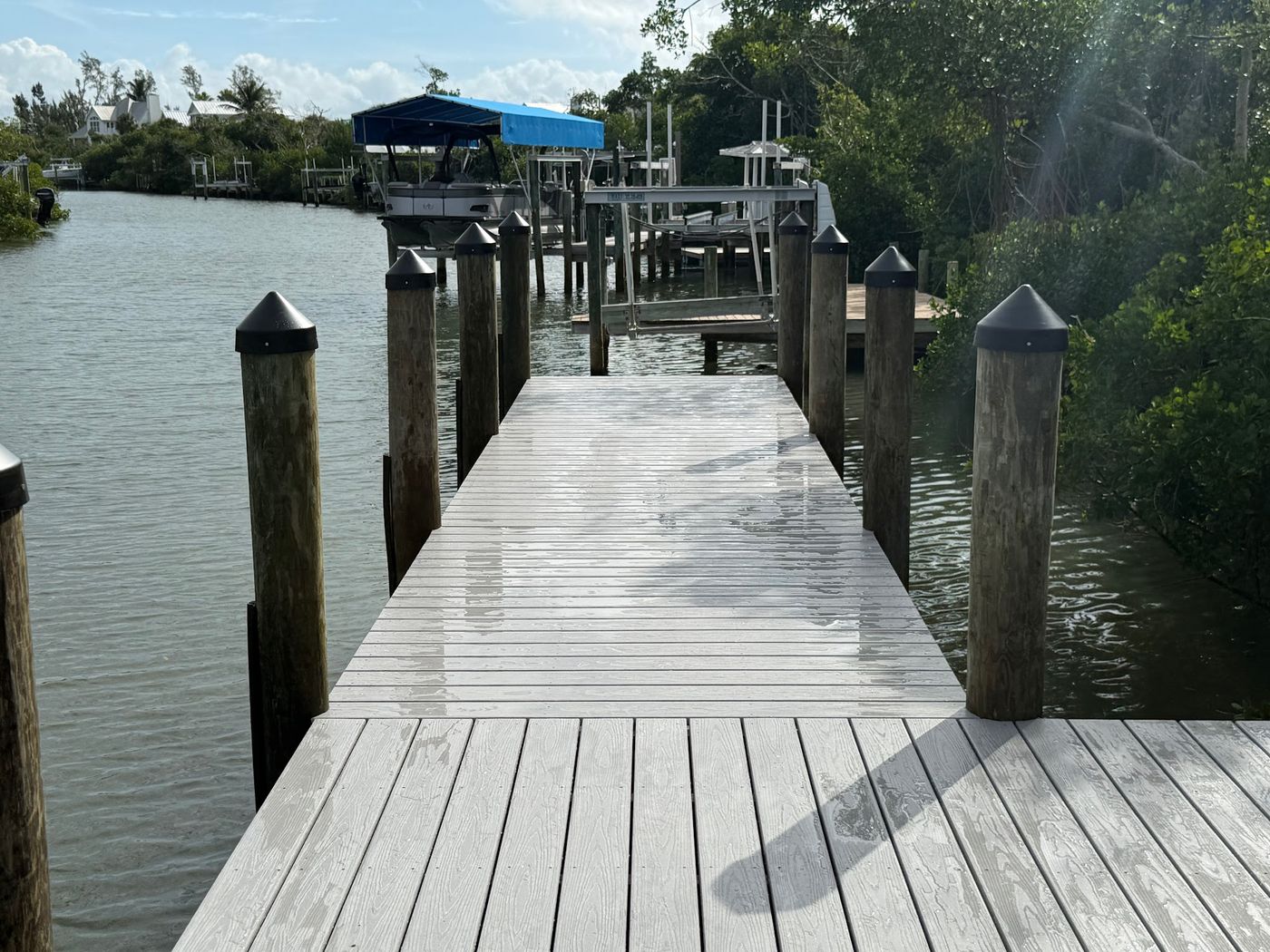
Every photo is our own work on SW Florida water. Click any of them to look closer.
Rated 5.0, 98 reviews
“I'm a pretty particular person when it comes to Detail and Alex and his crew gave very great attention to detail. The best I've seen. Love my Dock and couldn't be happier with the results.”Duane Needham · Google
Bolted on later never sits the same
There is a reason add-ons look added on. Hardware planned into the build lands over solid framing, with the blocking already there and the fasteners reaching something that can carry a real pull. Hardware added afterward lands wherever there is a board and a hope, because the person installing it cannot see what is underneath, and a cleat that only holds deck boards is a cleat that will eventually take the boards with it.
So the finishing layer gets walked through at layout, on your seawall, with the boat in the water if it is already there. It is the least technical conversation in the whole build, and it is the one you notice every weekend for as long as you own the place.
| Full rails | The pick when small kids, dogs or unsteady footing are part of daily life. They cost you sightlines, they get in the way of fishing and loading, and they are the hardest of these to add later in a way that looks built rather than bolted. |
|---|---|
| Rope rails | A hand to grab and a visual edge without a wall between you and the water. Popular on platform decks, easy to live with, and they read as part of the dock instead of a safety fixture. |
| Open deck | Nothing between you and the canal. Best for fishing, line handling and the view, and the honest choice only if everyone using the dock is steady on their feet and knows where the edge is. |
Cleats, Ladders and Add-Ons: Finishing a Dock the Right Way questions
Where to go from here
New Dock Construction
Finishing touches belong on the drawing, not bolted on after. On a new build the frame gets told about the cleats, the ladder and the lighting before the deck goes down.
See the service Related guidePermits for Dock Work in SW Florida
Bigger add-ons like a covered structure can change what the permit review looks at, so it helps to know what that review actually considers.
Read the guidePlan the details on the seawall
Tell us how you use the water: where the boat lies, who swims, whether you are out there at dusk. The owner will walk the dock with you, free, and the finishing layer gets decided before a board goes down.
Open 7 AM to 7 PM, 7 days a week · Call or text