Dock Pilings and Piling Wrapping in Southwest Florida: Protecting the Foundation of Your Dock
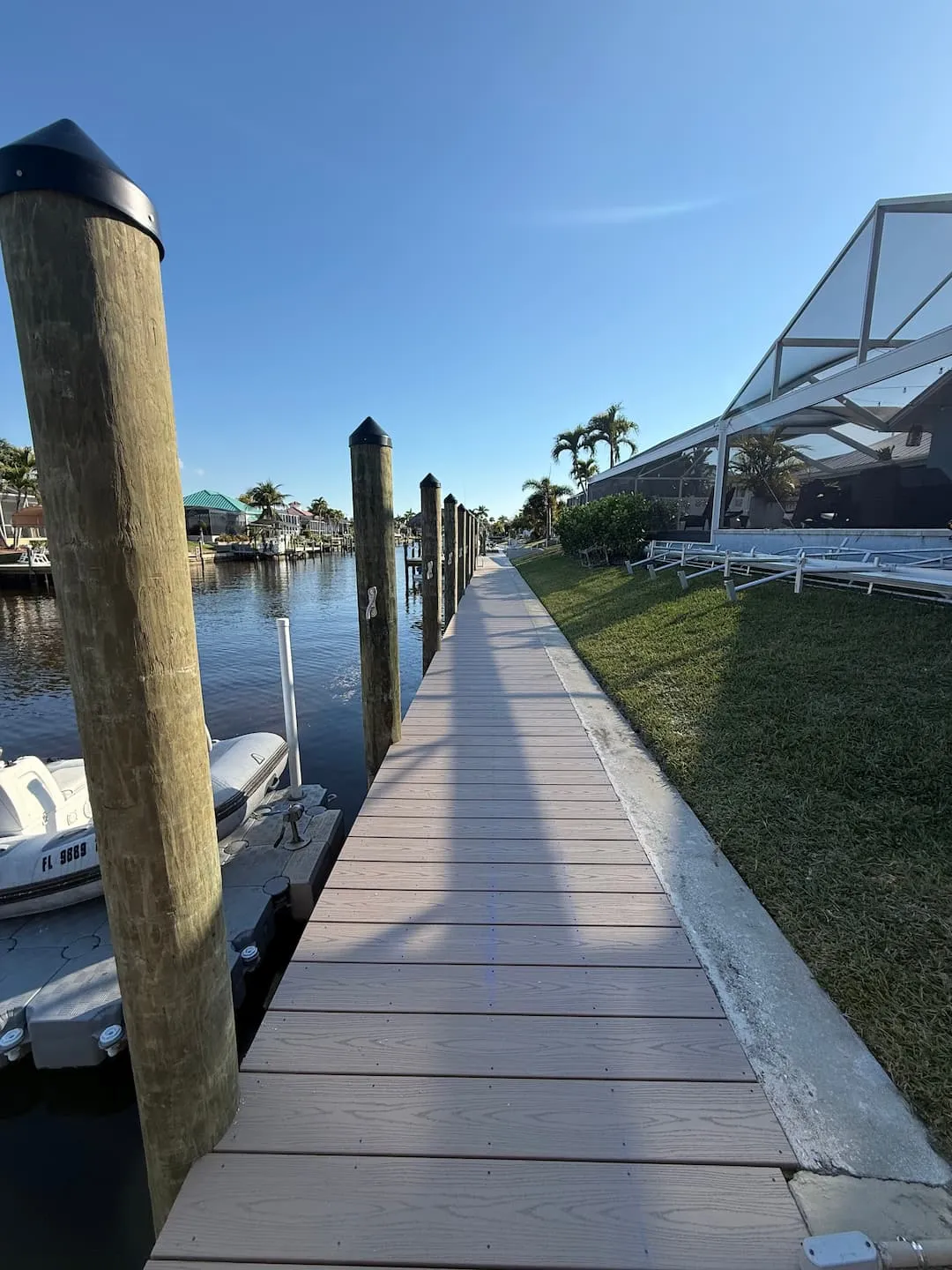
Everything you can see on a dock rests on the part you mostly cannot: the pilings. In Southwest Florida, protecting those pilings is what determines how long the structure lasts.
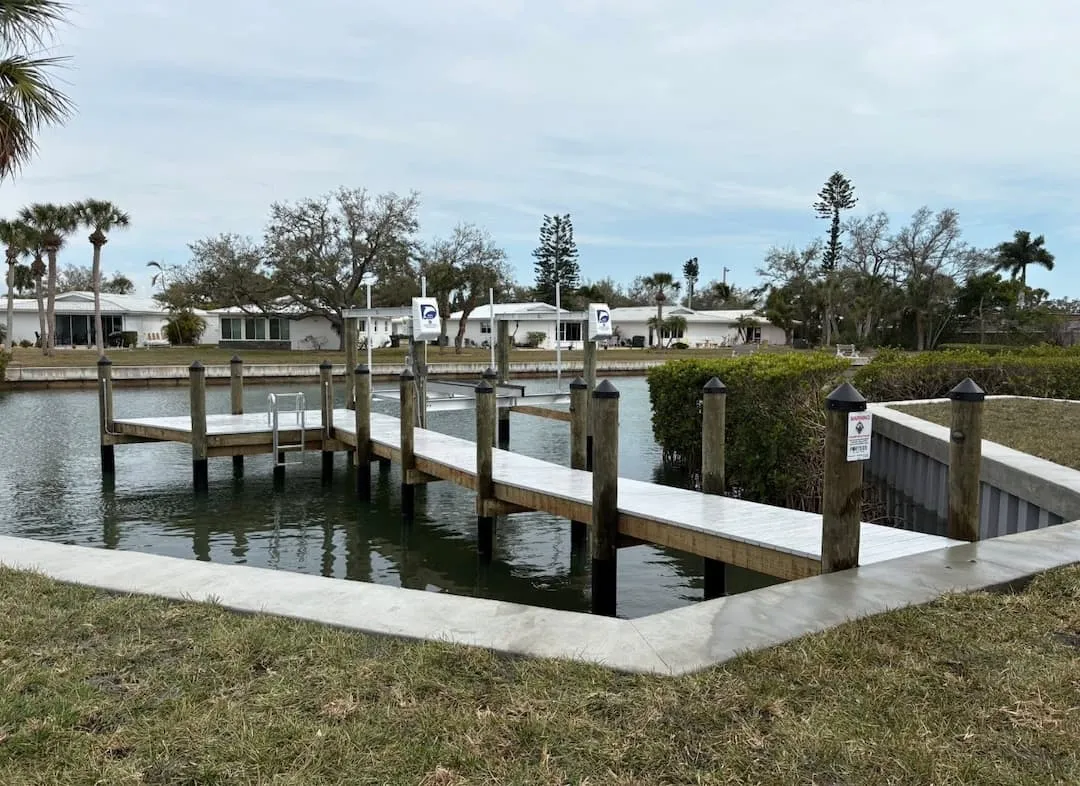
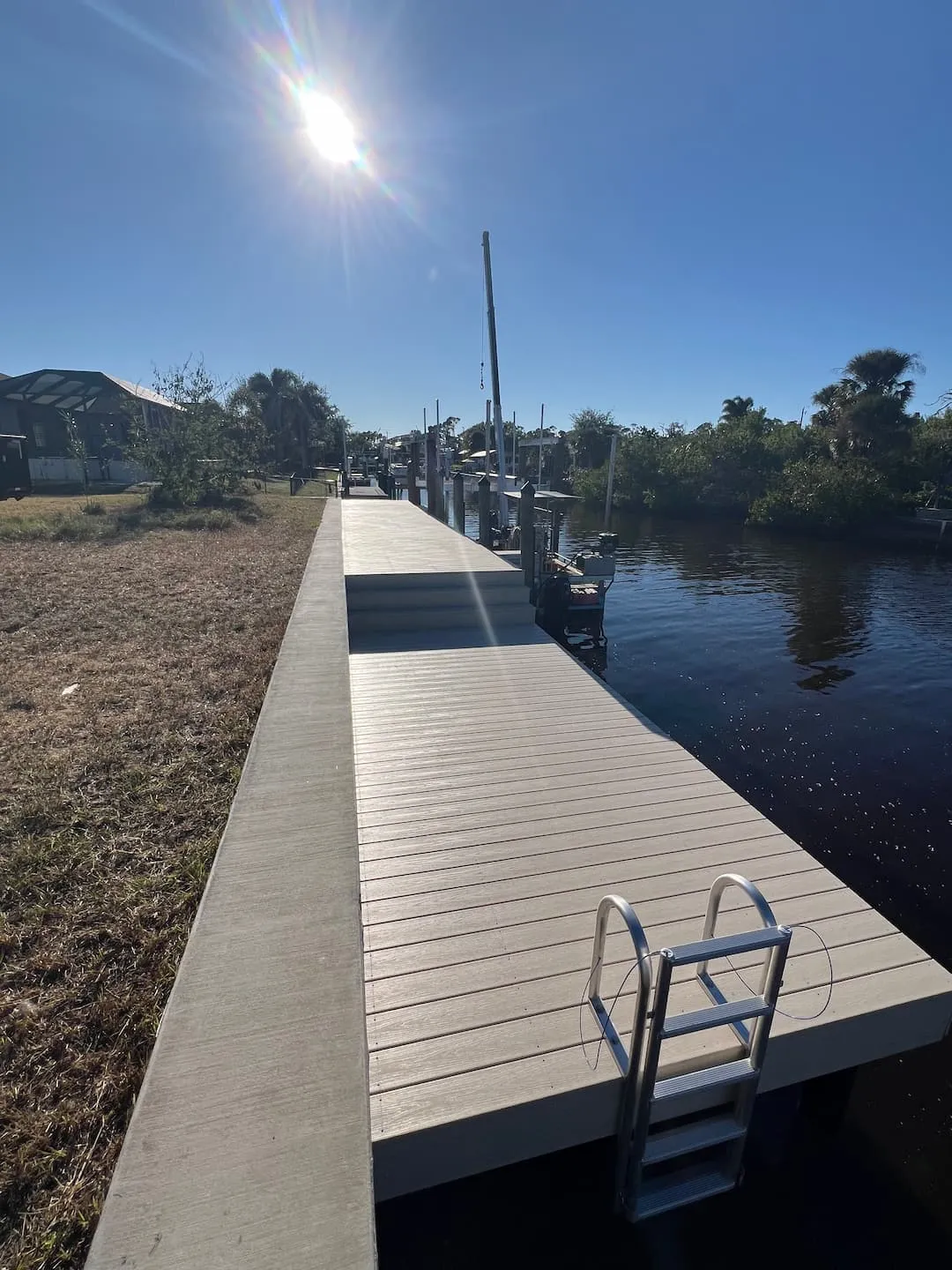
Dock decking, framing, railings, and boat lifts all depend on the pilings underneath them. If the pilings fail, the dock fails, no matter how good the rest of the structure looks.
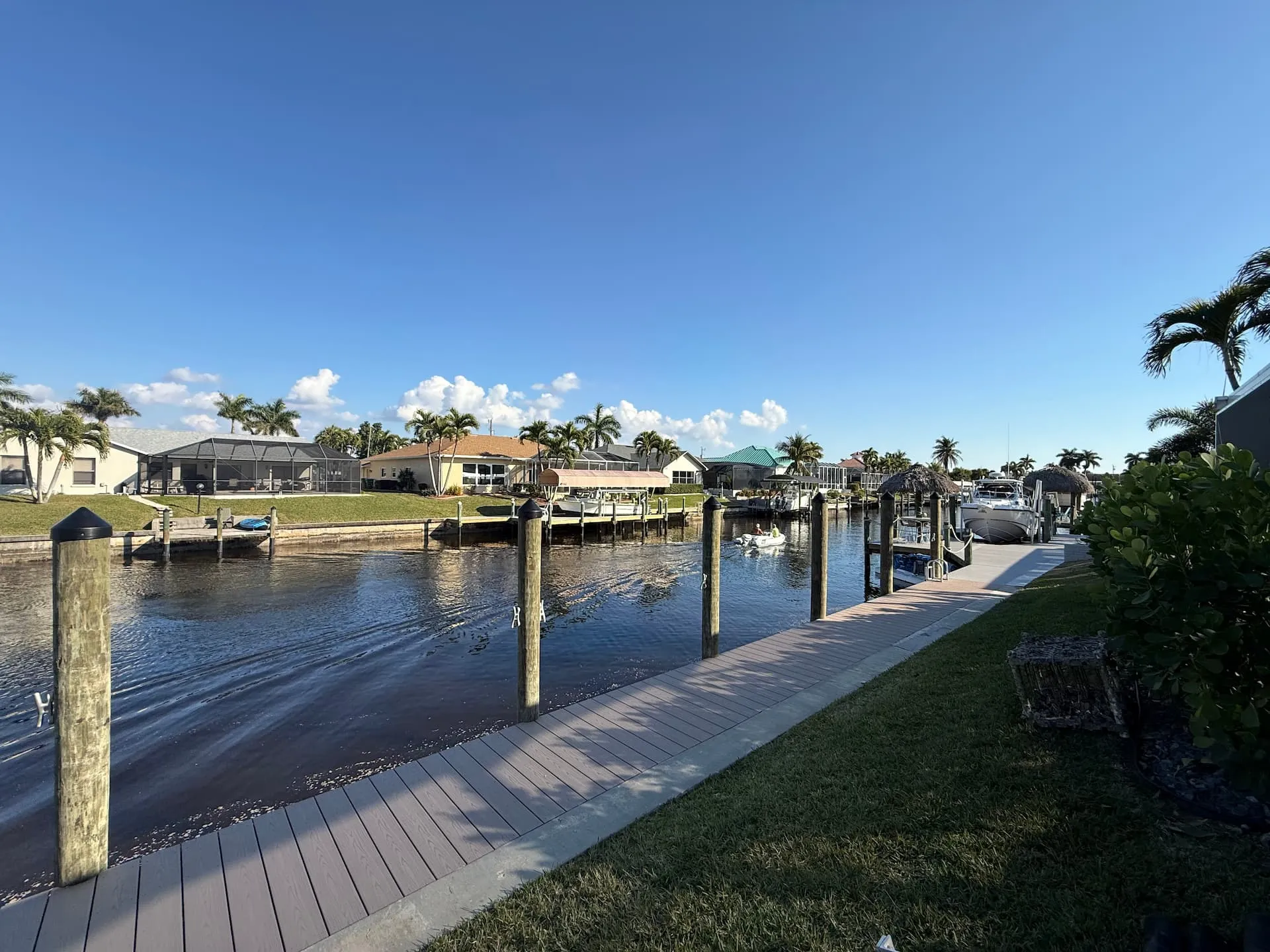
In Southwest Florida, pilings live in one of the harshest environments a wood structure can face: saltwater, tidal movement, UV exposure at the waterline, and marine organisms that attack submerged wood.
CC Docks & Lifts is an owner-operated dock and boat lift company serving Lee County and Charlotte County. Piling work is one of our core services, including piling installation, piling replacement, and piling wrapping.
What Pilings Are Up Against in Southwest Florida
Marine Borers
Shipworms and gribbles attack submerged wood. Some damage starts inside the piling, which means the outside can look sound while the inside is being destroyed.
Saltwater and Tides
Constant wet-dry cycling, salt crystallization, and tidal movement punish the waterline area of every piling.
Florida UV
Above the waterline, intense Florida sun breaks down exposed materials and contributes to checking, cracking, and surface wear.
Storm Loading
Wind, surge, debris, and wave action transfer force through the dock into the pilings. Weak pilings put the entire structure at risk.
Marine Borers Are the Silent Destroyers
The biggest biological threat to wood pilings is marine borer activity. In warm coastal saltwater, organisms such as shipworms and gribbles can seriously damage submerged wood.
Shipworms work from the inside out. That is what makes them dangerous for homeowners. A piling can look acceptable from the outside while being hollowed below the waterline.
Gribbles attack closer to the surface, creating a worn or honeycombed look over time.
How to Tell If Your Pilings Are in Trouble
- The dock feels less solid than it used to.
- One area of the dock sways more than the rest.
- A piling sounds hollow or high-pitched when tapped.
- You see cracking, splitting, or honeycombing near the waterline.
- Framing connections have opened up or shifted.
- Wood feels soft or spongy when probed.
Wood vs. Composite Pilings
When pilings need replacement, the right material depends on budget, timeline, location, and how long you plan to own the property.
Pressure-Treated Wood
The traditional lower-upfront-cost option. It performs well when properly treated and protected, but unprotected wood is vulnerable to marine borers.
Composite or Concrete
Higher upfront cost, but stronger resistance to borers and rot. Often a strong long-term value in aggressive saltwater environments.
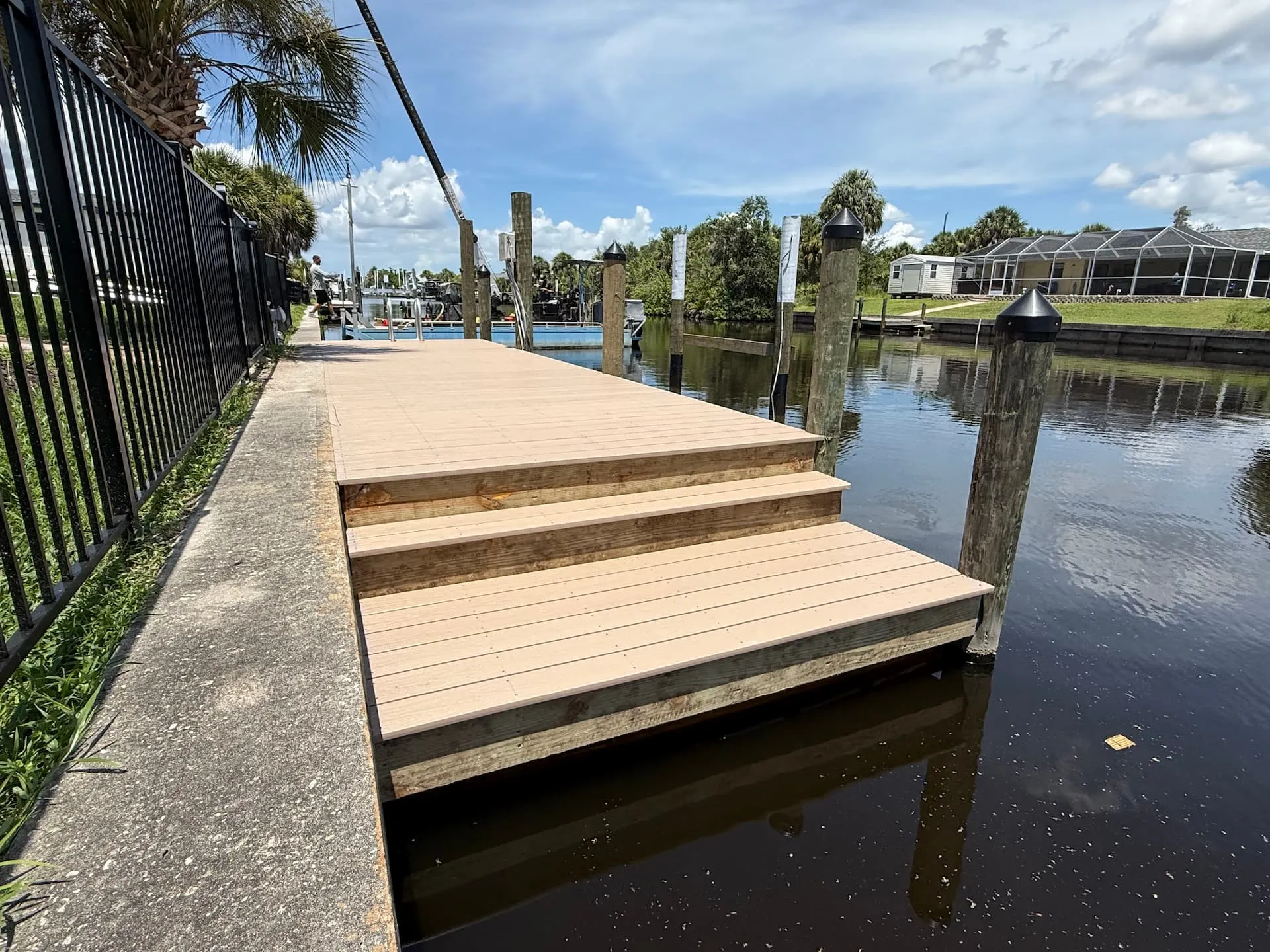
Piling Wrapping: The Protection Most Docks Should Have
Piling wrapping is a protective barrier, commonly marine-grade PVC, installed around the piling from above the high-tide line down below the mud line.
The goal is simple: seal off the wood so marine borers cannot reach it.
New Pilings
Wrapping new pilings at installation protects them from the beginning and helps extend the service life of the dock foundation.
Existing Pilings
Sound existing pilings can often be retrofitted with wraps before borer damage starts or before minor exposure becomes a major problem.
Why This Matters More on Our Coast
Marine borer activity is tied to warm saltwater, and Lee County and Charlotte County canals provide exactly that for much of the year.
A dock that might last decades in a cold northern lake faces a faster clock here. That is why piling protection is not optional maintenance for many waterfront properties.
Building for Florida coastal conditions means protecting the foundation, not just replacing the boards you can see.
Do Piling Repairs Require a Permit?
Replacing pilings in the same location and dimensions may fall under Florida’s repair exemption at the state level, depending on the location and scope.
That does not automatically remove local building permit requirements. Lee County, Charlotte County, Cape Coral, or Punta Gorda may still require local review, inspections, or documentation.
Dock Piling and Piling Wrapping FAQ
How long do wood dock pilings last in Southwest Florida?
It depends heavily on protection. Unprotected wood in warm saltwater can be seriously damaged by marine borers in a short time. Properly treated and wrapped pilings can last much longer, often for decades.
What is piling wrapping and is it worth it?
Piling wrapping is a protective barrier, usually marine-grade PVC, applied around the piling from above the high-tide line to below the mud line. It helps seal the wood from marine borers and is usually well worth it for Southwest Florida docks.
Can you wrap pilings that are already installed?
Yes. Sound existing pilings can often be retrofitted with wraps. If the piling is already compromised, replacement is the better path.
Should I choose wood or composite pilings?
Pressure-treated wood is lower upfront and performs well when protected. Composite and concrete pilings resist borers and rot more naturally and can be a better long-term value depending on the project.
Protect the Foundation of Your Dock
Whether you need new pilings, replacement of damaged pilings, or wrapping to protect what you already have, start with an inspection.
Alex will check your pilings, tell you what shape they are really in, and recommend only the work the structure actually needs.