Boat Lift Repair in Southwest Florida: Warning Signs and When to Repair vs. Replace
A boat lift rarely fails all at once. It usually gives warning signs first. Catching those signs early can be the difference between replacing a cable and replacing the whole lift.
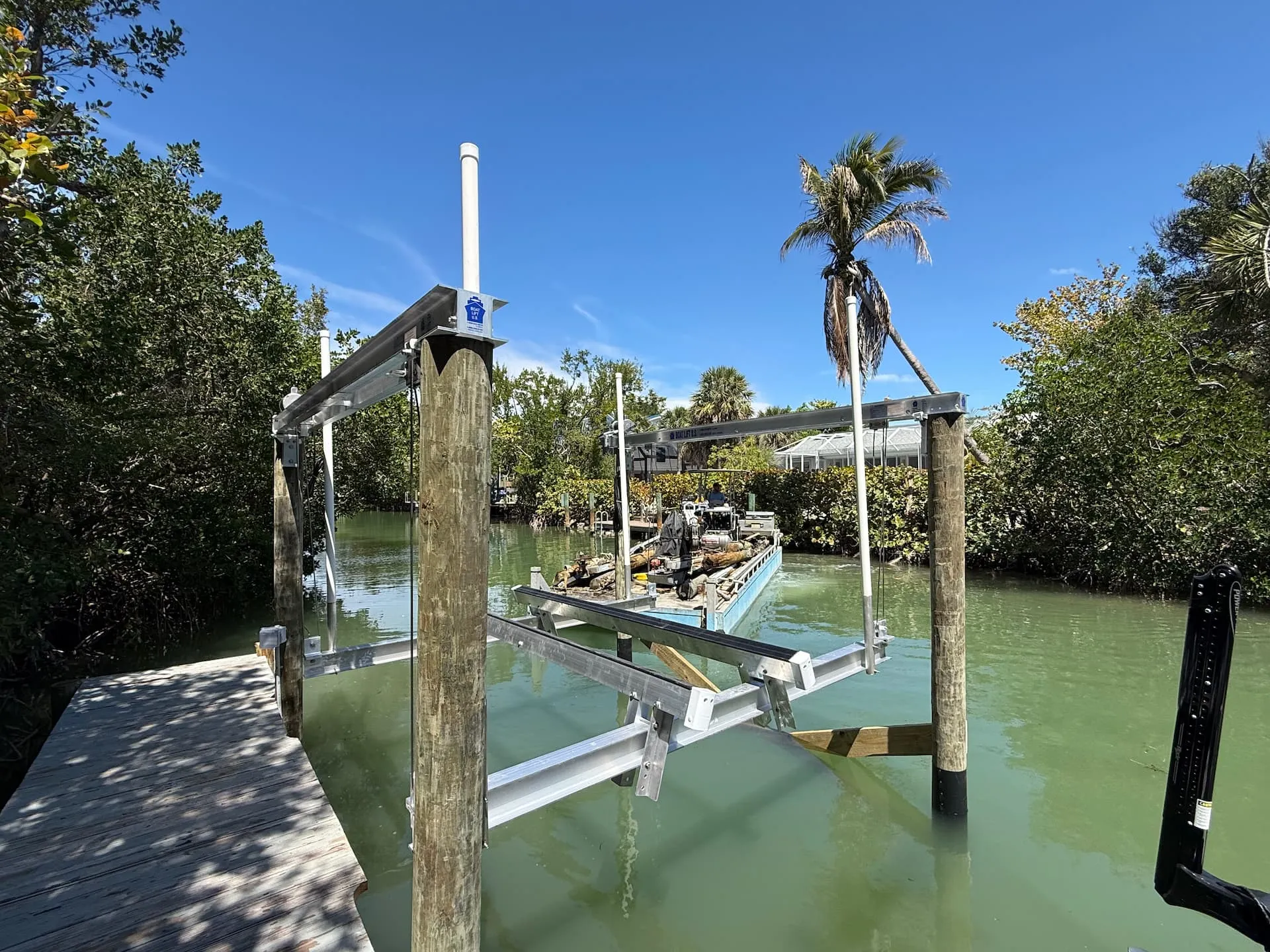
In Southwest Florida, saltwater works on every lift component around the clock. Cables, pulleys, bunks, cradles, motors, hardware, and frames all wear faster when they live in a salt-air and saltwater environment.
CC Docks & Lifts is an owner-operated dock and boat lift company serving Lee County and Charlotte County. We repair lifts every week, and the patterns are consistent: most failures gave warning signs before they became expensive.
This guide explains what to watch for, what each repair usually involves, and how to decide whether your lift should be repaired or replaced.
The Warning Signs Your Boat Lift Needs Attention
New Noises
Grinding, squealing, popping, or a motor that strains through the lift cycle can point to pulley wear, cable problems, or gearbox trouble.
Uneven Travel
If one side rises faster than the other or the boat sits crooked, the cradle may be out of square or the cables may be wearing unevenly.
Visible Cable Wear
Fraying, rust, kinks, or even one broken strand means the cable should be inspected immediately and likely replaced.
Corrosion
Rust on hardware, white powdery buildup on aluminum, or corrosion around the motor housing means saltwater is winning.
Worn or Shifting Bunks
Torn carpet, waterlogged bunk boards, or bunks that slipped out of position can damage the hull and change how the lift carries the boat.
Motor Problems
If the motor hesitates, trips, or will not start, the issue may be mechanical or electrical. Electrical supply problems require a licensed electrician.
Uneven Travel Is One of the Most Important Warning Signs
A lift that rides unevenly should not be ignored. When one side moves faster than the other, the whole system starts wearing unevenly.
An out-of-square cradle can stress the frame, chew through cables, and put the boat in a poor load position.
Boat Lift Cables Are Wear Items
Cables are one of the most exposed components on a boat lift. Saltwater, load cycles, pulley wear, and misalignment all shorten cable life.
- Replace cables at the first sign of fraying.
- Do not ignore rust, kinks, bird-caging, or broken strands.
- Inspect pulleys at the same time, because worn pulleys can destroy new cables.
- Use marine-grade cable suited for Southwest Florida saltwater conditions.
Manufacturer guidance commonly points to replacement around every two years or roughly 200 lift cycles, but in saltwater that should be treated as a ceiling, not a target.
What Each Boat Lift Repair Actually Involves
Cable Replacement
New marine-grade cable, proper tensioning, and pulley inspection so the new cable is not damaged by an old sheave.
Bunk and Cradle Kit Work
Replacing worn bunk boards, damaged carpet, or cradle components that no longer support the hull correctly.
Pulley and Sheave Replacement
Worn pulleys can chew through cables quickly. Replacing them protects the rest of the lift system.
Motor and Gearbox Diagnosis
Mechanical-side motor and gearbox diagnosis helps determine whether the problem is in the lift system or electrical supply.
Structural Repair
Bent beams, corroded hardware, and frame damage need to be evaluated before the lift is loaded again.
Post-Storm Assessment
After storm surge or impact, the lift can look usable while hidden alignment or cable problems remain.
How to Decide Whether to Repair or Replace a Boat Lift
Lean Toward Repair When
- The frame and cradle are structurally sound.
- The issue is a wear item such as a cable, bunk, pulley, or anode.
- The lift is a known brand with parts still available.
- The repair cost is a fraction of replacement cost.
Lean Toward Replacement When
- The frame or cradle is bent, badly corroded, or compromised.
- You are repairing the same lift repeatedly.
- The lift is undersized for your current boat.
- Parts are difficult to source.
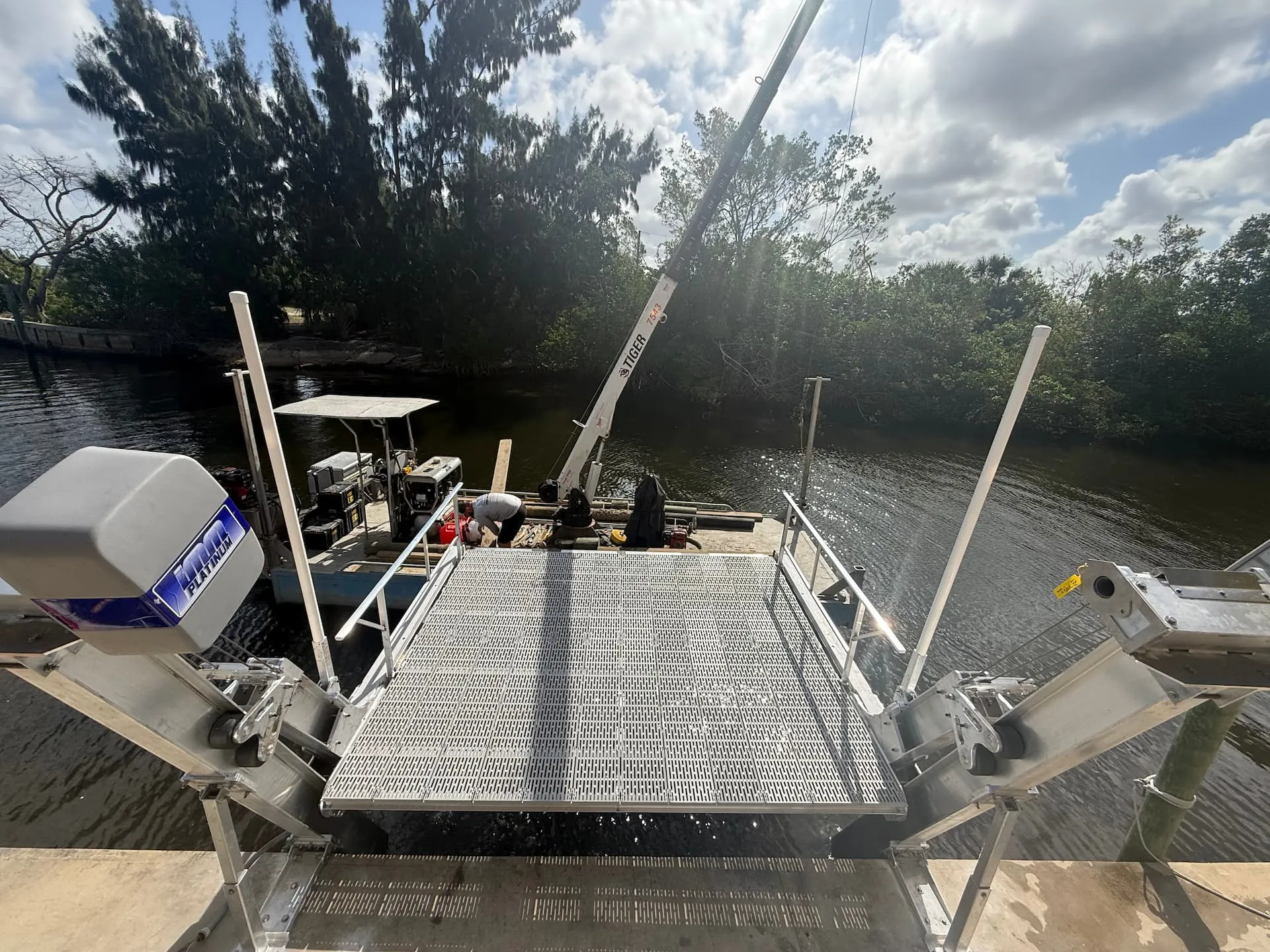
Saltwater Is Why Boat Lift Maintenance Matters More Here
Boat lifts in freshwater can sometimes run for years between service visits. In Lee and Charlotte County saltwater, the maintenance clock runs faster.
Small issues become failures faster here because saltwater attacks cables, hardware, motors, pulleys, and aluminum connections continuously.
Boat Lift Repair FAQ
How often should boat lift cables be replaced?
Manufacturer guidance is commonly around every two years or about 200 lift cycles, whichever comes first. In Southwest Florida saltwater, inspect often and replace at the first sign of fraying, rust, or a broken strand.
My boat lift is making a grinding noise. Is that serious?
It can be. New noises usually point to a worn pulley, a dry or failing cable, or a gearbox issue. Stop using the lift and have it inspected before the failing part damages another part.
Should I repair or replace my boat lift?
Repair when the frame and cradle are sound and the issue is a wear item on a lift with available parts. Replace when the structure is bent or badly corroded, repairs keep stacking up, or the lift is undersized for your boat.
Do you fix the electrical part of the lift too?
CC Docks & Lifts services the mechanical side: cables, cradle, bunks, pulleys, motor mechanics, and structure. For wiring and electrical supply issues, a licensed electrician is required.
Boat Lift Acting Up? Get an Owner’s Eyes on It.
Do not wait for a cable to snap or a cradle to drop your boat. Call CC Docks & Lifts at (239) 834-0095 or request a free boat lift inspection.
We will diagnose the issue, give you a straight repair-or-replace answer, and help get your lift running right for the season.