Composite vs Pressure-Treated Wood Decking: 2026 Comparison for Southwest Florida Docks
Decking is the part of your dock that takes the most punishment and the part you walk on, sit on, and look at every day. The right material changes the look, feel, maintenance burden, and long-term cost of your dock.
Composite versus pressure-treated wood is not a small decision. It affects the lifespan of the dock, the maintenance schedule, how hot the surface gets, how the dock handles storm surge, and what the structure costs over a full ownership timeline.
CC Docks & Lifts is an owner-operated dock and boat lift company serving Lee County and Charlotte County, including Cape Coral, Fort Myers, North Fort Myers, Punta Gorda, Port Charlotte, Englewood, Sanibel, Captiva, Bokeelia, and St. James City.
We install and re-deck with pressure-treated wood, composite decking, and Throughflow-style decking. This guide explains how we help homeowners choose the right material.
The Three Materials We Re-Deck With
Pressure-Treated Wood
The classic dock material. It is available, familiar, and lower upfront cost, but it requires cleaning, sealing, fastener maintenance, and eventual replacement.
Composite Decking
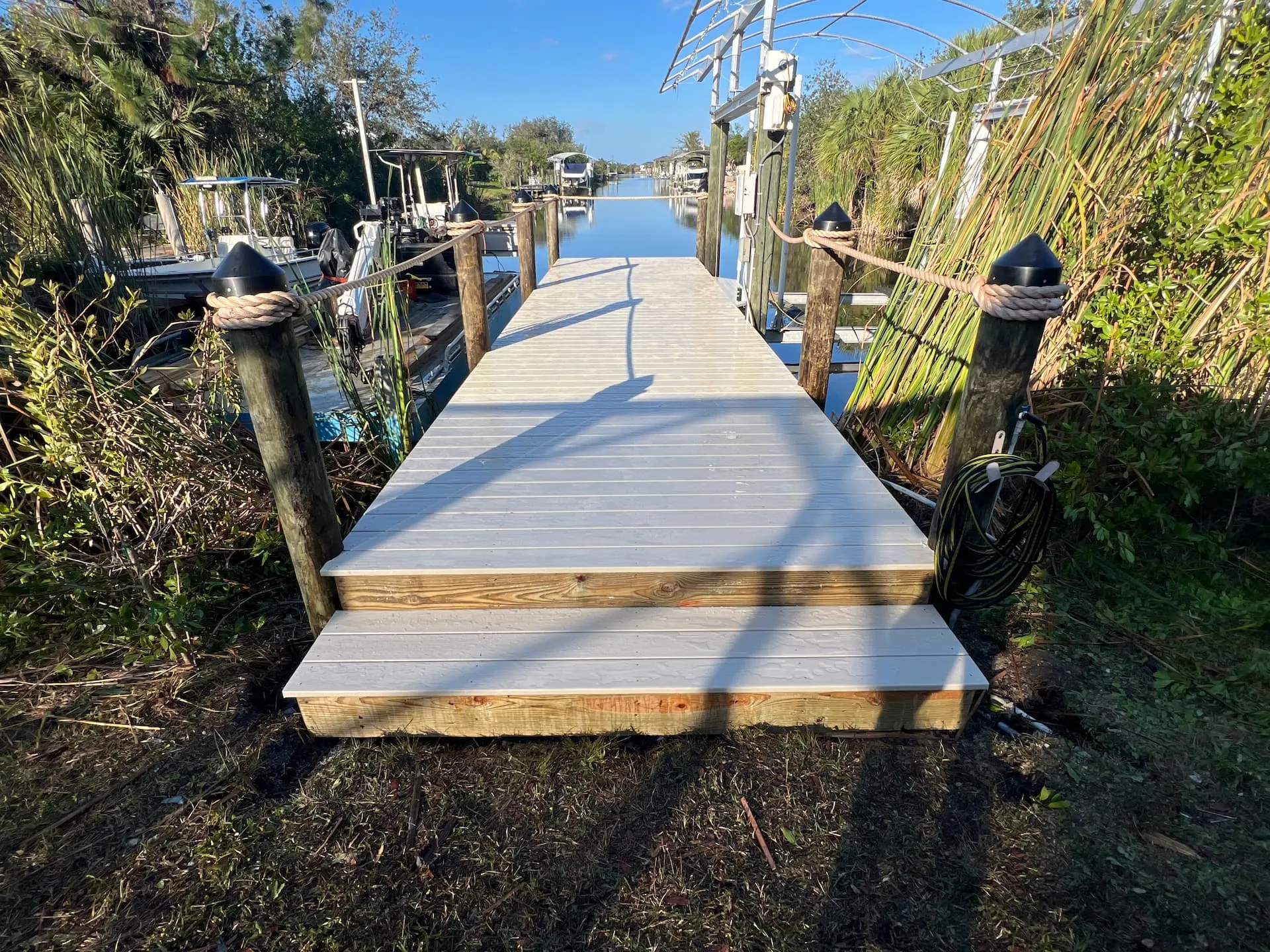
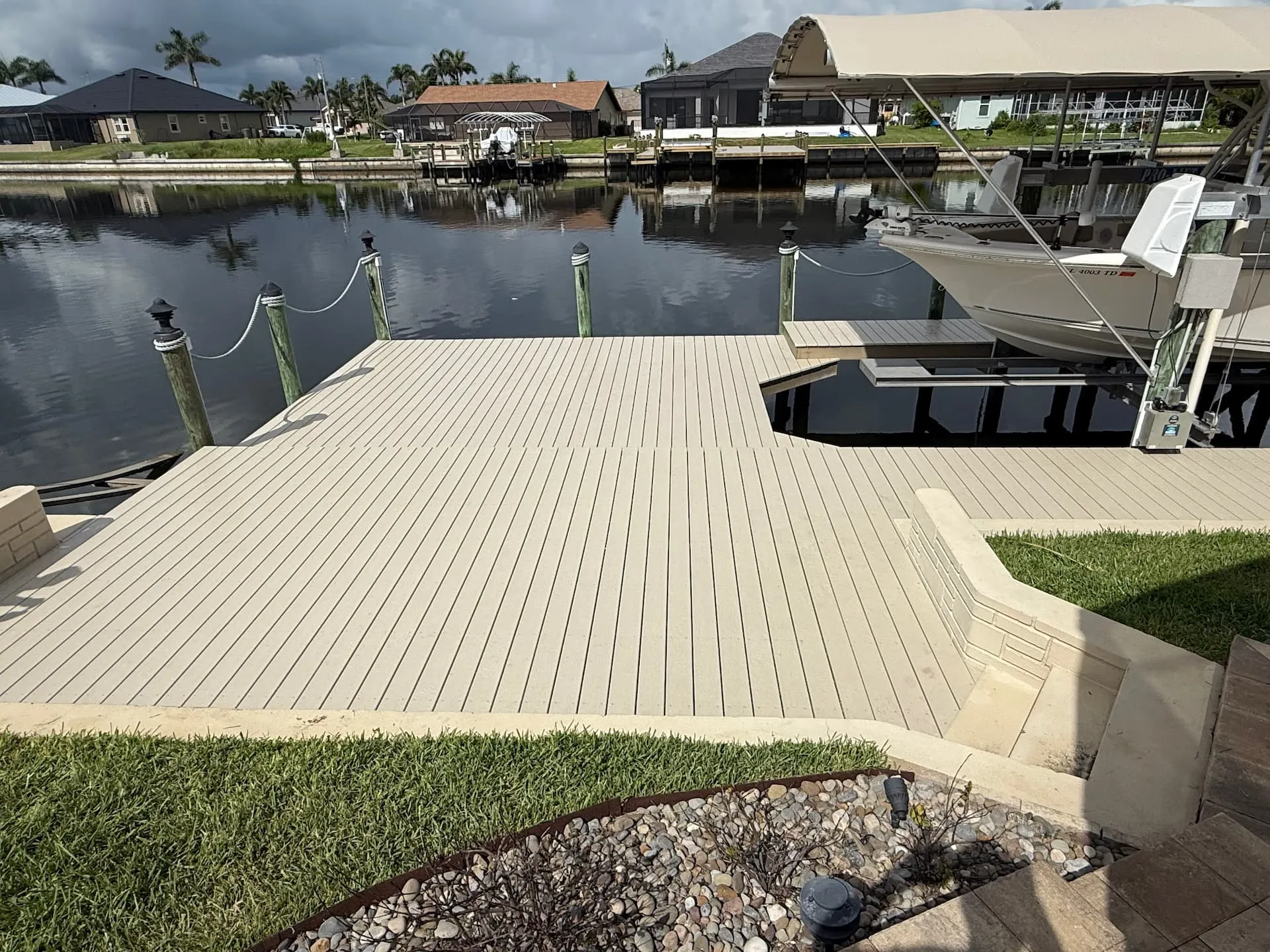
Wood-plastic composite boards that look like wood from a distance, do not splinter, and do not require staining or sealing.
Throughflow Decking
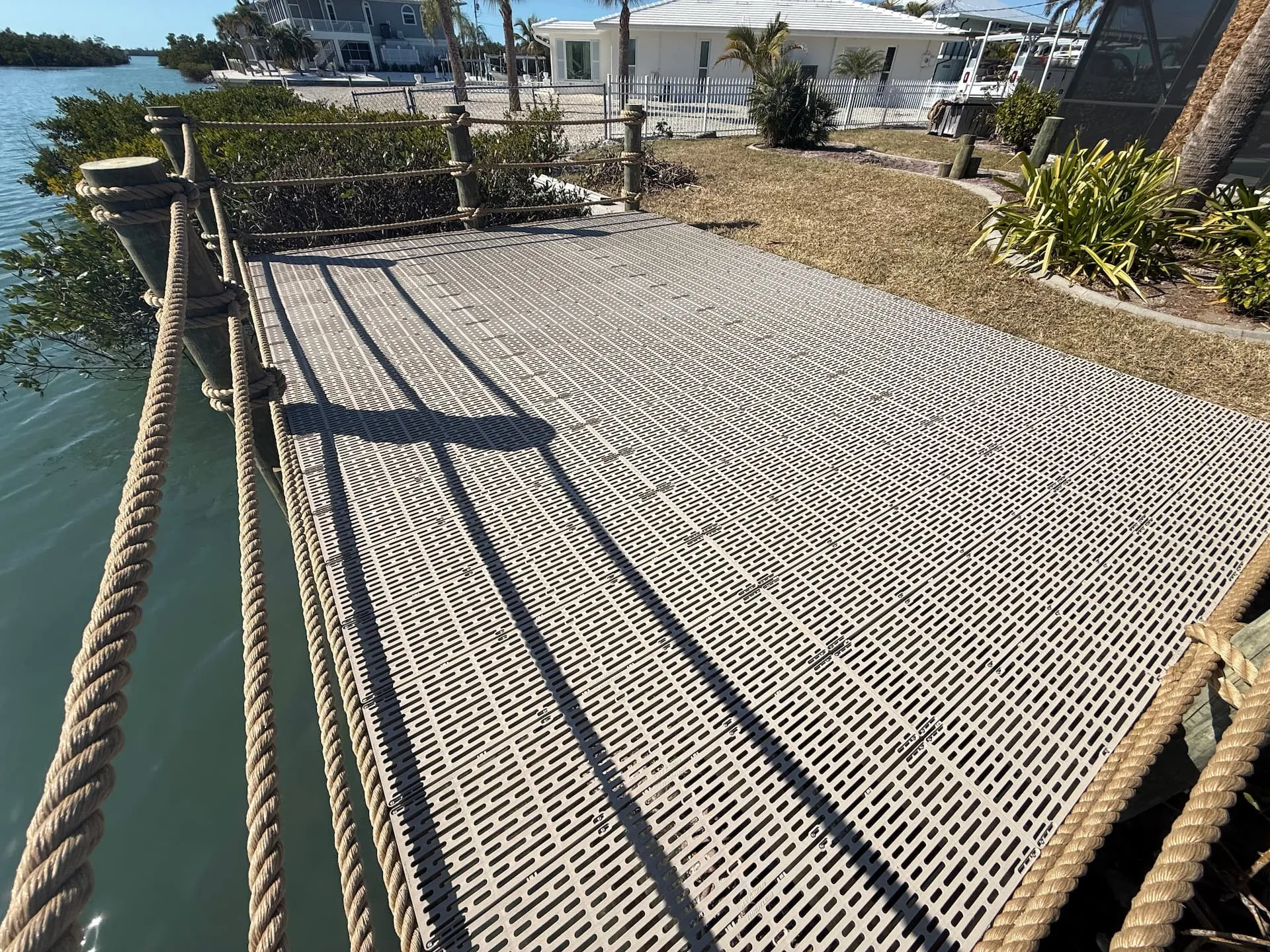
A specialty open or perforated decking option designed to let water and light pass through the surface, reducing wave-load and supporting sensitive-waterfront requirements.
Composite vs Wood vs Throughflow Dock Decking
| Factor | Pressure-Treated Wood | Composite | Throughflow |
|---|---|---|---|
| Lifespan | 8 to 15 years | 20 to 25 years | 20 to 25 years |
| Maintenance | Cleaning, sealing, fastener upkeep | Soap and water rinse | Soap and water rinse |
| Initial Cost | Lowest | Higher | Highest |
| Long-Term Cost | Higher over 25 years | Lower over 25 years | Often lowest in storm-exposed areas |
| Storm Performance | Moderate | Strong when fastened correctly | Best wave-pass-through advantage |
| Heat Underfoot | Moderate | Can get hot in direct sun | Often cooler than solid composite |
Lifespan in Southwest Florida Conditions
Florida sun, salt air, humidity, and storm exposure are harder on dock decking than most homeowners expect.
- Pressure-treated wood: Usually 8 to 15 years before major cupping, splintering, or fastener failure.
- Composite decking: Usually 20 to 25 years with no refinishing required.
- Throughflow decking: Similar 20 to 25 year range, often with a manufacturer warranty.
If you are keeping the property long-term, lifespan should be one of the biggest parts of the decision.
Maintenance Requirements
Pressure-treated wood is lower upfront, but it asks more from the homeowner every year.
- Pressure-treated wood: Annual or biennial cleaning, sealing every 2 to 3 years, and fastener replacement as corrosion appears.
- Composite: Soap and water cleaning. No staining. No sealing.
- Throughflow: Similar to composite, with simple washdown maintenance.
Look, Feel, and Heat Underfoot
Pressure-treated wood looks natural because it is wood. It fades to gray unless stained and develops texture as it weathers.
Modern composite decking has improved significantly and reads as natural wood from typical viewing distance, though up close most people can tell the difference.
Throughflow has a more functional look because of the open or perforated surface, but that design helps with airflow, water movement, and storm-load reduction.
Heat matters in Southwest Florida. Standard composite can get hotter than wood in direct sun. If barefoot summer use is important, ask about cooler composite formulations or Throughflow options.
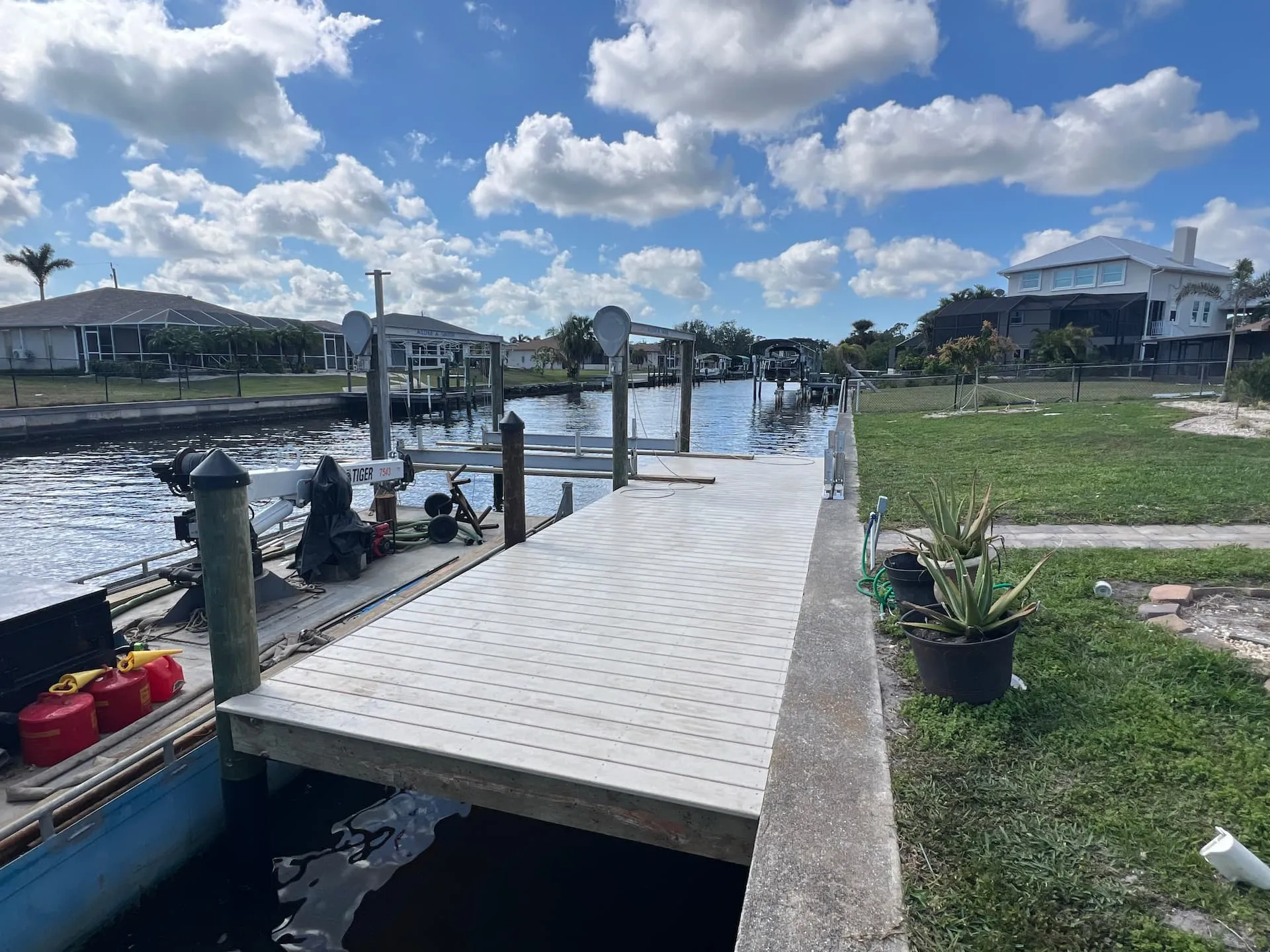
Storm Performance
Storm surge creates vertical and horizontal forces on dock decking. Material choice affects how the deck reacts when water, debris, and wave action move through the structure.
- Pressure-treated wood: Boards can be torn off during severe storms, but replacement is usually straightforward.
- Composite: Heavier and often more secure when fastened properly, but more expensive to replace if damaged.
- Throughflow: Designed to let water pass through instead of pushing against the deck surface, which can reduce load on the substructure.
Initial Cost vs 25-Year Cost
The number that matters most is not always the first quote. It is the total cost over the time you own the dock.
- Pressure-treated wood: Lowest initial cost, but higher long-term cost once sealing, repairs, fasteners, partial replacement, and eventual rebuild are included.
- Composite: Higher initial cost, but lower long-term cost because there is no staining, sealing, or early rebuild cycle.
- Throughflow: Highest initial cost, but often strongest value in exposed or environmentally sensitive locations.
Where Each Dock Decking Material Is the Right Call
Choose Pressure-Treated Wood When
You want the lowest upfront cost, the dock is in a sheltered canal, or you may sell the property within the next few years.
Choose Composite When
You plan to keep the property long term, want lower maintenance, and use the dock regularly throughout the year.
Choose Throughflow When
The dock is in a high storm-exposure location, local rules favor open decking, or you want the strongest storm-tolerance profile.
Example: When Throughflow Is the Right Call
Throughflow-style decking makes the most sense when the project involves open exposure, long-term ownership, and a homeowner who wants to invest in storm performance up front.
For waterfront areas like Englewood, Charlotte Harbor, and outer canal systems, Throughflow can offer a real advantage because it allows water and light to pass through the deck surface instead of creating the same level of upward pressure during surge.
What We Do Not Recommend
- Cheap non-marine lumber: Not all pressure-treated wood is appropriate for marine dock use.
- Painted dock decking: Paint can flake, trap moisture, and accelerate rot underneath.
- Mixing decking generations: Replacing only the worst boards can create uneven structure, mismatched appearance, and inconsistent service life.
For most full re-deck projects, it is better to replace the entire walking surface with one material and one warranty horizon.
Composite vs Wood Dock Decking FAQ
How long does pressure-treated dock decking last in Cape Coral?
Pressure-treated dock decking commonly lasts 8 to 15 years depending on treatment quality, salt exposure, maintenance, and fastener condition.
Is composite decking worth the extra cost?
For many long-term homeowners in Lee and Charlotte Counties, yes. Composite costs more upfront, but often costs less over 20 to 25 years because it avoids staining, sealing, and earlier replacement.
What is Throughflow decking?
Throughflow is a category of open or perforated decking designed to let water and light pass through the surface. It can reduce wave-load and is often used in exposed or environmentally sensitive waterfront areas.
Does composite decking get hot in Florida?
Yes, standard composite can get hot in direct summer sun. Homeowners who use the dock barefoot should ask about cooler formulations or consider Throughflow-style options.
Can I re-deck only part of my dock?
It is possible, but not usually recommended. Mixing old and new decking can create uneven structure, mismatched appearance, and different service-life timelines.
Do I need a permit for a dock re-deck?
Like-for-like decking replacement may not require a permit in many cases, but structural changes, material upgrades, or major reconstruction may. Confirm your specific scope before starting.
Choosing Between Composite, Throughflow, and Pressure-Treated Wood?
CC Docks & Lifts offers free on-site quotes across Lee and Charlotte Counties. We measure the dock, evaluate the substructure, and walk through which material makes the most sense for your property, budget, and long-term plans.