How to Choose the Right Boat Lift for Lee County and Charlotte County Waterways
Choosing a boat lift is one of the most important decisions a waterfront homeowner can make. The right lift protects your boat, makes launching simple, and can last decades. The wrong lift can create service issues, premature wear, and expensive upgrades.
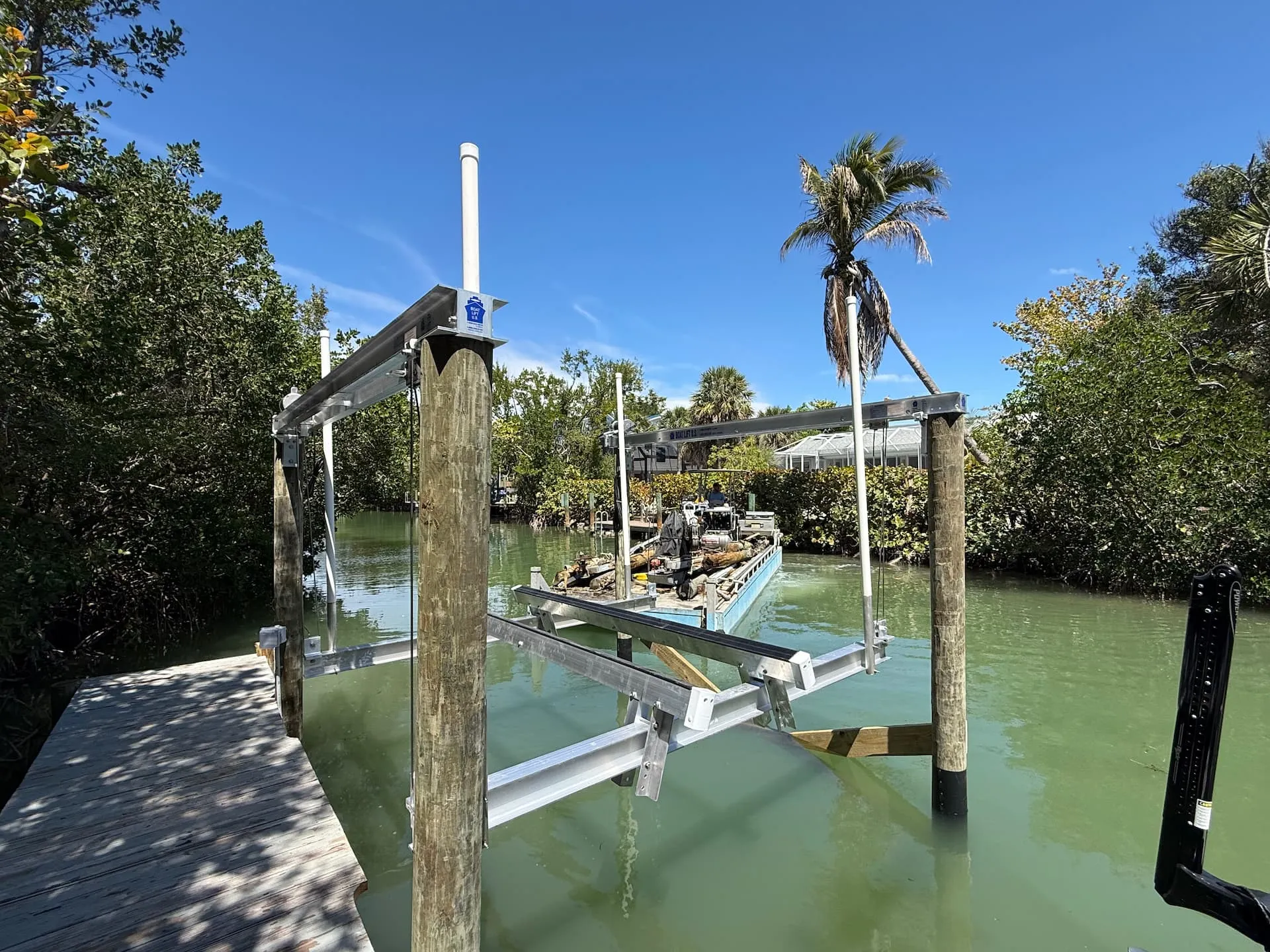
Whether you're installing your first lift in Cape Coral, replacing an aging lift in Punta Gorda, or upgrading for a larger boat in Port Charlotte, selecting the right system starts with understanding your boat, your dock, and your water conditions.
CC Docks & Lifts installs and services boat lifts throughout Lee County and Charlotte County, including Cape Coral, Fort Myers, North Fort Myers, Punta Gorda, Port Charlotte, Englewood, Sanibel, Captiva, Bokeelia, and St. James City.
This guide walks through the same framework we use when homeowners ask us: "What boat lift should I get?"
The 6 Questions You Need to Answer Before Buying a Boat Lift
-
What is your boat's actual loaded weight?
Include fuel, batteries, gear, water, coolers, and normal equipment. -
What is the beam width?
Beam determines cradle width and piling spacing. -
What hull type do you have?
V-hull, catamaran, pontoon, bay boat, flats boat, or center console all require different bunk setups. -
What are the water depth and tidal conditions?
Water depth and tidal movement directly affect lift travel requirements. -
What dock structure do you have?
Existing docks determine whether a piling lift, elevator lift, beamless lift, or another configuration is appropriate. -
How do you use the boat?
Daily users typically prioritize convenience and speed. Seasonal users often prioritize storage height and storm preparation.
How to Size a Boat Lift Correctly
The most common mistake we see is homeowners selecting a lift based on brochure weight instead of actual operating weight.
Boat Lift Capacity = Loaded Boat Weight × 1.25
After calculating the result, round up to the next available lift size.
Example
A 24-foot center console weighing approximately 5,800 lbs fully loaded should typically be placed on a 10,000 lb lift rather than a 6,000 lb or 8,000 lb model.
Typical Residential Boat Lift Sizes in Southwest Florida
| Lift Capacity | Common Applications |
|---|---|
| 4,500 lbs | Jet skis, skiffs, small fishing boats |
| 6,000 lbs | Small center consoles and bay boats |
| 8,000 lbs | Mid-size center consoles |
| 10,000 lbs | 24-28 ft center consoles and deck boats |
| 12,500 lbs | Large bay boats and sportfish |
| 16,000 lbs | Large center consoles and offshore boats |
| 20,000+ lbs | Cruisers and yachts |
Which Boat Lift Type Is Right for Your Dock?
Four-Piling Cradle Lift
The most common lift found throughout Cape Coral, Punta Gorda, and Port Charlotte canals. Durable, proven, and ideal for most center consoles and fishing boats.
Beamless Lift
A lower-profile design that offers a cleaner appearance while maintaining excellent lifting performance for lighter boats.
Elevator Lift
Ideal where canal width is limited or piling placement is restricted.
PWC Lift
Designed specifically for jet skis, skiffs, and small watercraft.
Davit Lift
Often used where piling systems are impractical or shoreline constraints exist.
Boat Lift Brands Commonly Installed in Southwest Florida
IMM Boat Lifts
Manufactured in Fort Myers with strong local parts support and a broad residential and commercial lineup.
Visit ManufacturerQABL
Quality Aluminum Boat Lifts feature all-aluminum construction and a wide range of beamless and piling lift options.
Visit ManufacturerHi-Tide Boat Lifts
Well-known Florida manufacturer offering heavy-duty residential and yacht lift systems.
Visit ManufacturerHurricane Boat Lifts
Designed with Florida storm conditions in mind and available in a wide range of capacities.
Visit ManufacturerWhat Impacts Boat Lift Cost?
Many homeowners focus solely on lift hardware, but several factors influence total project cost.
- Lift capacity and configuration
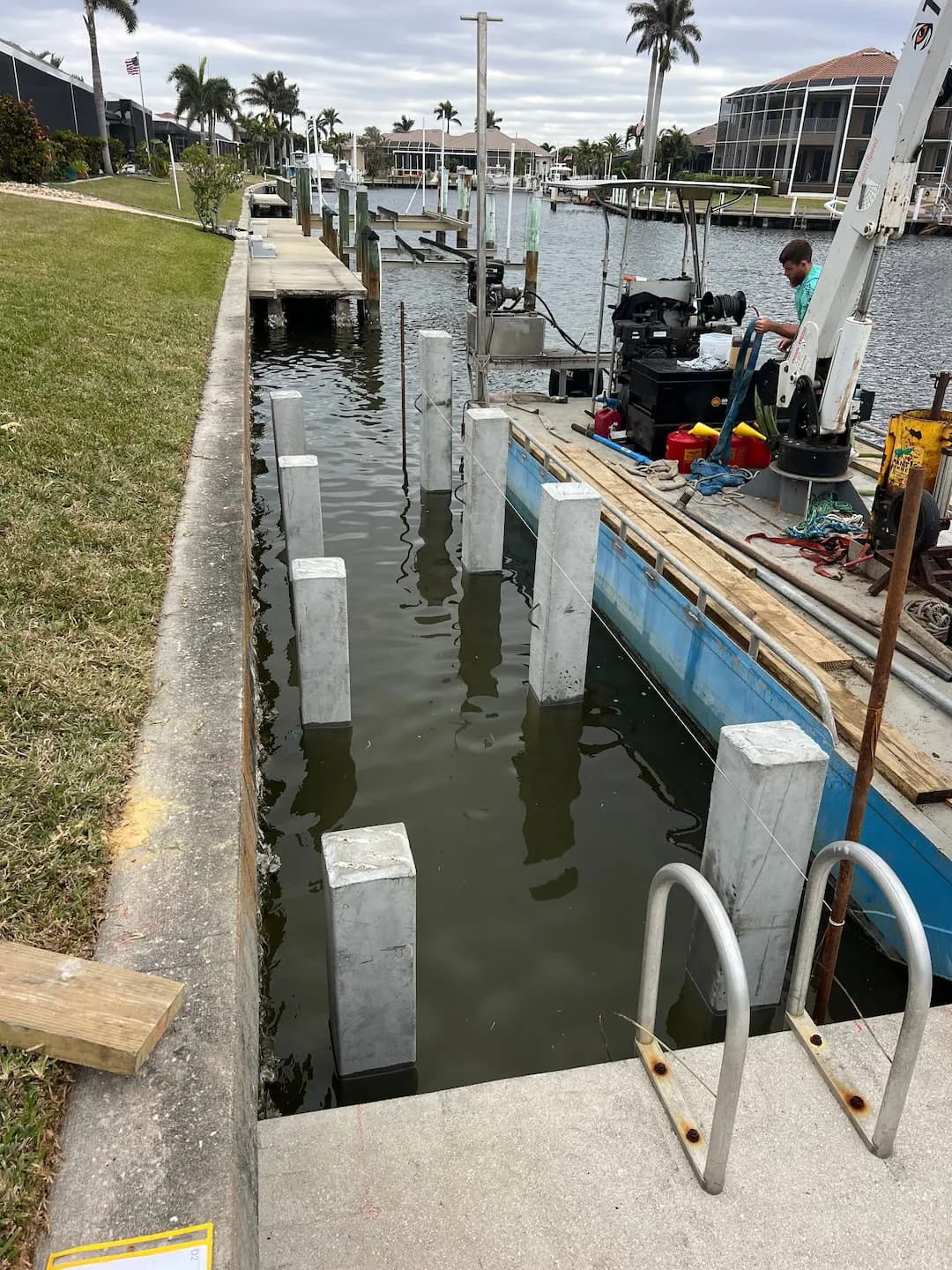
- New piling installation requirements
- Electrical service availability
- Permitting and engineering
- Removal of existing equipment
- Water depth and site accessibility
The fastest way to receive accurate pricing is through an on-site inspection where measurements, dock conditions, and vessel specifications can be reviewed.
Common Boat Lift Buying Mistakes
- Buying only for your current boat. Most lifts outlast the boat sitting on them.
- Choosing based solely on price. Long-term reliability matters more than the initial difference in cost.
- Ignoring electrical requirements. Planning electrical from the start avoids expensive surprises.
- Ignoring storm exposure. Florida waterfront conditions should be part of every lift specification.
- Skipping annual inspections. Preventative maintenance is significantly cheaper than major repairs.
Boat Lift Frequently Asked Questions
How long does a boat lift last in Southwest Florida?
Properly specified and maintained lifts commonly last 15 to 25 years.
Do I need a permit for a new boat lift?
Yes. New lift installations generally require permitting and often include structural and electrical review.
Can a boat lift be installed on an existing dock?
Often yes, provided the dock structure is capable of supporting the lift and vessel load.
Which boat lift brand is best?
The best brand depends on your boat, dock layout, budget, and service expectations. We evaluate each project individually.
How long does installation take?
Most standard installations take 1 to 3 days after permitting is complete, though piling work can extend timelines.
Not Sure Which Boat Lift Is Right?
We offer free on-site lift sizing consultations throughout Lee County and Charlotte County. We measure your dock, verify water depth, review your boat specifications, and recommend the right capacity and configuration.